



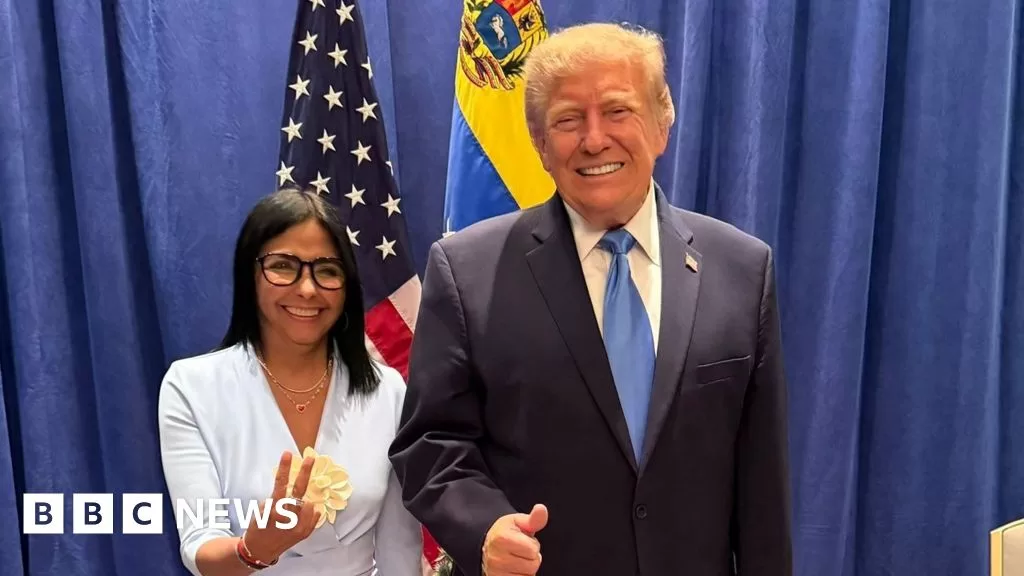
Venezuela’s interim President Delcy Rodriguez arrived in New York this week for the UN General Assembly seeking business deals on debt, energy and mining, to demonstrate the once sanctioned country was open for business again after US forces removed her predecessor in January.
She pledged in her speech before the UN that the South American OPEC member would hold elections as part of a transition to “full democracy.”
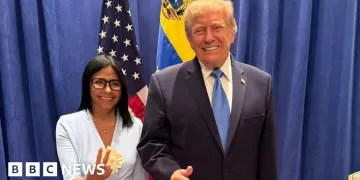
She left with photographs of herself alongside US President Donald Trump, but obtained no concrete agreements.
It was her first visit to the US since American forces captured then-President Nicolas Maduro in a January raid.
It demonstrated Washington’s deep control over her administration and showed Venezuela’s need for new alliances to align with Trump’s aspirations, analysts said.”Rodriguez enjoyed a week of high visibility.
Yet, when we make a list of concrete results, the outcome is modest.
Where are the disbursements, the reconstruction package or the business deals?
They did not materialise on the scale that would have allowed New York to be portrayed as Venezuela’s great financial comeback,” said Washington-based analyst Antonio De La Cruz.
“To the victor belong the spoils,” Trump said in a Tuesday address to the assembly as Rodriguez listened, reminding her that the US stood ready to use its “unmatched military might.
“Trump did not mention Rodriguez by name in his speech, and no readout was published on his brief “pull-aside” meeting with her.
Leftist leaders from other nations who once backed Maduro kept their distance, while Venezuelans living in the US protested outside the UN with signs depicting Rodriguez in a jail-style orange jumpsuit.
De La Cruz said Trump showed Washington is shaping the new Venezuelan landscape, while Rodriguez demonstrated she is the key interlocutor.
“But she now bears an additional consequence: she will have to explain when Venezuelans will actually vote.
“For nine months, Rodriguez had avoided giving signals about an election, while US officials kept expectations at bay by saying it would take time to materialise.
Analysts and Venezuelan opposition parties now say the clock is ticking to set a date, while experts estimate it will take at least 12 months to appoint reliable authorities and organise the voting.

