




US officials have told several Middle East countries and regional allies to be prepared for potential renewed military action against Iran after next week’s midterm elections in the United States — as well as the possibility that Iran will attempt to retaliate against them, according to two diplomats briefed on the matter.
Both of the diplomats spoke on the condition of anonymity because they were not authorized to comment about the sensitive warnings conveyed by US diplomats and defense officials.
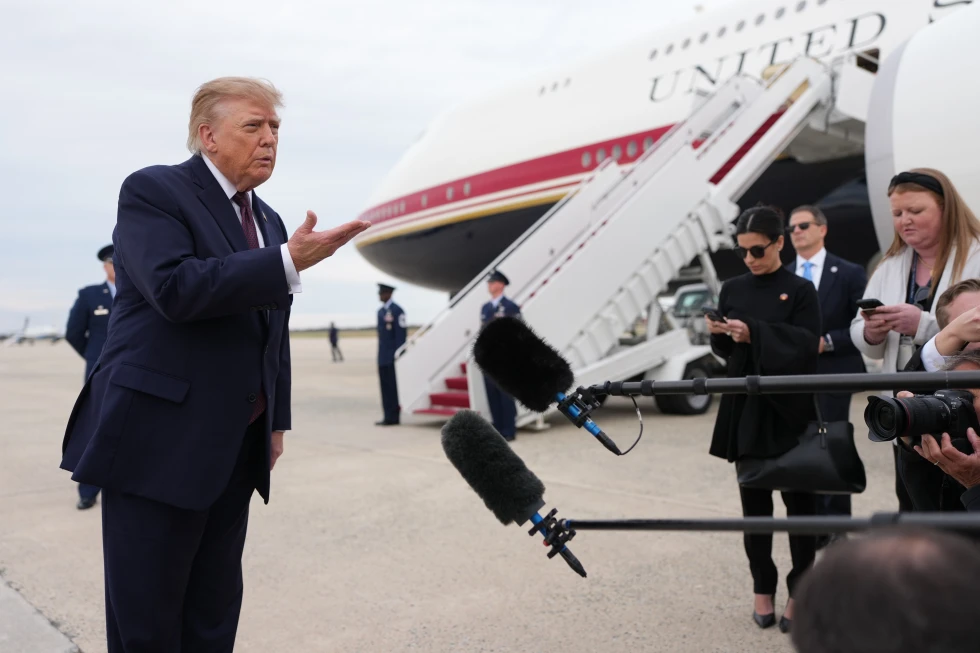
President Donald Trump has not made a final decision on whether to carry out new strikes against Iran, the diplomats stressed. The president, however, has repeatedly said that he is weighing ordering new military action once the critical Nov. 3 elections in the United States are over.
Those threats and the fresh US urgings for allies to prepare for potential retaliation are putting the region on alert that a return to major operations could now be on the horizon.
The White House and US officials declined to comment.
Iranian Foreign Minister Abbas Araghchi said Wednesday in a post on X that Tehran “continues to give diplomacy a chance to succeed” and is working with mediators to review ideas that Tehran included in a proposal floated last month — summarily rejected by Trump — that the Iranians still want to see used as the basis to return to a ceasefire.
Meanwhile, the United Arab Emirates foreign ministry issued a statement urging the sides to “exercise wisdom and pursue political solutions to help contain tensions” and prevent a return to full-scale operations in the war that began in late February.
The US has told regional allies that the new round of military action could last for several days, but regional officials are bracing for Iran and its proxy groups to retaliate — leading to a fight that could last even longer, the diplomats said.
The allies have also been urged by US officials to take precautionary measures in anticipation that Iran’s response will include retaliatory strikes on energy facilities and other crucial infrastructure.
While the US has not carried out a strike against Iran since early September, the situation in the Middle East has become more complicated.
The conflict has spread, with Iran-backed Houthi rebels carrying out attacks on Saudi Arabia’s oil infrastructure and airports. A Saudi-led coalition has responded with its own deadly attacks on Houthi-held territory in Yemen.
The Wall Street Journal reported earlier on Gulf nations being briefed to be prepared for potential escalation by the US
It’s unclear how soon after Election Day that the US military would be ready to potentially resume strikes.
The Pentagon late last month deployed the USS Theodore Roosevelt, along with a series of amphibious landing ships with Marines aboard — roughly 9,000 troops in all — from San Diego to the Persian Gulf to bolster the U.S. military in the region.
At the time, one U.S. official said this deployment could lead to an unusually high naval presence of more than 20,000 sailors and Marines, as well as hundreds of aircraft, in the region, which has only occurred a handful of times in the last two decades. The Navy had three carrier strike groups in the Middle East in April for the first time since 2003.
Late Wednesday, reports emerged that Defense Secretary Pete Hegseth had fired the Pentagon’s top military planner.
Army Lt. Gen. Brett Sylvia was removed as head of strategy, plans and policy on the Joint Chiefs of Staff, according to a defense official who spoke on condition of anonymity to discuss sensitive personnel matters. That official said there is no immediate replacement for Sylvia and no reason has been given for the firing.

