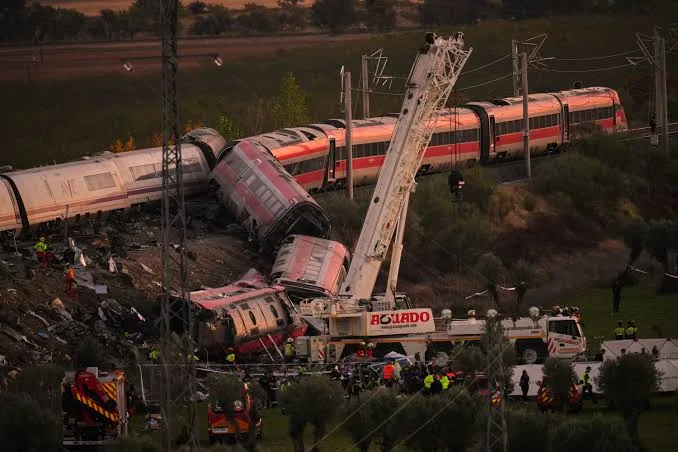








Spain’s second high-speed rail disaster this year, a crash in which one train struck another from behind, killing 68 people, has raised fresh concerns about the safety of the country’s rail network.
Spain’s network of high-speed rail has been considered one of the nation’s crowning achievements. It ranks second to China in track mileage in the world. Until this year, it had not endured a deadly crash since coming into service over three decades ago.
The collision Wednesday that turned a sleepy stretch of rail lined by olive groves into a scene of carnage came just four weeks before the country votes in a national election.
Spanish Prime Minister Pedro Sánchez visited the crash site in the central province of Toledo after regional authorities confirmed that more than 60 people had died and dozens more were being treated at hospitals.
Only in January, 46 people had died when one train jumped the track and slammed into the side of another going the opposite way in southern Spain.
Sánchez pledged an investigation into the latest collision and improvements to prevent another tragedy like the two that have shaken trust in a rail system that carried 45 million travelers last year, including millions of tourists.
“It is clear that we need to reinforce the safety of our train service to rebuild the trust in our high-speed rail,” Sánchez said. “It is not acceptable for a country like Spain to endure two high-speed train accidents in the same year.”
Sánchez’s government declared three days of mourning starting Thursday.
Both deadly crashes this year involved a train operated by the state-owned RENFE company and one from the privately owned IRYO. Spain only liberalized its high-speed rail service in 2021, with the Italian IRYO starting service the following year.

