





The geopolitical landscape of South Asia is defined by historical rivalries, but few moments in recent history have reshaped strategic narratives as intensely as the brief military conflict of May 2025. On the first anniversary of this intense escalation, senior Pakistani military and naval officials gathered in Islamabad to brief reporters on the tactical and strategic outcomes of the confrontation, where the Pakistan Air Force capabilities were a central focus of discussion. During this comprehensive briefing, officials shed light on previously unconfirmed details, revealing significant assertions regarding aerial victories, cyber operations, and shifting regional dynamics that continue to influence policy today.
Escalation to the Brink: The Triggers of the Conflict
The roots of the May 2025 escalation trace back to a deadly security incident on April 22, 2025, in Pahalgam, located in Indian-administered Kashmir. The attack resulted in the tragic deaths of 26 civilians, a majority of whom were tourists. New Delhi immediately attributed responsibility to Islamabad, a claim that Pakistan strongly denied while demanding an independent international investigation.
Tensions boiled over on May 7, 2025, when India launched cross-border airstrikes under the codename “Operation Sindoor,” asserting that it had targeted militant infrastructure within Pakistan and Pakistan-administered Kashmir. In response, Islamabad claimed that civilian areas had been hit and launched a retaliatory counter-offensive days later named “Operation Bunyan-un-Marsoos.” This operation specifically targeted Indian military installations. For three intense days, the neighboring nations traded artillery fire, drone strikes, and missile attacks, while their fighter jets engaged in fierce dogfights before an international ceasefire was brokered on May 10, 2025.
The Aerial Dimension: Unveiling the “Eight-Zero” Claim
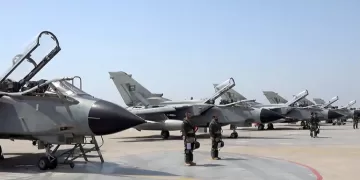
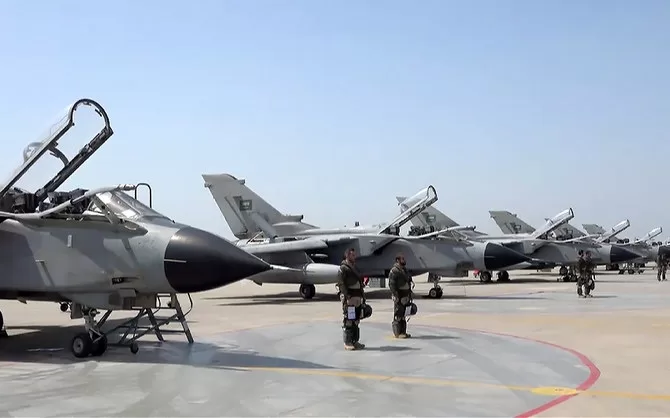
The most striking revelations from the one-year anniversary briefing came from the aerial warfare data presented by senior defense officials. Air Vice Marshal Tariq Ghazi provided an updated tally of the engagement, asserting that Pakistani forces managed to down eight Indian aircraft without losing a single asset.
Previously, the Pakistani government had publicly claimed the destruction of six Indian jets. However, the revised official statement adjusted the figure to eight confirmed aerial victories. According to Ghazi, the downed assets included:
- Four French-made Rafale fighter jets
- One Russian-origin Su-30 twin-engine fighter
- One MiG-29 air superiority fighter
- One Mirage 2000 multi-role aircraft
- One highly expensive, multi-role unmanned aerial system (drone)
Beyond the kinetic engagements in the sky, defense officials highlighted the critical role that electronic warfare played during the skirmishes. The military disclosed that advanced cyber operations successfully disrupted Indian communications networks during the peak of the dogfights, allowing Pakistani pilots to achieve early tactical superiority and exploit gaps in the adversary’s air defense coordination.
Naval Posturing and Strategic Stabilizations
The briefing also revealed insights into naval coordination during the conflict, known domestically as Marka-e-Haq (Battle for Truth). Rear Admiral Shifaat Ali Khan, representing the Navy, stated that maritime forces were fully mobilized and prepared to launch strikes against the Indian Navy’s flagship aircraft carrier, the INS Vikrant. However, Khan claimed that the carrier did not deploy out of its heavily defended home ports during the active window of the conflict.
Reflecting on the broader geopolitical aftermath, military spokesperson Lt. Gen. Ahmed Sharif Chaudhry argued that the crisis transformed the country’s international standing. Chaudhry stated that the outcome effectively shifted the global narrative regarding regional security. He emphasized that Islamabad is increasingly viewed as a net security stabilizer in South Asia rather than a source of instability. To support this claim, he pointed to the country’s diplomatic mediation efforts in April 2026, where Islamabad hosted peace talks and helped broker a tentative ceasefire between the United States and Iran.
The Fragmented Western Frontier: Tensions with Kabul
While the eastern front has quieted down since the May 10 ceasefire, the Pakistan Airforce and land forces have faced a severe surge in cross-border militant attacks over the past year. Islamabad alleges that these insurgent groups are utilized as proxies to drain Pakistani security resources on its opposite flank.
This friction culminated in direct military operations in February 2026, following a surprise border attack by the Afghan Taliban. In response, Islamabad initiated a major counter-terrorism campaign titled “Ghazab Lil Haq” (Wrath for Truth). While Pakistani authorities report the elimination of hundreds of cross-border militants, authorities in Kabul have countered with allegations that strikes have hit civilian infrastructure, including educational and medical facilities—charges that Islamabad vehemently denies.
Final Words
One year after the intense days of May 2025, the strategic realities of South Asia remain highly complex. The military briefing in Islamabad underscores a renewed confidence in conventional deterrence, driven by claims of absolute aerial success and successful electronic warfare. However, as long-standing disputes remain unresolved and a new, volatile security crisis unfolds along the western border with Afghanistan, regional stability remains a delicate balance that requires continuous diplomatic and defensive vigilance.

