








Rescue teams searched on Thursday for hundreds of missing people along the Nepal-China border, where a catastrophic and deadly torrent of water and mud several stories high swept through communities a day earlier following a glacier collapse.
Videos of the disaster showed people running before the floodwaters swallowed them up and washed out buildings and bridges. At least 353 people were killed, police said, and more than 1,300 are missing, including scores of foreigners. Hundreds others have been displaced across the Himalayan region.
The steep slopes and lush valleys below the Himalayan mountain range — home to many of the world’s highest peaks and remaining glaciers — are especially vulnerable to flooding and landslides. Melting glaciers have become more common because of human-caused climate change.
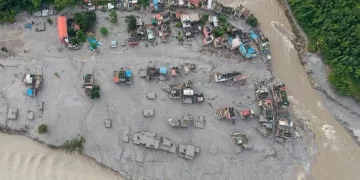
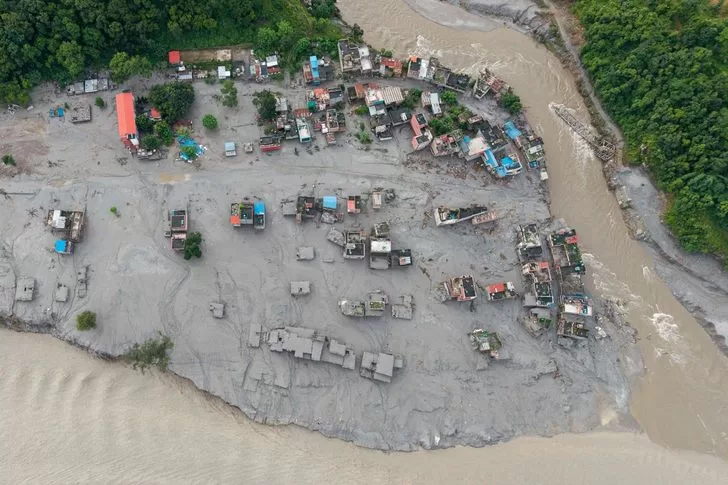
Images showed what appeared to be the second floors of buildings in Nepal’s hard-hit Nuwakot district slathered in mud after the torrent rushed by. Debris hung from tree branches and wires, vehicles were buried and some stunned survivors were caked in mud.
Nirajan Paudyal, a journalist based in Nepal’s capital of Kathmandu, worried for his parents and other relatives who live in the small village of Soley in the district.
“There is no update till now. I fear there won’t be any update,” Paudyal said.
The disaster has left at least 826 people missing in Nepal. Authorities in Tibet, an autonomous region of China, reported at least three dead and 558 missing.
Nepalese officials said that dozens of bridges were destroyed and nearly 40 kilometers (25 miles) of roads were damaged, complicating search efforts.
The Nepalese army has rescued more than 100 people from flood-affected areas through helicopter operations, army spokesperson Brig. Gen. Raja Ram Basnet said. Army teams also evacuated people trapped inside facilities linked to the Trishuli hydropower project, he added.
Dozens of injured people have been transported to Kathmandu for advanced medical care.

