



King Mohammed VI said on Friday that Morocco’s efforts to curb irregular migration had produced “concrete results,” but that the current co-operation model with Spain had reached its limits amid recurring crises.
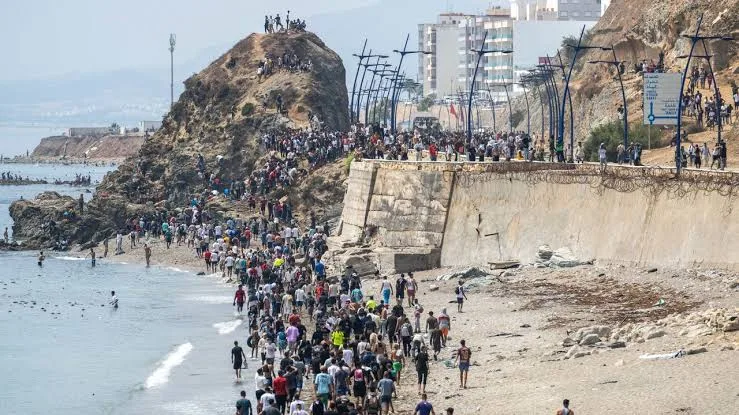
At least 70,000 people crossed from Morocco into the enclave of Ceuta in July.
Most have returned but thousands, including minors, remained.
Speaking at the parliament’s opening, the king cited “obsolete” and “unrealistic” Spanish court decisions that hindered co-operation on migration.
“They are regrettably impeding the repatriation of minors and of fake asylum seekers, while fuelling the greed of criminal networks,” he said.
Since the Ceuta migration crisis, Spanish opposition parties have blamed Pedro Sanchez’s government and accused Rabat of facilitating the crossing.
Morocco rejected the accusations, blaming the crossing on social media and misinterpretations of a court ruling that appeared to open a legal loophole for arrivals by sea.
Morocco’s partnership with Spain was a “sovereign choice” and “it will never be subject to any pressure, threat, or blackmail,” the king said. He added that Morocco would propose a vision centred on shared development, economic competitiveness and regional stability to its partners.
Relations between Morocco and Spain have improved since Spain backed Morocco’s autonomy plan for Western Sahara in 2022.
But bilateral ties have faced a test since the Ceuta migration crisis.
The king appointed Fatima Ezzahra El Mansouri as the country’s first female prime minister, after her party finished on top in the September 23 election.
He urged members of parliament to put young people at the heart of public policies.

