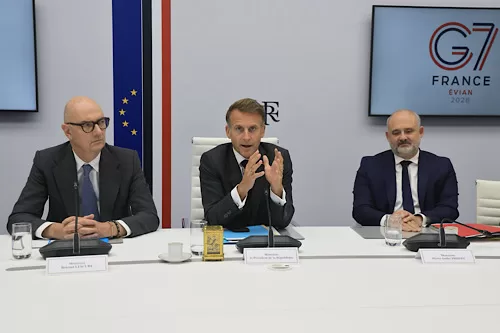



Group of Seven (G7) countries agreed on Friday to release 100 million barrels of diesel and crude oil from emergency reserves and pledged to refrain from energy export restrictions after pressure from US President Donald Trump.
The US led a pressure campaign on the European Union to draw down emergency diesel inventories, with the Trump administration warning that failure to act could lead to a US ban on diesel exports. Such a ban could sharply reduce supplies to Europe, which has become increasingly reliant on US diesel, and potentially inflict high economic costs on the bloc.
Trump is seeking to cool surging fuel prices ahead of the November midterm elections.
Trump told reporters at the White House before departing for Alabama that the US would not impose a diesel export ban. He said the plan was never really on the table, even though in the past two weeks he said several times that such a ban was under consideration, and that he supported the idea.
“Europe has a lot of diesel, and they’re going to be making a major world contribution, and so are we. And we’re not going to be doing the export ban. We’re going to be doing what we’re supposed to do,” Trump said.
The Iran war sparked the biggest emergency stock release ever of 400 million barrels in March, co-ordinated by the International Energy Agency (IEA).
“Taking into account commitments that have already been fulfilled, we will implement our commitments with a co-ordinated release through the IEA of 100 million barrels,” the G7 said in a joint statement.
It was uncertain how much of the petroleum in the new agreement would come from what remains from the March pact. IEA Executive Director Fatih Birol said this week that members had released about two-thirds of the 400-million-barrel agreement.
The release will begin immediately and last four months, with a substantial amount of diesel to be released within 20 days by G7 members and partners, the statement said.
It did not provide a breakdown of the volumes of crude, diesel and other products to be released or say which countries would participate. “We will convene in the context of the IEA in the coming days to discuss the possibility of additional diesel releases as necessary,” the statement added.

