






With the US midterms over, Democrats are turning to what could become one of their most crowded and unpredictable presidential primaries in decades, a 2028 contest likely to expose the party’s divide over how to win back the White House.
No Democrat has emerged as a clear favourite in a field that could attract dozens of contenders, while Republicans have a smaller group of widely discussed candidates, led by Vice President JD Vance and Secretary of State Marco Rubio, to succeed President Donald Trump, who is constitutionally barred from seeking a third term.
Potential Democratic candidates, including sitting governors and senators, have spent months cultivating donors, visiting states with early nominating contests and raising their national profiles, positioning themselves for a race that strategists expect to begin in earnest now that the midterms are over.
The sweeping victories by Democrats on Tuesday, when voters delivered a sharp rebuke to Trump and his agenda, will intensify discussions within both parties about how to win over an electorate unhappy with the country’s direction.
Despite their resounding victories on Tuesday, Democrats enter the 2028 campaign still divided over whether to tack to the centre or move further left on issues ranging from healthcare and taxes to policing and foreign policy.
Republican candidates will face a different challenge – how to distance themselves from Trump after Tuesday’s repudiation of his policies. They need to broaden their appeal beyond the president’s base while avoiding a break with the populist Make America Great Again movement that has come to define the party.
Trump, who has dominated the political landscape for a decade, may be reluctant to yield center stage, and his continued influence with MAGA followers could complicate the path of the party’s next standard-bearer.
Doug Sosnik, a Democratic strategist, said both progressives and moderates will claim vindication in their ideological approaches, ensuring an intense internal battle over the party’s future as the 2028 race begins in earnest.
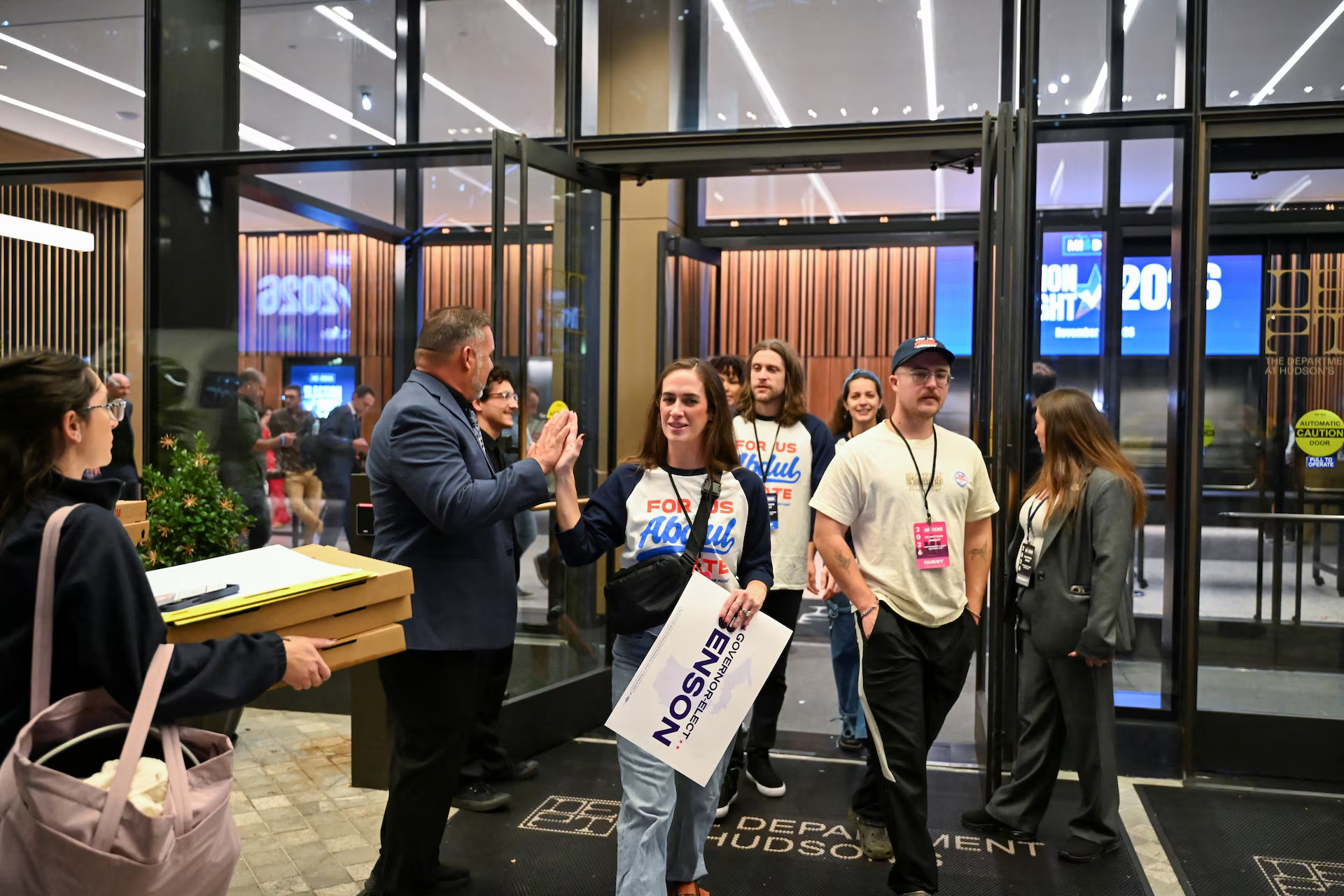
One of the most high-profile progressive wins came in the Michigan Senate contest, where Democrat Abdul El-Sayed easily defeated Republican Mike Rogers in a likely 2028 presidential swing state, becoming the first Muslim elected to the US Senate.
“All kinds of wings of the Democratic Party can find affirmation in the results last night,” Sosnik said on Wednesday. “I don’t think that anyone can, nor should they, try to contain the differences we have as a party.”
Several potential candidates have either acknowledged considering a White House run or declined to rule one out. Most spent the final weeks of the midterm campaign stumping for fellow Democrats in early nominating states such as Nevada, New Hampshire and South Carolina.

