



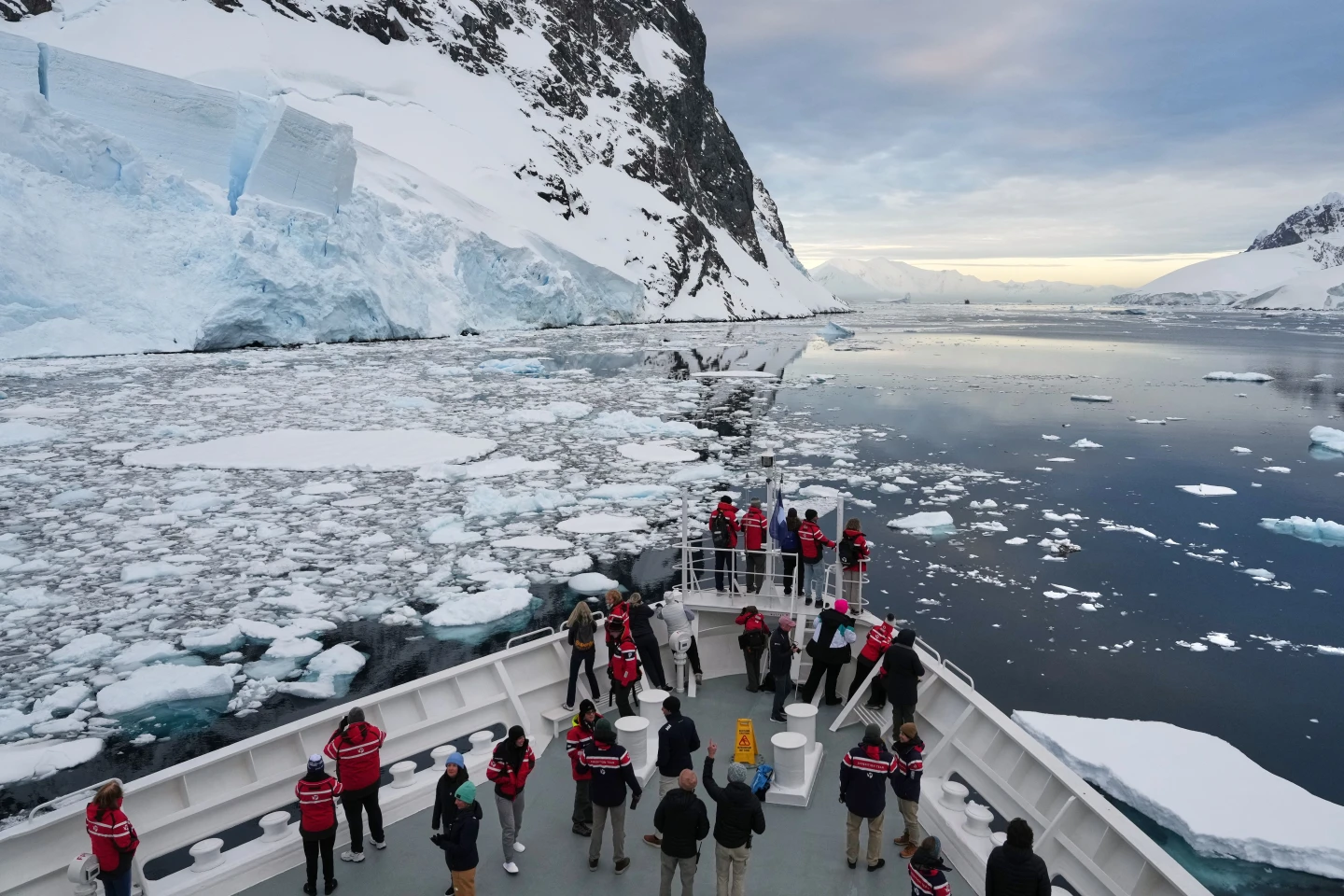
Driven in part by fears that the frozen landscapes of Antarctica may be irreversibly melting away because of climate change, tourism to the bottom of the world is soaring. And experts warn that with more visitors comes an increased risk of contamination, illness and other damage to the continent.
While visitor numbers are still small — in part due to the high costs and time it can take — they are growing so fast that scientists and environmentalists are sounding alarms.
A deadly outbreak of the rare hantavirus aboard a Dutch ship on a weekslong polar cruise has brought attention to the growing tourism trend.
Most expeditions head to the Antarctic Peninsula, one of the fastest-warming places in the world. From 2002 to 2020, roughly 149 billion metric tons (164 billion tons) of Antarctic ice melted per year, according to the National Aeronautics and Space Administration.
A common route is to voyage south from Argentina toward Antarctica before heading north up the coast of Africa — the same route taken by the cruise ship MV Hondius.
“The sites you will see in Antarctica are extremely unique and not replicable anywhere else on the planet — the whales, the seals, the penguins, the icebergs — it’s all really stunning and it makes a huge impression on people,” said Claire Christian, executive director of the environmental group Antarctic and Southern Ocean Coalition.

