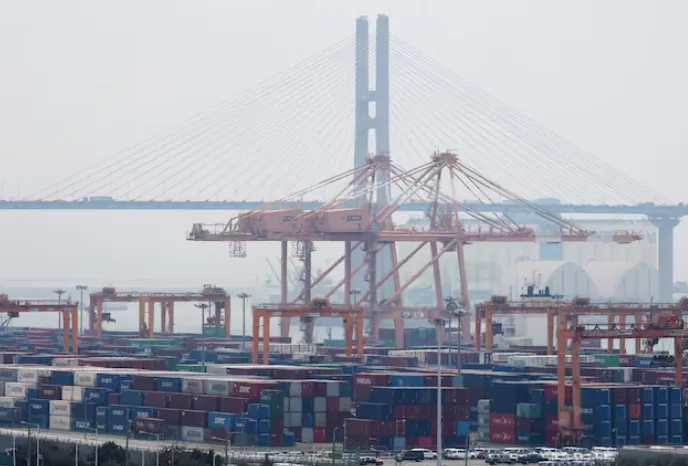









SEOUL – South Korea’s exports so far for this year have exceeded $1 trillion, driven by a global AI chip boom, making it the fourth country in the world to reach the milestone after Germany, the United States and China, Reuters reported.
Exports passed the $1 trillion mark at 0509 GMT on Thursday, compared with last year’s record of $709 billion, the trade ministry said.
The export surge has been led by the semiconductor sector as AI investment drives demand, while other traditional manufacturing sectors, such as autos, steel and ships, have lagged amid global protectionism triggered by US tariffs and geopolitical conflicts such as the Iran war.
In the first three quarters of 2026, semiconductor exports jumped 184% from a year earlier to account for 42% of the country’s total exports, more than double their average 20% share over the past five years.
“Now, we need to turn this achievement into sustainable growth. We will enhance the competitiveness of major industries and grow future growth engines, such as AI and bio,” President Lee Jae Myung said in a social media post on X.
“Most of all, the achievement in exports should improve the lives of the people. We will create ‘growth for all’, sharing the opportunities and fruits of growth with big and small companies as well as the capital area and regional areas,” Lee said.
Despite record exports, domestic demand in Asia’s fourth-largest economy remains weak, with the benefits of the export boom yet to trickle down to many households. Consumer sentiment has been hurt by high interest rates and prices, as well as unprecedented volatility in the domestic stock market.
As part of efforts to tackle widening inequality in a two-speed economy, the Lee administration plans to create a 162.3 trillion won ($121.94 billion) Future Response Fund to funnel excess tax revenue from the chip boom toward growth industries, young people, regional development and education.
“The government and the private sector will have to work together to strengthen the cycle of exports leading to domestic investment and job creation, as well as the revitalisation of regional economies, so that all people share the benefits of export growth in their daily lives,” the country’s six major business groups said in a joint statement, welcoming the $1 trillion milestone.

