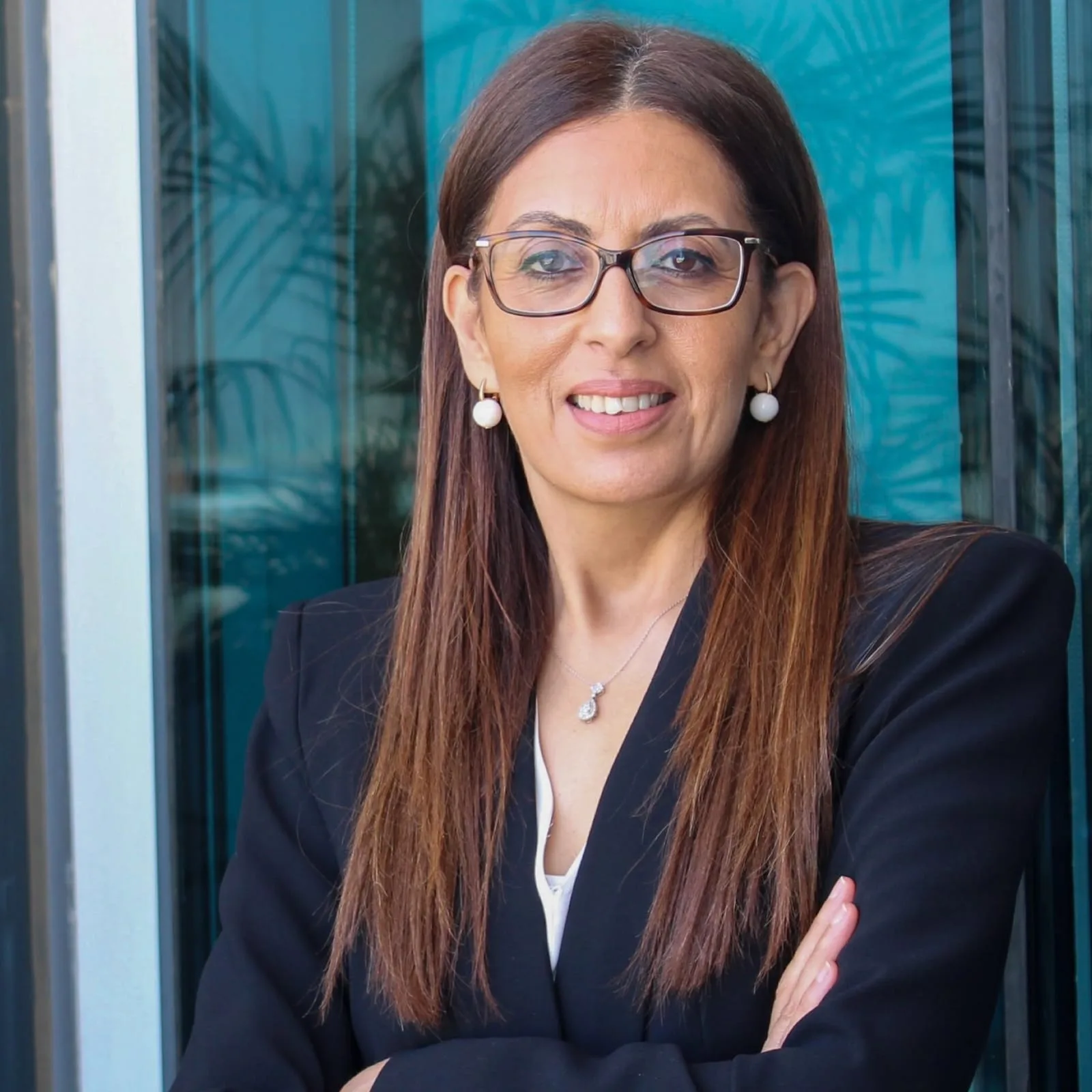












Raya Information Technology CEO discusses the launch of specialised businesses, new technology solutions, Egypt’s evolving digital landscape and opportunities for regional expansion
As the technology sector undergoes rapid transformation, competitive advantage is increasingly determined not by access to advanced technologies alone, but by how effectively businesses integrate them into their operations and translate them into measurable value.
Against this backdrop, Raya Information Technology is expanding its portfolio and strengthening its capabilities across artificial intelligence, cybersecurity and data centres, while continuing to develop its core activities in IT infrastructure, enterprise solutions and banking technology.
On the sidelines of the 30th edition of Cairo ICT 2026, held under the theme “AI in Action”, Marwa Abbas, CEO of Raya Information Technology, discusses the company’s evolving strategy, the role of its newly established specialised businesses, and its approach to addressing the changing needs of enterprises.
She also shares her assessment of Egypt’s technology market, emerging growth opportunities and the company’s ambitions in regional markets.
1. Raya has recently expanded into several technology segments. What are the strategic priorities shaping the company’s next phase, and how are you positioning the business to capture emerging market opportunities?
Our strategy is focused on strengthening our position in the areas expected to shape the next phase of the technology sector, particularly data centers, cybersecurity and artificial intelligence, while continuing to build on our established capabilities in enterprise infrastructure and banking technology.
This direction reflects a clear shift in market demand. Organisations are increasingly looking for integrated technology environments that combine infrastructure, applications, connectivity, security and managed services.
We are therefore developing our portfolio to address these requirements through specialised capabilities and a broader range of solutions.
As part of this strategy, we established specialized businesses in artificial intelligence and cybersecurity, while increasing the capital of Raya Network Services by LE100 million to support its data center infrastructure activities.
These steps are intended to strengthen our delivery capabilities in high-growth segments and enable us to address a wider range of enterprise requirements.
Our approach is to balance investment in emerging technologies with the continued development of our core business. We see significant opportunities in helping banks, telecommunications companies and large enterprises modernise their technology environments, while expanding into new areas where demand is accelerating.
2. Artificial intelligence is moving beyond experimentation into enterprise-wide adoption. How is Raya translating this shift into practical solutions, and what has been achieved through Raya Digital so far?
We believe that competitive advantages in the AI era will not come from simply having access to technology. It will come from integrating AI into business operations, redesigning processes and generating measurable returns.
This is the principle guiding our approach to AI development.
Through Raya Digital, we are translating advances into generative and agentic AI, intelligent automation and data analytics into practical enterprise applications. Its portfolio includes more than 40 solutions across AI, automation, data, integration and customer experience, with more than 15 solutions already deployed in live operating environments.
Our work has progressed beyond pilot projects, particularly in banking and financial services.
Applications include credit assessment, customer identity verification, collections, customer service, document processing and workflow automation.
We are also developing solutions for invoice and correspondence processing, human resources operations, call analytics, customer behavior prediction and intelligent assistants.Depending on the process and application, some of these solutions can reduce processing time by between 50% and 80%.
However, we assess success not only through efficiency gains, but also through improvements in service quality, decision-making and the overall customer experience.
Our priority is to ensure that AI applications address specific business needs and can be scaled across the organisation.
3. What must organisations put in place to move from AI pilots to large-scale deployment while ensuring security, governance and a clear return on investment?
AI adoption is not an isolated technology decision.
It requires organisations to reconsider how their operations are designed and to establish the technical and organisational foundations needed to use these technologies effectively.
Reliable, well-structured data is one of the most important requirements. Organizations also need specialised talent, clearly defined use cases, measurable performance indicators and a framework for evaluating the return on investment.
Without these elements, even promising AI projects may struggle to move beyond the experimental stage.
Governance, data protection and regulatory compliance are equally important, particularly in financial services and other sectors handling sensitive information. Organisations must establish clear accountability, risk management and oversight mechanisms as they expand their use of AI.
Ultimately, successful adoption depends on combining management commitment with technical readiness and workforce development.
We see AI as a transformation in how businesses operate and make decisions, rather than simply another technology project.
4. Data centers are becoming a strategic component of national digital infrastructure. What is Raya doing to expand its presence in this market, and what do your recent investment moves indicate?
We see data centers as a long-term growth area, driven by increasing demand for cloud services, data storage, advanced computing and AI workloads.
The expansion of digital services is creating a need for reliable infrastructure that can support growing capacity requirements while maintaining security, availability and operational resilience.
Through Raya Data Centre, we are developing a portfolio that includes cloud services, colocation, hosting, professional technology services and managed services.
We are also working to provide advanced computing capabilities, including GPU-as-a-Service, which gives organisations access to the processing resources required for demanding AI applications without having to make the full infrastructure investment themselves.
Our collaboration with Africa50 to develop a Tier III data center in Egypt, with a total announced investment of $25 million, is an important part of this direction.
In addition, in September 2026, Raya Holding announced approval for a capital investment of up to $60 million through Raya Information Technology to finance a proposed acquisition of an existing data center facility in Egypt.
The proposed transaction remains subject to the completion of the necessary procedures and approvals.We have also increased the capital of Raya Network Services by EGP 100 million to support data centre construction activities.
Together, these initiatives reflect our intention to strengthen both the infrastructure assets and technical capabilities needed to serve the market’s evolving requirements.
5. Cybersecurity is becoming inseparable from digital transformation.
How is Raya Cyber Solutions addressing the changing security requirements of businesses?
As organisations become more dependent on digital platforms, cloud environments and interconnected systems, cybersecurity has become a core business requirement.
It is no longer sufficient to deploy individual security products, institutions need an integrated approach covering risk assessment, prevention, monitoring and incident response.
Raya Cyber Solutions was established to strengthen our capabilities in this area.
Its portfolio includes more than 45 services across eight domains, covering governance, risk and compliance, infrastructure and data protection, application security, threat monitoring and incident response, business continuity, and the security of emerging technologies, including AI applications.
Our services also address vulnerability management, cloud security and security operations through continuous monitoring and response capabilities.
We aim to help clients build a more comprehensive security framework tailored to their operating environments and risk profiles.
This is particularly relevant to banks, telecommunications companies and large enterprises, where security incidents can affect service availability, customer trust and business continuity.
Our broader expertise in infrastructure, networks and data centers also enables us to connect cybersecurity with the underlying technology environments we help clients build and manage.
6. Raya has a 25-year partnership with Diebold Nixdorf. How is this relationship evolving beyond traditional ATM solutions, and what opportunities are emerging in retail technology?
Our partnership with Diebold Nixdorf has evolved alongside the changing needs of the banking sector.
Over 25 years, we have moved beyond ATM supply into a broader range of services covering deployment, maintenance, operations, cash automation, predictive analytics and self-service banking solutions.
Our installed base represents more than 60% of the ATMs operating in Egypt, reflecting our established position in this market.
Today, we are focused on helping banks manage their ATM networks as integrated parts of their wider service infrastructure.
Solutions such as AllConnect Data Engine support proactive monitoring and operational performance, while Vynamic Security addresses physical, logical and cybersecurity requirements.
We also provide advanced ATM series, including the DN 300 and DN 350, alongside self-service technologies that enable customers to complete more banking transactions with less reliance on branch staff.
An important development is the expansion of our offering into Diebold Nixdorf’s Retail Solutions portfolio.
This allows us to extend our expertise into the retail sector through point-of-sale systems, self-service checkout, retail software and AI-enabled applications that support product recognition, payment processes and loss prevention.
For retailers, the value goes beyond faster checkout.
These technologies can help reduce waiting times, improve store operations, optimize workforce allocation and strengthen control over transactions.
This expansion also allows us to diversify the sectors we serve while building an established international technology partnership.
7. How do your partnerships with Cisco complement Raya’s capabilities, particularly as enterprises move towards more connected and hybrid technology environments?
Our partnerships with global technology providers are an important part of our ability to deliver integrated solutions that meet increasingly complex enterprise requirements.
Through our collaboration with Cisco, we provide enterprise networking and communications infrastructure, connectivity and collaboration solutions, alongside cybersecurity capabilities covering network and data protection, access management and threat detection.
The scope also extends to data centers, AI-related infrastructure, smart workplaces, digital resilience and customer experience, as well as solutions for telecommunications service providers.
The value we bring lies in combining these global technologies with our local expertise in consulting, systems integration, implementation and managed services.
This enables us to adapt solutions to each client’s operating environment and ensure that technology investments translate into practical business outcomes.
8. How do you assess the outlook for Egypt’s technology market, and where do you see the strongest opportunities compared with global and regional trends?
The Egyptian market is entering a period of growing demand for digital infrastructure, data center capacity, cloud services, cybersecurity and AI applications.
These developments are consistent with global trends, although the pace and requirements of adoption differ across sectors and markets.
Financial services and telecommunications remain important drivers of technology investment, while government, energy, retail and large enterprises are also expanding their digital capabilities.
We expect demand to grow not only for infrastructure and systems integration, but also for specialised services that help organisations operate, secure and continuously improve their technology environments.
Globally, the expansion of AI is increasing demand for advanced computing, data centers and secure cloud infrastructure.
At the regional level, particularly in Saudi Arabia and the Gulf, large-scale digital transformation programs are creating opportunities for technology providers with strong implementation and operational capabilities.
For Egypt, this creates a dual opportunity: developing the local infrastructure needed to support digital growth, while strengthening its position as a base for exporting technology services.
We see considerable potential in delivering software, automation, data analytics, cybersecurity and managed services from Egypt to regional clients.
9. What are Raya’s priorities for regional expansion, and how do you see Egypt contributing to the company’s growth beyond its domestic market?
Our approach is to strengthen our position in Egypt while expanding our regional business, particularly in Saudi Arabia and the Gulf markets.
We have an established presence in Egypt, Saudi Arabia and the UAE, providing a platform to serve clients across the region and build on our experience in enterprise technology and digital infrastructure.
We are focusing on opportunities in data centers, cloud computing, cybersecurity, AI and managed services, alongside our established systems integration and enterprise technology activities.
We also see potential to expand the export of technology services delivered from Egypt, including software development, automation, data analytics and outsourced technology operations.
Egypt has an important role to play in this strategy, not only as a major market in its own right, but also as a source of specialised talent and technology services.
Our objective is to combine local expertise with regional market opportunities, building long-term client relationships and delivering solutions that can scale across different markets.
Our workforce is a central part of our ability to deliver and expand our technology capabilities. Raya Information Technology employs more than 1,500 people, and we are continuously developing their skills in areas such as AI, cybersecurity, cloud computing, data engineering and software development.
We focus on continuous training, practical professional development and knowledge transfer through our technology partnerships.
We also work to prepare talent in line with actual market requirements through training and employment programs, including Raya Tech University, which aims to equip graduates with relevant skills and improve their readiness for the labor market.
As the industry evolves, the demand for specialised talent will continue to increase.
Our priority is therefore not only to recruit for immediate business needs, but also to build a sustainable base of local expertise capable of developing solutions, supporting regional expansion and contributing to Egypt’s wider technology ecosystem.

