











With his approval at a record low and petrol above $4 a gallon, president Trump faces his 1st national test since returning to office
In a few days, Americans will vote in midterm elections that look less like a routine party contest than a referendum on a president nearing the end of his second year back in the White House. All 435 House seats are up for grabs, along with roughly a third of the Senate and 36 governorships. Democrats hope to win at least one chamber of Congress and, with it, a brake on Donald Trump. Republicans, who have held both since 2024, are fighting to preserve the freedom that control has given him.
One issue dominates the campaign, the cost of living. Democrats accuse the administration of failing to tame inflation and blame Trump’s tariffs for part of the squeeze. They also point to the war with Iran, which has pushed the average price of a gallon of petrol from about $3 to above $4, according to the American Automobile Association. They want the enhanced health insurance subsidies that lapsed in 2025 restored, and higher taxes on top earners. Republicans defend the president’s economic record and lean on immigration, their traditional rallying cry, and on Trump’s personal appeal. It is a risky bet. An August Reuters/Ipsos poll put his approval rating at 33 per cent, the lowest of his second term, and found that only 31 per cent of Americans backed the war.
For the president, the stakes are considerable. Republican majorities have allowed him to govern with few constraints, often by decree: he has signed about 290 executive orders this term, against 220 in the whole of his first. Losing the House would bring subpoenas, investigations and a stalled legislative agenda, and some even predict renewed impeachment proceedings. Yet Congress’s power to undo his orders should not be overstated. Reversing one needs both chambers to agree, the president can veto, and overriding a veto requires a two-thirds majority. Even so, governing would become markedly harder if Democrats won only one chamber.
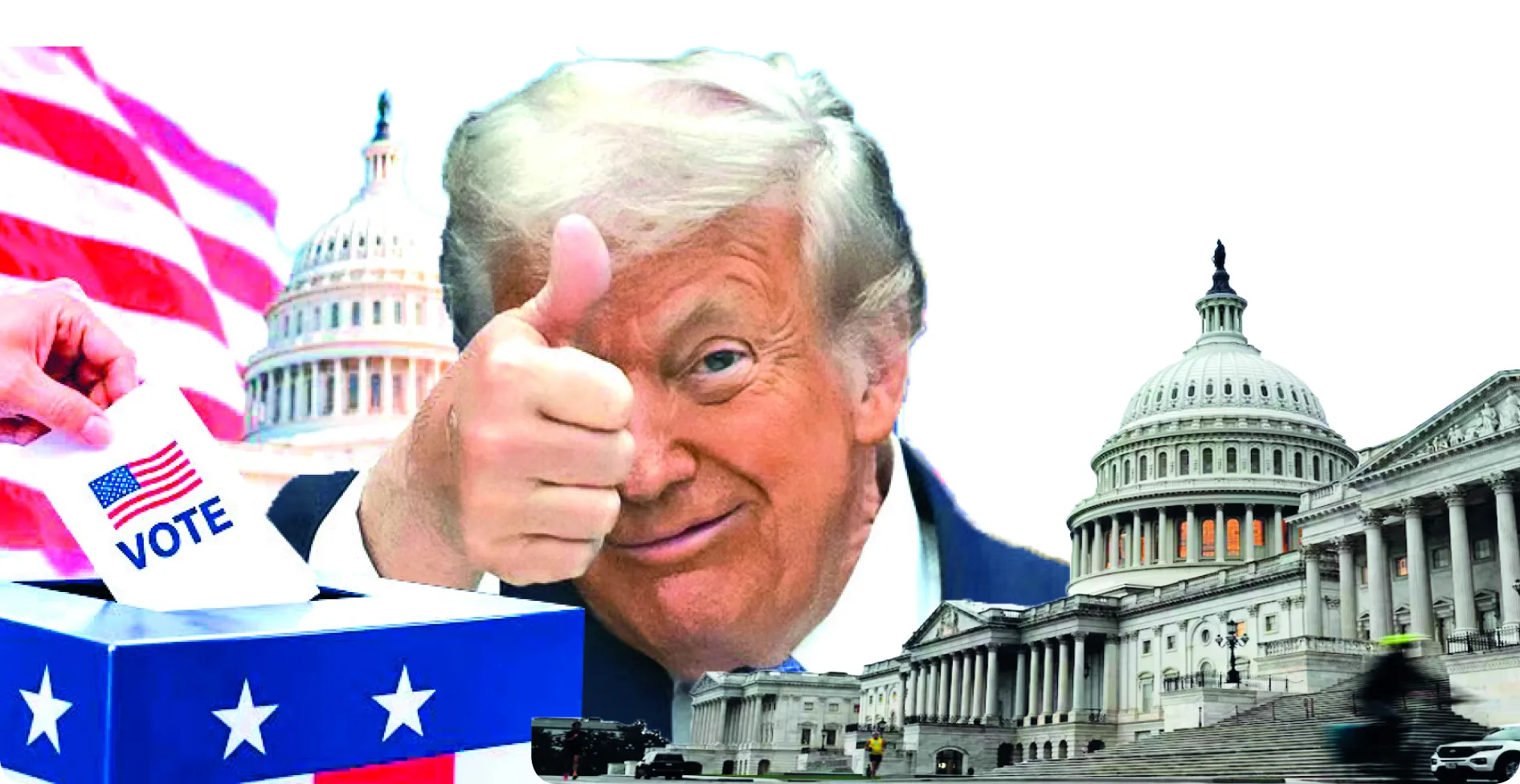
So what are their chances? In the House they are clear favourites, with prediction markets putting their odds at about 85 per cent. The Senate is a harder climb. Republicans hold 53 of the 100 seats; Democrats, together with two allied independents, hold 47 and need a net gain of four to take control. They must do so while defending every seat they have, and the markets rate the chamber close to a coin toss. The battlegrounds include North Carolina, Maine, Alaska and Ohio, but the biggest prize is Texas.
There, the Democrat James Talarico, a 37-year-old former teacher, leads the Trump ally Ken Paxton, the state’s attorney general, by two points in both a University of Houston poll (48 per cent to 46 per cent ) and a Fox News poll (51 per cent to 49 per cent ). Both leads sit within the margin of error. The cost of living is the top concern: 68 per cent of likely voters call it extremely important, and 35 per cent say they are falling behind financially, against 16 per cent getting ahead. About a fifth of those who backed the incumbent senator, John Cornyn, in the Republican primary and runoff now say they support Talarico. In the governor’s race, however, Greg Abbott, seeking a fourth term, leads Gina Hinojosa by 49 per cent to 46 per cent , a reminder that any Democratic wave will not wash over everything.
The consequences reach far beyond America’s borders. The US-Israeli war on Iran, launched on 28 February, is the campaign’s most prominent foreign-policy issue. The House has passed three resolutions seeking to end it or to require congressional authorisation, with seven Republicans joining Democrats in the latest. The Senate passed one in June, only for Republicans to reverse course the next day after Trump berated them. Last month, it narrowly rejected another. Such measures are largely symbolic, since a veto would sink them. The sharper weapon is the power of the purse, and a Democratic House could turn it into real leverage over the war’s funding. A Republican hold, by contrast, would give the president freer rein and the Middle East two more years of uncertainty.
History suggests that presidents weakened at home often turn abroad in their final stretch, and Trump’s ambitions look anything but peaceful. Vladimir Putin has reportedly proposed a summit with Trump and Xi Jinping in China next month. Critics fear it could nudge the world towards a carve-up into spheres of influence, leaving Europe and east Asia most exposed. Even the Wall Street Journal’s editorial board has reportedly dismissed the proposal as possibly the worst idea of his second term.

Caution is warranted. Polls have underestimated Republican strength in recent years, and much will turn on fuel prices and the course of the war in the days that remain. But whatever the outcome, on November 3 American voters will decide how much freedom Trump would enjoy over the next two years, and the whole world has a stake in the answer.
Mohamed Fahmy
Editor-in-Chief
The Egyptian Gazette

