




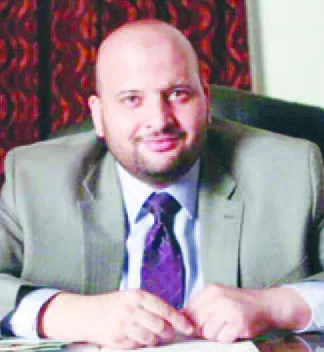
Ibrahim Negm
Every year, as the Mawlid al-Nabi approaches, I find myself returning to the same question: what does it actually mean to celebrate the birth of the Prophet Muhammad, peace be upon him? Not the question of how many lights we hang, or how elaborate our gatherings become, but the deeper one — what changes in us because of this day?
The Quran describes the Prophet’s mission in a single, sweeping phrase: “We did not send you except as a mercy to the worlds.” Not a mercy to Muslims alone, not a mercy confined to believers, but a mercy extended to “the worlds” — an address so vast it includes every human being, every creature, every corner of creation. This is not a poetic flourish. It is the operating principle of his entire life and mission, and it is the standard by which we ought to measure our own observance of his birthday.
I say this because I worry that we have allowed the Mawlid to become an occasion primarily of sentiment rather than substance. We recite his praises, we light up our streets, we distribute sweets to children, and there is nothing wrong with any of that. But if the day passes and we return to our ordinary harshness — in our households, our workplaces, our public discourse — then we have missed something essential. The Prophet himself modeled how to receive this blessing: he fasted on Mondays, explaining simply, “That is the day I was born.” His gratitude was an act, not merely a declaration.
What would it mean to take mercy seriously as the defining characteristic of this occasion?
It would mean, first, revisiting how we treat the vulnerable among us — the poor, the orphaned, the elderly, the stranger. The Prophet once said that one who cares for a widow or the destitute is like one who strives in the way of God, or like one who fasts by day and prays through the night. That is an extraordinarily high moral valuation placed on ordinary acts of care. It suggests that mercy is not an abstract virtue to be admired from a distance, but a discipline to be practiced in specific, often unglamorous ways: visiting the sick, feeding the hungry, checking in on someone who has been forgotten.
It would also mean examining the tone of our public conversations. We live in an age of instant reaction, where outrage travels faster than understanding, and where religious and political disagreements are increasingly conducted with a cruelty that would have been unrecognisable to the man whose birth we are commemorating. The Prophet was once asked about a matter and responded, “Indeed, God is gentle and loves gentleness, and He grants for gentleness what He does
not grant for harshness.” This is not a minor aside in his teachings; it is close to the centre of his method. He built one of history’s most consequential communities not through intimidation but through patience, through a willingness to absorb insult without returning it in kind, through an insistence that strength and gentleness were not opposites but partners.
There is a particular relevance to this in Egypt today, and across our region more broadly, where public discourse – online and off – often rewards the loudest and harshest voice rather than the wisest one. If the Mawlid is to mean anything beyond nostalgia,
it should function as an annual audit of our collective temperament. Are we, as a society, becoming gentler or harsher? More forgiving or more vindictive? More attentive to our weakest members or more indifferent to them?
None of this requires abandoning the joy of the occasion. Communal celebration, recitation, gathering – these have their place, and they are not incidental to faith. But joy without transformation is incomplete.
The Prophet’s birth was not simply an event
to be remembered; it was the beginning of a moral project that continues to make demands on us. This year, as sweets are distributed and streets are lit, I hope we ask ourselves honestly whether we have carried forward the mercy he embodied, or merely admired it from a comfortable distance. The difference between the two is the entire meaning of the day.
By Ibrahim Negm
Senior Advisor to the Grand Mufti of Egypt

