








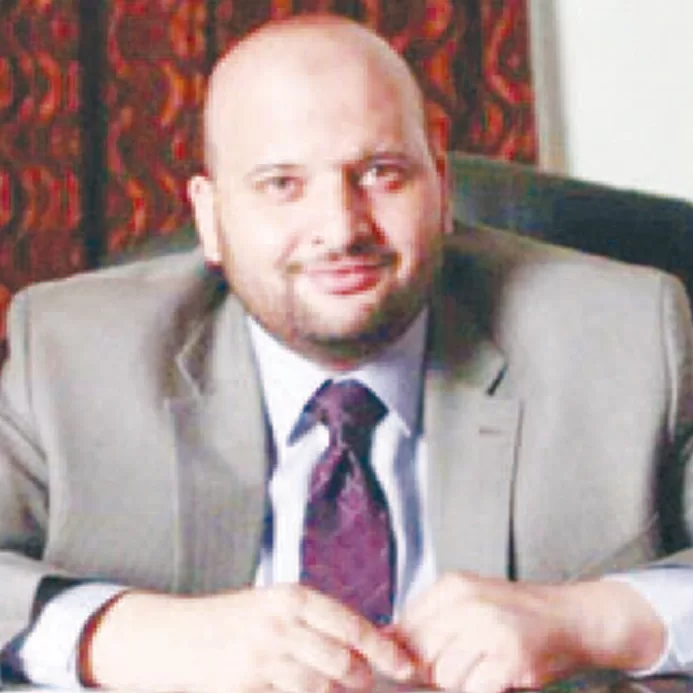
By Ibrahim Negm
The debate over artificial intelligence is no longer an intellectual luxury, nor a matter confined to science-fiction films and futuristic novels. The extraordinary speed of technological development, and AI’s expanding presence in the economy, education, media, health care, security, and human relationships, require us to treat it as a civilisational, ethical, and public-policy issue.
The recent resignation of a researcher from Anthropic, followed by his public warning on social media that increasingly capable AI systems could pose an existential threat to humanity, should, therefore, be read as another alarm bell. The point is not to surrender to panic or regard every warning as an inevitable prophecy. It is to recognise that such concerns are being voiced by people who work close to the frontier of these systems, who understand both what advanced models can already do and what they may be capable of doing in the near future.
We must resist two opposite temptations. The first is alarmism that portrays AI as an uncontrollable technological demon. The second is naïve reassurance—the assumption that every innovation is inherently beneficial and needs no meaningful oversight. A wiser approach lies between them. Artificial intelligence is a powerful instrument: it can help diagnose disease, expand access to knowledge, improve education, and make public services more effective. Yet the same technology can facilitate deception, invade privacy, manufacture false images and voices, spread misinformation at scale, intensify surveillance, and contribute to the development of increasingly autonomous weapons.
The central problem is not technology in itself. It is the absence of responsibility in the way technology is designed, deployed, and governed. When the race to release more capable systems becomes more important than demonstrating that those systems are safe, society has a serious moral problem. Humanity must not become the testing ground for products whose consequences have not been adequately understood. Commercial advantage and technological prestige cannot take precedence over people’s safety, dignity, livelihood, and right to reliable information.
From an Islamic ethical perspective, power cannot be separated from responsibility, and knowledge cannot be separated from trust. The Qur’anic vision of human beings cultivating the earth is inseparable from the duty to avoid corruption and harm. That principle has particular force in the age of AI. Scientific progress should serve human beings; human beings should not be reduced to passive subjects of systems they neither understand nor control.
This does not mean rejecting science or resisting innovation. Religious and ethical traditions should not be invoked as excuses for technological stagnation. Knowledge that benefits humanity is a blessing, and societies should invest in research, education, and technological capacity. But beneficial innovation requires moral foresight: the willingness to consider consequences before they become irreversible. It is no longer sufficient to ask whether we can build a certain system. We must also ask whether we should build it in this form, under what conditions, for whose benefit, and with what safeguards if it fails or is misused.
No country can solve this problem alone. Digital risks cross borders instantly, while regulation remains largely national and fragmented. If one state adopts strong safeguards while another rewards unrestrained deployment, the result may be a dangerous race to the bottom. Governments, technology firms, universities, civil-society organisations, and international institutions must therefore work toward common standards that place human safety above short-term commercial competition.
Religious, educational, and cultural institutions also have an indispensable role. They should help shape a public culture in which technological power is assessed through the values of human dignity, justice, truthfulness, privacy, and the prevention of harm. They must also strengthen public awareness, especially among young people, about the dangers of fabricated videos, cloned voices, falsified religious statements, and online impersonation. AI can imitate the appearance, speech, and style of trusted figures with increasing sophistication. This makes verification and reliance on credible sources not merely good habits, but civic and ethical necessities.
Warnings from researchers working inside leading AI companies should not be casually dismissed. They are neither a reason for despair nor a license for fear. They are a call for vigilance, regulation, and moral seriousness. The future will not be shaped simply by those who possess the most powerful machines. It will be shaped by those who possess the wisdom to direct them, the conscience to restrain them, and the laws to ensure that technology remains a tool for human flourishing rather than a source of human peril.
Ibrahim Negm
Senior Advisor to the Grand Mufti of Egypt

