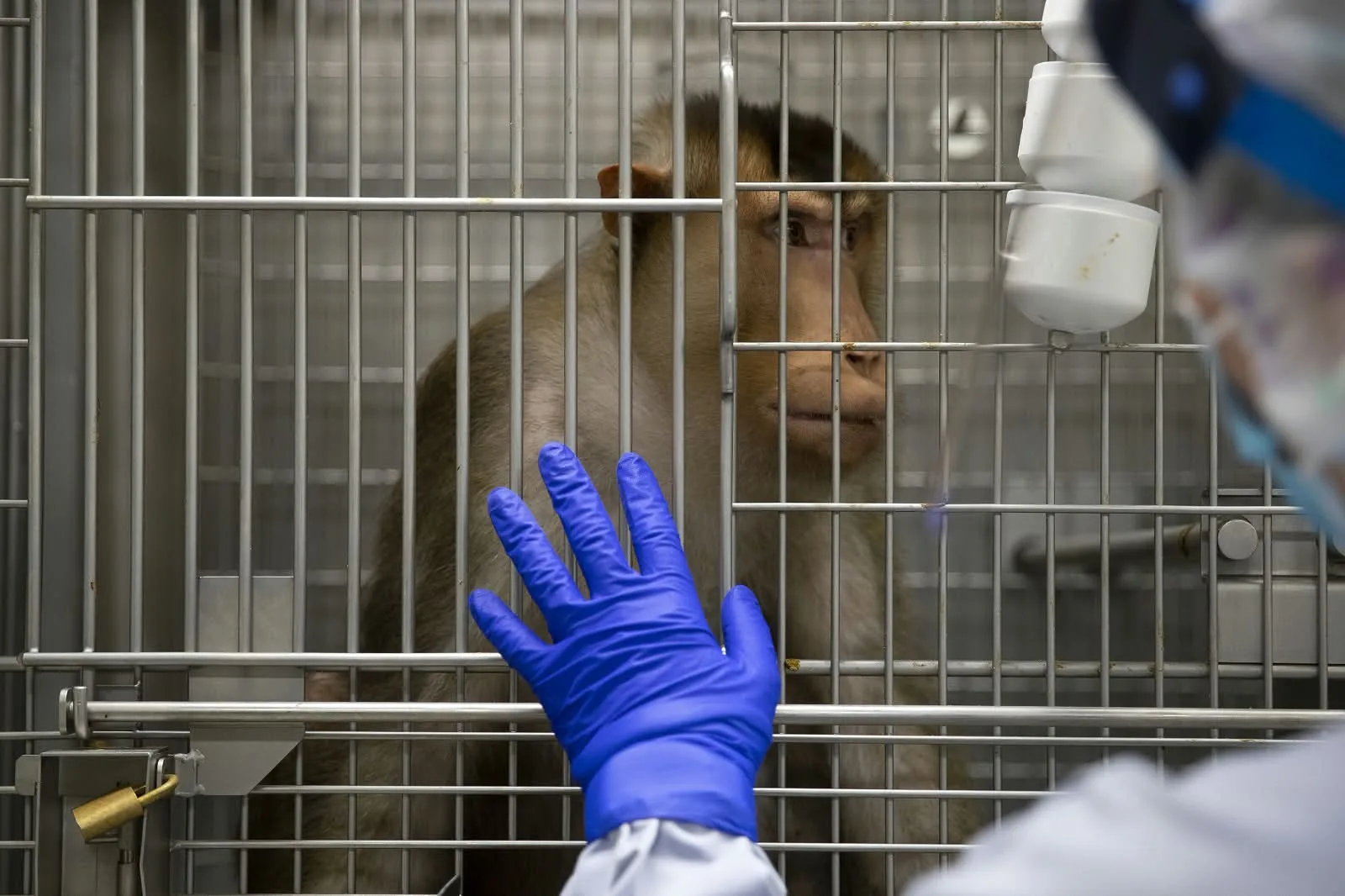









WASHINGTON – The price of laboratory monkeys in the US has surged from $3,000 to $20,000 in recent years, an increase of around 570 per cent. Now one of Palantir’s billionaire co-founders is seeking to capitalise by breeding 30,000 of the animals in the United States.
The US-based platform Moneywise reported that Palantir co-founder Joe Lonsdale, whose company is listed on the Nasdaq technology index, is backing a startup that aims to breed tens of thousands of monkeys for laboratory experiments. The move comes amid a years-long shortage that has driven prices sharply higher and forced medical researchers to rely heavily on foreign suppliers.
The issue has attracted widespread attention from several US newspapers and magazines. Forbes reported that the startup, named Human Medicine, has raised $28 million since its establishment in 2023. The company plans to build a breeding facility in Bainbridge, Georgia, which could eventually house up to 30,000 long-tailed macaques. The species is widely used in pharmaceutical research because of its biological similarities to humans.
Forbes noted that the shortage has also driven a dramatic rise in prices. Journalist Ole Lehmann highlighted the increase in a post on X, saying prices had risen from around $3,000 per monkey in 2019 to more than $20,000 today.
Historical data shows the scale of the rise. According to Evercore estimates cited by The Washington Post, the cost of monkeys supplied by Charles River Laboratories, a major provider of animals for clinical trials, climbed from around $2,500 in 2019 to $22,000 in 2022.
Lehmann attributed the shortage to the COVID-19 pandemic. China, previously a major supplier of research monkeys to the US, imposed export restrictions, forcing American laboratories to look elsewhere.
Cambodia subsequently emerged as an important supplier. But a federal investigation into allegations that wild-caught monkeys had been smuggled disrupted supplies to the US even further.
Expanding domestic breeding could help reduce America’s reliance on imports. It would not happen overnight, however. Female macaques reach sexual maturity at around four years of age and typically give birth to only one offspring a year.
Lehmann reported that CEVR Human Medicine had proposed initially importing between 500 and 1,000 macaques from breeding centres in Asia. Numbers would then grow gradually to 30,000 over 20 years.
The plans have drawn opposition from animal rights groups and organisations. In a 2025 report, the Animal Welfare Institute called for an end to the international trade in long-tailed macaques, noting that the species is endangered. The institute also voiced concern over expanding breeding operations in the US, citing escapes, injuries and deaths at existing facilities across the country.
Opposition has not been limited to animal welfare groups. The Associated Press reported that residents of Bainbridge have also objected to the $396 million breeding complex proposed by CEVR Human Medicine in their city.
The project initially won strong backing from local authorities. In December 2023, officials approved the allocation of around 200 acres of land, a 10-year property tax exemption and the issuance of up to $300 million in revenue bonds by municipal authorities, according to court documents. In return, CEVR Human Medicine pledged to create up to 263 jobs and inject $270 million into the local economy, according to the Bainbridge-Decatur County Development Authority.
Just two months later, however, local officials withdrew their support amid growing public opposition. Lacey Shepard, a local real estate agent, told NPR that the controversy had led some prospective buyers to back out of property purchases. Other residents raised concerns about the project’s potential impact on home values and the possible contamination of local water supplies.
“We are talking about invasive animals, and having 30,000 of them means we will be surrounded by monkeys,” a local resident told the Associated Press in 2024.
Meanwhile, the US Food and Drug Administration (FDA) is moving in a different direction. It is encouraging the use of artificial intelligence and other technologies to reduce animal testing, although the transition could take years.
Media reports last year indicated that animal testing remains a standard part of drug development. Laboratory safety studies involving monoclonal antibodies, for example, typically take up to six months and use an average of around 144 non-human primates, at a cost of $50,000 per animal.
Nevertheless, some industry executives believe artificial intelligence could eventually eliminate the need for animal testing altogether.
“We have reached a point where we no longer actually need to do this,” said Patrick Smith, head of drug development solutions at Certara.
