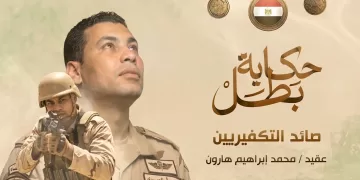




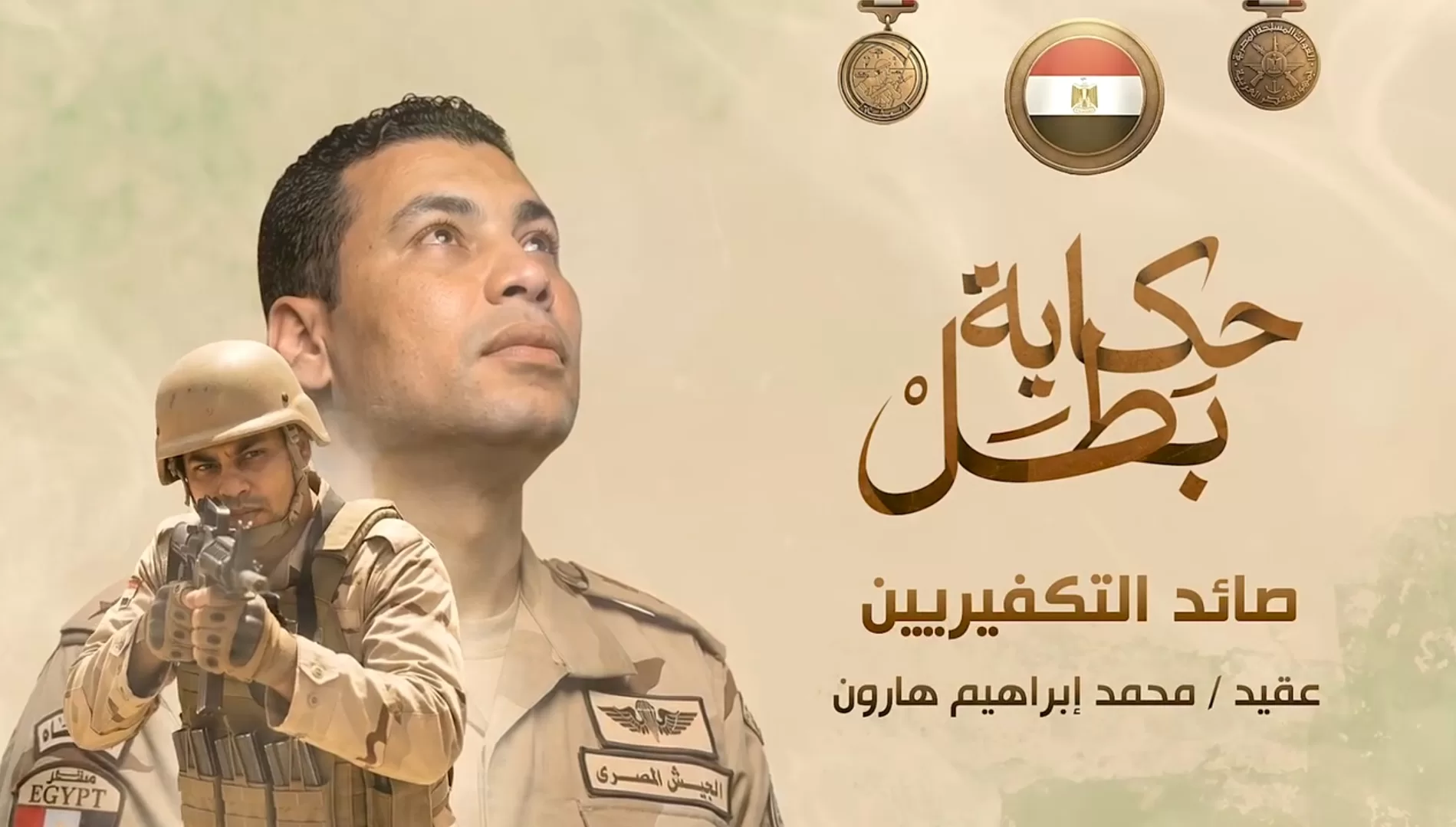
Egypt’s Armed Forces have released a new episode of the documentary series “Hekayat Batal” (A Hero’s Story), recounting the life and sacrifice of Colonel Mohamed Ibrahim Haroun, an officer remembered by comrades for his unconventional tactics, courage and humanity during Egypt’s counter-terrorism operations in North Sinai.
The episode, published on the official platforms of military spokesperson Brigadier General Staff Gharib Abdel Hafez, forms part of an ongoing effort to document the stories of servicemen who laid down their lives defending the country.
Through testimonies from fellow officers and soldiers, the documentary portrays Haroun as a commander whose methods consistently caught terrorists off guard.
“His way of thinking was never conventional,” recalled Brigadier General Staff Ehab Yassin El-Mensi. “He used to surprise the terrorists before he even surprised us.”
His repeated successes in Sheikh Zuwaid, Al-Goura and southern Al-Goura earned him a reputation among comrades as the “Sayyad El-Takfereyeen” Hunter of Terrorists
According to officers who served with him, Haroun rejected traditional defensive tactics. Whenever his unit came under attack, he preferred taking the initiative and charging toward the source of fire, often forcing attackers to flee.
“He had a style unlike anyone else,” one officer recalled. “The terrorists never expected him to move toward them. They always expected us to take cover.”
Those who knew him personally described him as far more than a commander.
Newly assigned soldiers remembered finding in him the spirit of an elder brother and a mentor who guided and educated his men.
Before every mission, he would repeat the same advice:
“Leave your heart behind in the outpost. Do not let emotions control you.”
His humanity extended beyond the battlefield.
During one prolonged siege that left troops with limited food and water, Haroun ordered his men to give part of his own water ration to an elderly Sinai woman who had come seeking help.
On another occasion, after a wounded terrorist who had moments earlier attempted to kill one of his soldiers was captured, Haroun surprised everyone by ordering his men to give the man water.
“You could lose your life in a second,” he told them. “But now he is in your hands. Give him water and try to save him.”
His compassion and respect earned him the affection of many residents across North Sinai.
According to comrades, news of his death deeply saddened local communities that had come to know and trust him.
Two days before his death, Haroun paid a lengthy visit to one of his close friends, sharing details about his work and experiences.
“When I asked why he was telling me all of this, he said: ‘I want you to know everything now. Nobody knows what may happen tomorrow,’” his friend recalled. “I felt as though he was saying goodbye.”
On the day of his martyrdom, Haroun was leading efforts to secure the route between Sheikh Zuwaid and Al-Goura ahead of a supply convoy.
After terrorist elements planted an improvised explosive device in the Al-Wahshi area, he deployed his men and personally took position in the sector facing the greatest danger while military engineers worked to neutralise the threat.
The device exploded, and a metal fragment severed a major artery in his leg.
His men rushed him aboard an M113 armoured vehicle toward the nearest medical point, but after spending nearly half an hour among his soldiers, Colonel Mohamed Ibrahim Haroun succumbed to his wounds.
“We lost a great man,” one comrade said. “No words can describe the grief. We lost a officer distinguished not only by his courage, but by his morals, his humanity and the way he treated everyone around him.”

