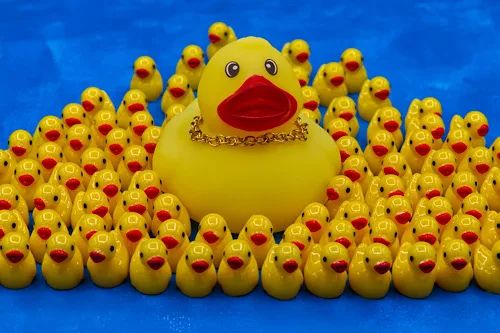











It’s not just a squishy noisemaker. The rubber duck is an American invention with a deep and rich past.
The cute, often yellow toys have seen a resurgence in recent years, especially in tourist shops from the US Open to Buckingham Palace, and are beloved across the world.
The duck’s origin story was forged in fire, according to popular lore. Charles Goodyear, inventor of vulcanised rubber, is said to have shaped leftover rubber into a duck as a chew toy for dogs and a teething aid for babies.
Vulcanisation made the rubber waterproof and mostly indestructible, but also heavy. It wasn’t until 1931 that Elenore Shannahan revised the design so it would float and become part of bathtime fun. The patent states her toy could “produce a fountain-like effect, and enable the playing of pranks by one person on another by the squirting of a fine stream of spray upon the face or other parts of a person.”
The Walt Disney Co. and Seiberling Latex Products created a floating Donald Duck water toy in 1938, which helped the rubber duck become popular around the globe. The vinyl duck known today traces to sculptor Peter Ganine’s 1947 design, according to St. Neots Museum.
When the rubber duck was inducted into the National Toy Hall of Fame, the museum said its “bright colour, smooth texture, and (for some) squeaky or quacky sounds sharpen toddlers’ senses,” solidifying its usefulness around the house.
The bath toy also inspired a Billboard hit. “Rubber Duckie” peaked at No. 16 on the Hot 100 in the magazine’s Sept. 26, 1970, issue. The song earned the first Grammy nomination for Jim Henson, the voice of Ernie on “Sesame Street,” according to the Grammy Awards website.
In 1992, a spill of 29,000 plastic bath toys, including rubber ducks, into the North Pacific Ocean created both a mess and a large scientific experiment, Allison Boyle of the Science Museum in London said on its website. Oceanographers Curtis Ebbesmeyer and James Ingraham used reports from beachcombers to track the toys around the world, not only to follow the plastic debris but also to “refine their models of ocean surface currents.”

