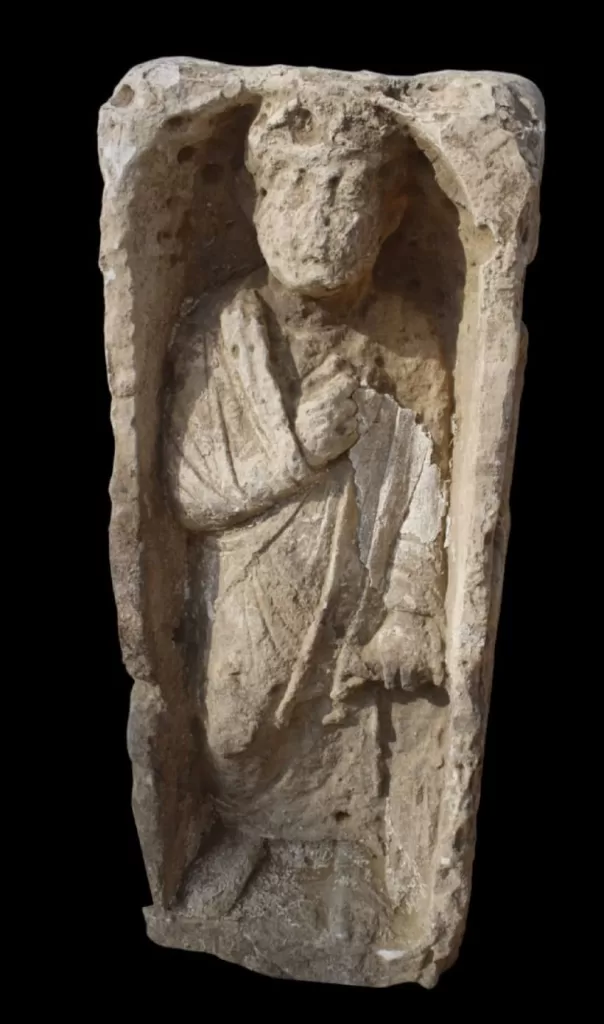
An Egyptian archaeological mission has uncovered around 20 limestone tombstones, coffins and funerary amulets at the Tell al-Deir site in Damietta province, the Supreme Council of Antiquities (SCA) said Thursday.
The discoveries were made during the mission’s current excavation season at the site in the eastern Nile Delta.
The tombstones were carefully carved with human figures and decorated with symbols and depictions of deities, including the griffin, Agathodaemon and Isis-Thermouthis, the SCA said.
The imagery reflects an interaction between Egyptian religious traditions and Greek-Roman influences, while also pointing to the high social status of those buried there, said Mohamed Abdel Badie, head of the council’s Egyptian Antiquities Sector.

The mission also found a large and varied collection of pottery incense burners, decorated oil lamps, barrel-shaped anthropoid pottery coffins and funerary amulets.
The discoveries provide a fuller picture of burial rituals and beliefs over different periods, the council said, adding that Tell al-Deir was not merely a burial ground but a fully developed funerary centre with a distinct social, cultural and religious identity.
The site’s archaeological layers indicate continuous activity from Egypt’s Late Period through the end of the Roman era, officials said.
The find could help researchers better understand the development of cemeteries in the Nile Delta and reassess ancient settlement patterns and the history of Damietta, the SCA added.