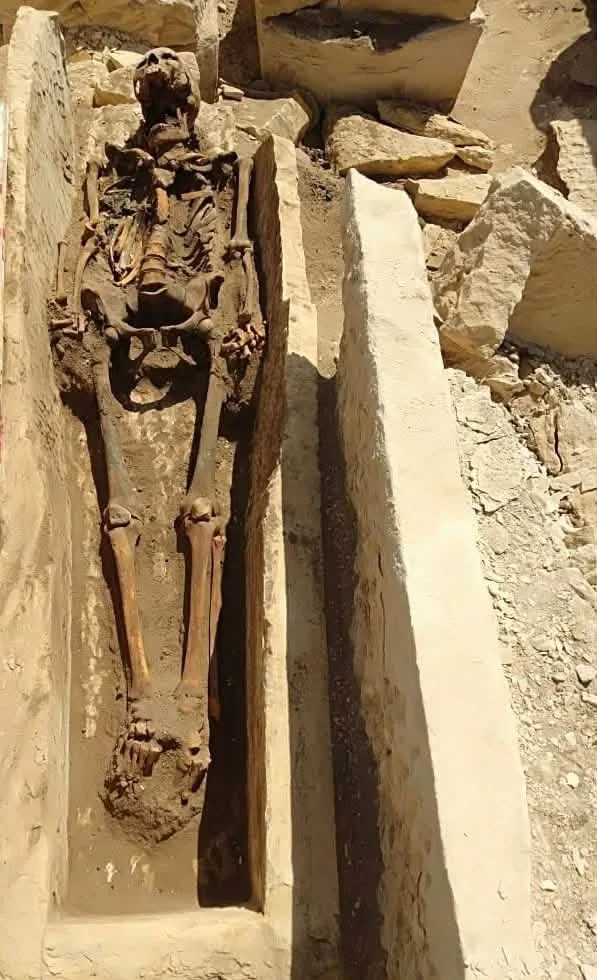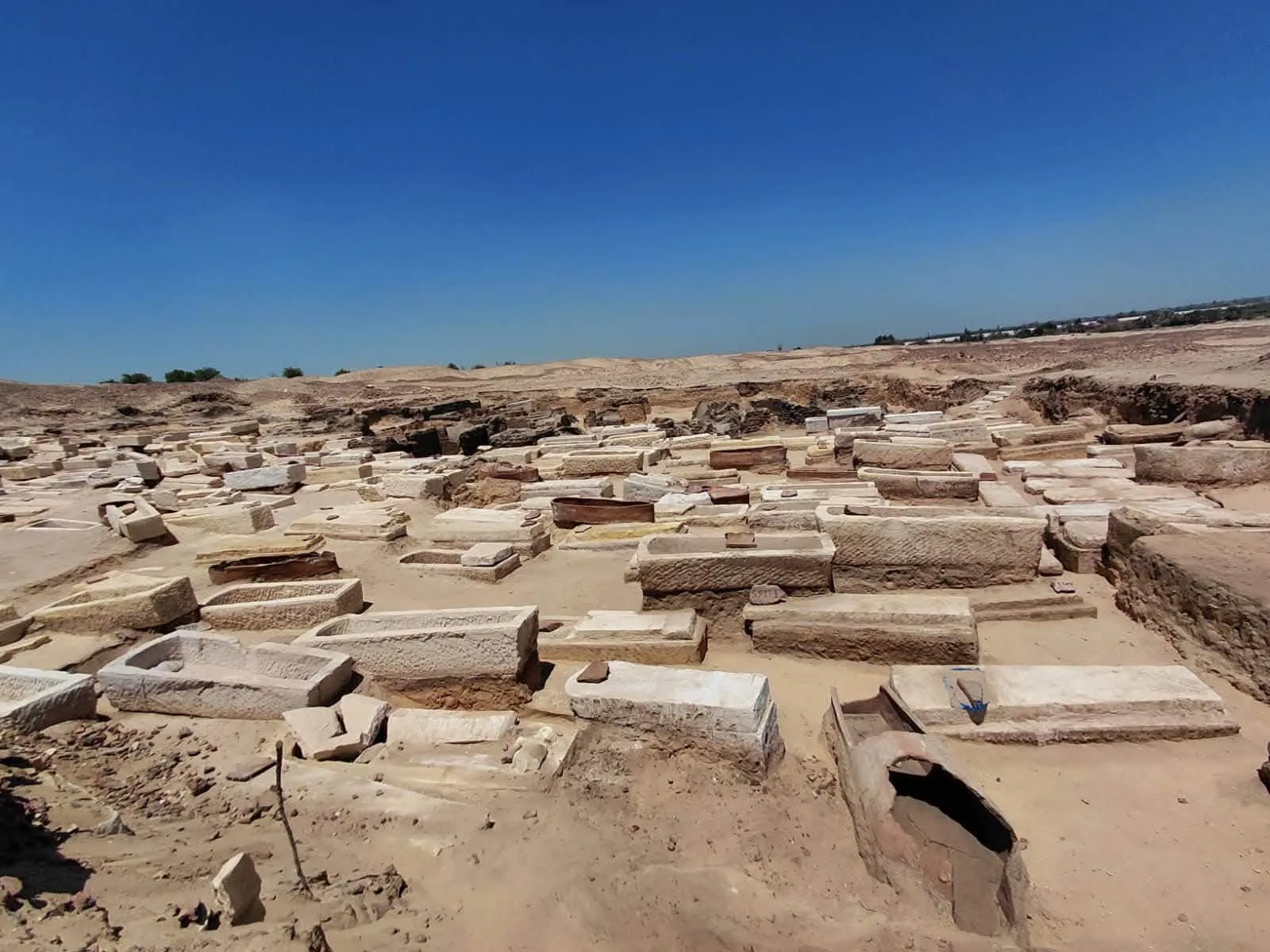








Beneath the sands of the Nile Delta, hundreds of stone coffins lie crowded together. Some have lost their lids; others are broken. Among them are the remains of two falcons, buried alongside people whose bodies still carry traces of embalming resin.
The dead did not go empty-handed. Gold tongues, an earring, scarabs and rows of faience figurines, all meant to serve their owners in the afterlife, were buried with them.
This is what a local archaeological mission uncovered at the burial ground at Kom Abu Billo in Menoufia governorate, as per last week’s announcement by the Ministry of Tourism and Antiquities.
The cemetery’s graves span the end of the Late Period (664 -332 BC), the Ptolemaic era (305- 30 BC) and the start of Roman rule.
Preliminary studies suggest much of the site dates to the third and second centuries BC.
The team found hundreds of stone coffins in a surface layer, some without lids and others shattered by earlier damage and quarrying. They also found clay coffins, a few with caricature-like human faces, plus traces of wooden coffins and vaulted mud-brick tombs.
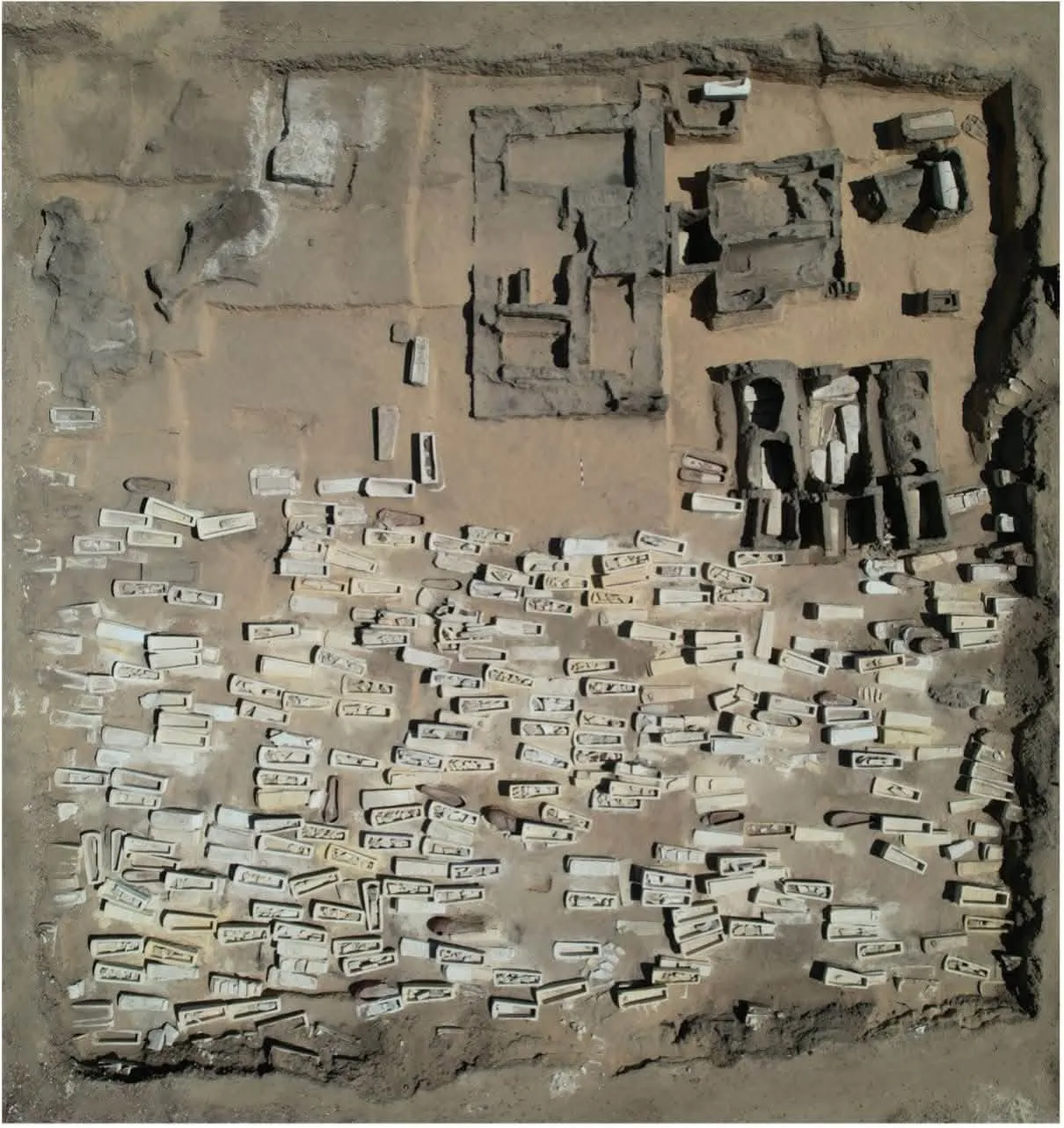
Secretary-General of the Supreme Council of Antiquities, Hisham El-Leithy, revealed that an initial study of the grave goods points to a cemetery probably used by the middle class.
The site sits within the ancient area of Terenouthis, near the eastern entrance to Wadi El-Natrun, long known as a source of the natron salt used in mummification in ancient Egypt.
Egyptologist Magdy Shaker said the area was a commercial and economic zone.
The find, he added, is valuable because it speaks for a group that rarely shows up in the archaeological record.
“We usually find artifacts belonging to the upper class, the class of kings and nobles. But our challenge, naturally, was the middle class, which is still the backbone of society,” he told The Gazette.
That group, he added, included scribes and skilled artisans, the carpenters and blacksmiths of their day. The mix of stone, wooden and clay coffins reflects what each family could afford.
The mummification tells the same story. There is clear evidence of embalming, but nothing particularly elaborate. Families prepared their dead according to their means.
“The importance of this discovery lies in shedding light on a social class for which we rarely find much data,” Shaker said.
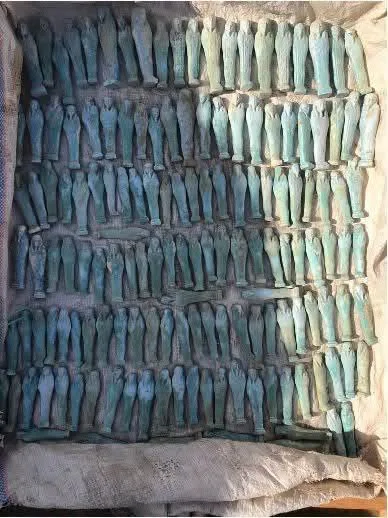
Studying the finds could show how the middle class related to wealthier and poorer groups. The objects left in the graves may also reveal what people thought they needed in the next life, and how that mirrored their life on earth.
Their materials, size and workmanship should show whether they were simple, cheap items or exceptional pieces from specialised workshops.
The mission said digging and recording would continue because more building remains buried under the sand and piles of excavated material.
Director-General of Antiquities in Menoufia, Mostafa Rizq, said human remains were poorly preserved but still bore traces of embalming materials and resins.
Fragments of painted cartonnage and plaster retained traces of yellow, red, blue and gold, he added in a statement.
The discovery also included small sphinx-shaped statuettes, fragments of stone statues of the falcon god Horus, and remnants of clay elements coated in gypsum plaster.
These depicted the façade of a royal palace and two pylons, each topped by a crouching lion with a falcon’s head.
The lions faced one another, wore the double crown and each rested its right paw on a djed, a pillar-like symbol in Egyptian hieroglyphs representing stability.
Other finds, he added, include terracotta figures of Isis-Aphrodite and part of a clay vessel lid showing the goddess seated on a lotus flower, nursing her child, Harpocrates.
“The figures show Egyptian and Greek religious traditions meeting. Isis, an Egyptian goddess, came to be linked with the Greek Aphrodite, while Harpocrates was the Greek form of the Egyptian child god Horus,” Shaker said.
“The Egyptian civilisation was not static or isolated, but rather one that interacted with others,” he added.