



In an age when truth is sought in courtrooms and evidence is established through fingerprints, DNA analysis, cameras, and digital technology, some communities still retain a strange traditional method of proving innocence or exposing lies – Al-Bashaa.
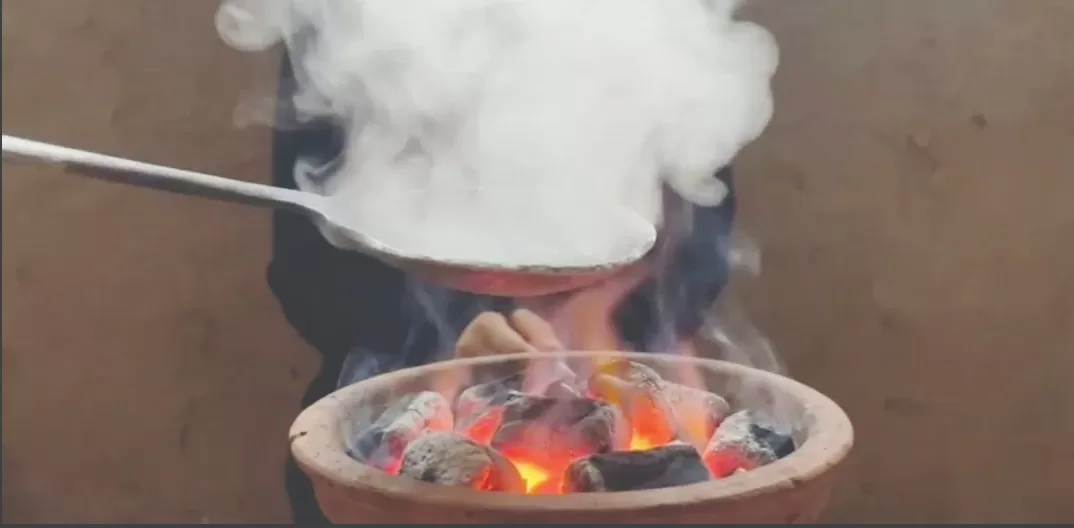
It is a piece of iron is heated until it glows red-hot, and the accused is then asked to lick it with his tongue in front of others. If the test leaves no obvious marks, this is considered evidence of innocence. But if burn marks appear, the person may be regarded as guilty. In this way, a few brief moments are transformed into something resembling an open-air popular court, with the tongue becoming the arena for a verdict that could change a person’s entire life.
Al-Bashaa is associated with Bedouin communities and desert environments, where it developed under social and geographical conditions very different from those governing modern societies today. In the past, when access to formal judicial institutions was difficult in some areas, certain tribes turned to traditional customs to settle disputes and accusations. Al-Bashaa became one of the most controversial of these practices.
The concept was not entirely unique to these communities. Other societies throughout history practiced similar rituals. In medieval Europe, for example, what was known as the “trial by ordeal” subjected accused individuals to harsh tests involving fire or water, based on the belief that the outcome could reveal the truth or establish innocence. But what was once regarded as a means of discovering the truth has become the subject of a fundamental question today: Can pain, fear, or a person’s ability to withstand them really be evidence of whether that person is telling the truth?
Between Custom and Islamic Law Al-Bashaa has come under sharp criticism from religious scholars who argue that it has no recognised basis in Islamic law and that using it to establish innocence or guilt contradicts the principles of Islamic adjudication, which are based on evidence and proof. Here lies one of the most striking paradoxes surrounding the practice: some practices presented as part of customary law are not necessarily law in the modern sense. Nor does their continued existence in certain communities automatically grant them religious or legal legitimacy.
Behind Al-Bashaa is a popular explanation that its supporters have repeated for generations: a person confident in his innocence, according to this belief, does not fear the test, and therefore his tongue remains sufficiently moist and is less likely to be affected by the hot iron. By contrast, fear and anxiety in a person who is lying supposedly trigger physical changes that dry out the mouth, causing more visible burn marks. This explanation makes Al-Bashaa appear almost like a primitive lie detector.

