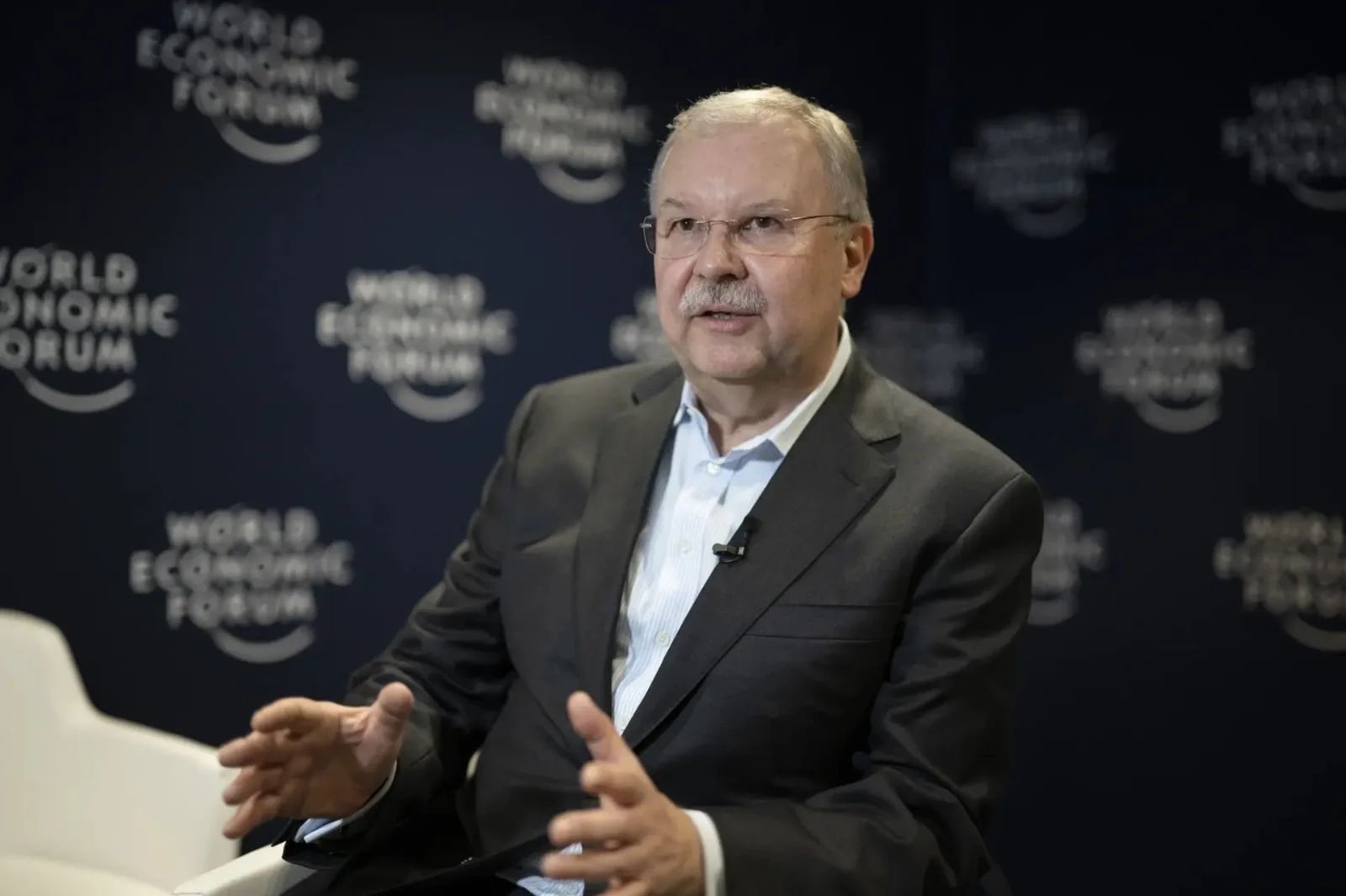





Egypt is well placed to become a regional hub for trade, logistics and digital connectivity, the president and chief executive of the World Economic Forum (WEF), Alois Zwinggi, has said ahead of the organisation’s Country Strategy Meeting in Cairo on 16-17 November.
The gathering is expected to bring together President Abdel-Fattah El-Sisi, senior government officials and leading regional and international business figures to discuss the country’s economic priorities, investment prospects and long-term growth outlook amid global and regional change.
In an exclusive interview with Ahram Online, Zwinggi said the meeting would bring together senior Egyptian government representatives, including President El-Sisi, and top leaders from regional and international businesses, international organisations and the WEF. It will focus on Egypt’s reform agenda, macroeconomic stability, competitiveness and the role of public-private collaboration in supporting growth and resilience. He said it would also provide an opportunity for direct dialogue on shared priorities, deepen understanding between government and business, and identify areas for continued cooperation in Egypt and the wider region.
Zwinggi highlighted the importance of economic reforms and stronger public-private partnerships in attracting investment, expanding exports and supporting private-sector-led growth.
He said Egypt’s strategic position was particularly relevant at a time of geoeconomic change, as countries and businesses reassess trade, supply chains, energy flows and economic priorities. At the same time, Egypt is advancing reforms aimed at strengthening private-sector-led, export-oriented and human-capital-driven growth. “Egypt has many of the foundations needed for stronger growth,” he said, citing a large market, a young population, an expanding industrial base and a strategic position connecting regions. At a time of growing uncertainty, he added, businesses are looking for predictable operating conditions and reliable partners with strong regional and global connections to help them navigate a changing environment.
On collaboration between the public and private sectors, Zwinggi said government and business bring different but complementary strengths. Governments set policy direction and establish the conditions in which companies operate, while businesses create jobs and contribute expertise, technology, supply-chain links and access to international markets. Stronger collaboration, he said, can help identify obstacles more clearly and give governments a better understanding of what businesses need to grow, while giving businesses a clearer view of government priorities and the role they can play in advancing them. That exchange is particularly valuable at a time of economic and geopolitical uncertainty, as companies reassess supply chains, markets and operating decisions.
In Egypt, he said, closer dialogue can help focus attention on macroeconomic stability, regulatory clarity, fair competition, infrastructure, skills and the investment environment, while identifying areas where international businesses can collaborate with the Egyptian government and businesses. The goal, he said, is to build a clearer basis for cooperation that supports sustained growth, exports, job creation and economic resilience in Egypt and beyond.
Zwinggi pointed to Egypt’s geography as a distinctive asset in global trade and regional connectivity. The Suez Canal carries around 12 per cent of global maritime trade, while the country’s ports, logistics infrastructure and transport corridors connect Africa, the Middle East and Europe.
Egypt is also a key digital crossroads, he said, with more than 90 per cent of data flows between Asia and Europe passing through its network of subsea cables and terrestrial routes. As demand for AI, cloud computing and data centres grows, this could create new opportunities for Egypt to expand its role in the digital economy.
Recent disruptions, he said, have underscored both the importance and the vulnerability of these connections. For businesses, a more complex geoeconomic environment is making global trade and supply chains more costly and difficult to navigate, increasing the value of reliable infrastructure, diversified supply chains and strong regional connections.
These advantages, together with continued reforms, can support Egypt’s logistics and industrial base, strengthen regional and global markets, and create opportunities for private-sector-led, export-oriented growth, Zwinggi said. This creates scope for greater cooperation in transport, logistics, energy, digital infrastructure and advanced manufacturing, while supporting investment, trade and long-term economic resilience.
The meeting builds on the Forum’s longstanding engagement with Egypt through its global and regional meetings, initiatives and year-round work, he said. This has included President El-Sisi’s participation in the 2026 Annual Meeting in Davos, cooperation with Egypt in the lead-up to COP27, and collaboration on initiatives such as the Closing the Gender Gap Accelerator, the Future of Growth Accelerator and the Global Alliance for Trade Facilitation. The Forum has also worked with Egyptian institutions on regional vaccine manufacturing, as well as on research into hepatitis C elimination and breast cancer care. While much of this engagement has taken place through global and regional platforms, the Country Strategy Meeting brings it into a more focused, in-country exchange, connecting Egypt’s leadership with international business leaders for direct dialogue on shared challenges, opportunities and priorities.
The meeting will bring together President El-Sisi and eight Egyptian ministers, including the ministers of foreign affairs, international cooperation and Egyptians abroad; finance; planning and economic development; industry; investment and foreign trade; communications and information technology; and electricity and renewable energy, as well as the governor of the Central Bank of Egypt.
International participants will include Odile Renaud-Basso, president of the European Bank for Reconstruction and Development (EBRD); Patrice Motsepe, chairman of African Rainbow Minerals; and Ahmed Galal Ismail, chief executive of Majid Al Futtaim Holding, who are among the meeting’s co-chairs. Senior business leaders from companies including DP World, Agility, Mingyang, First Abu Dhabi Bank, Qatar National Bank, PepsiCo, Bank of America, AstraZeneca and Tata will also participate.
Zwinggi said this combination of public- and private-sector perspectives would help move the conversation from priorities to practical possibilities, identifying where government and business can work together to support growth and job creation.

