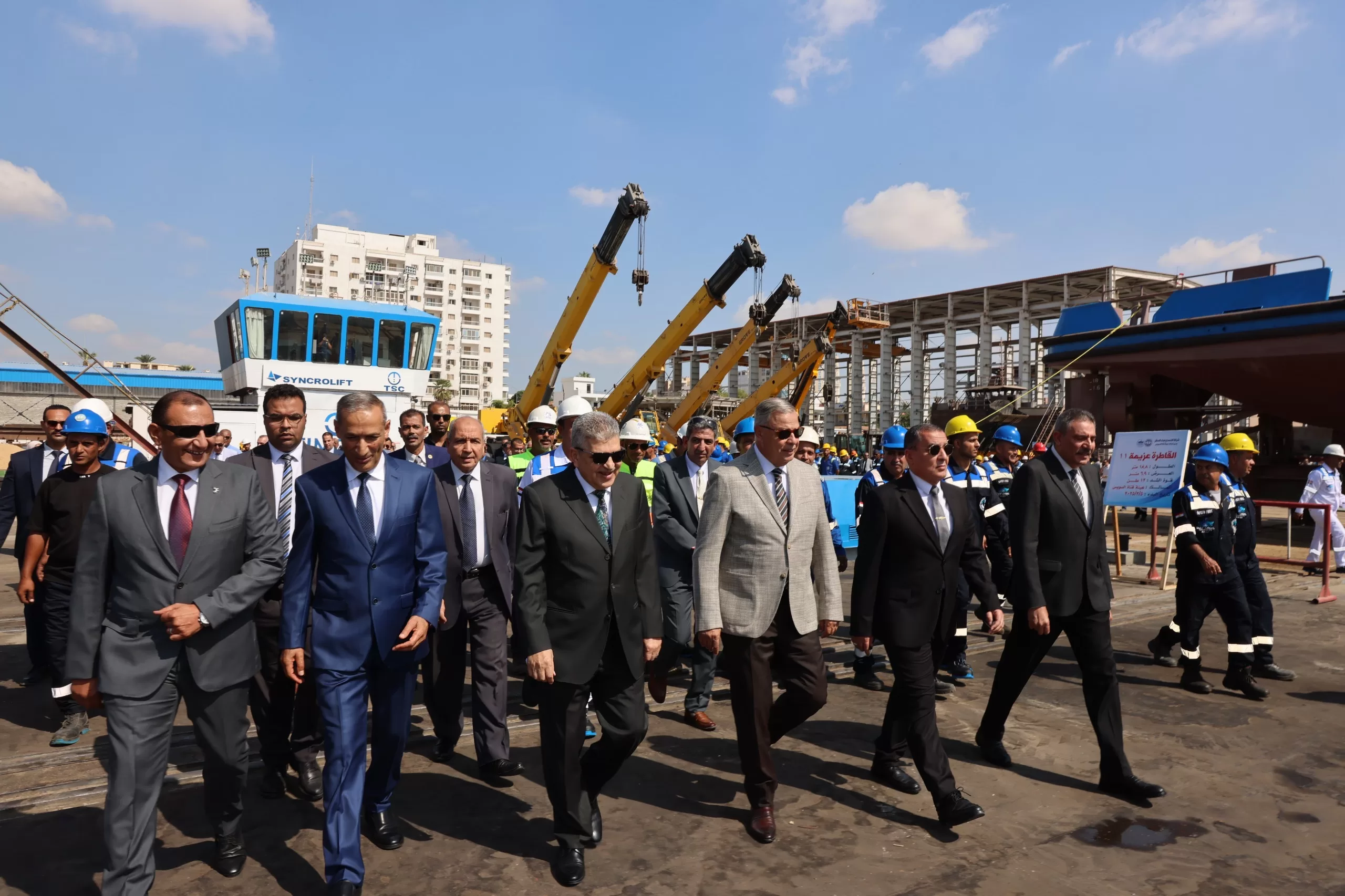









Suez Canal Authority Chairman Osama Rabie attended the launch of three new tugboats and the keel‑laying ceremony for five additional vessels at Timsah Shipbuilding Company, one of the Authority’s affiliated companies, as part of efforts to localise maritime industries and strengthen support services for Egyptian ports and the Suez Canal.
The event began with the launch of the tugboat Khidma 1, built for the Damietta Port Authority. The vessel is 18.6 metres long, 6.9 metres wide, has a draft of 2.2 metres at full load, a bollard pull of 20 tonnes, and a maximum speed of 10 knots.
Rabie also launched the tugboats Azima 11 for the Suez Canal Authority and Ezz El‑Din Younes 2 for the Canal Ports and Major Projects Company. Both vessels are 18.6 metres long and 6.9 metres wide, with a draft of 2.2 metres, a bollard pull of 12 tonnes and a top speed of 11 knots.
The SCA chief subsequently witnessed the keel‑laying of five new tugboats marking the start of construction work. The vessels, which are being built for the Red Sea Ports Authority, include two tugboats with a 70‑tonne bollard pull and three with a 20‑tonne bollard pull as part of efforts to modernise towing and pilotage services.
Rabie also reviewed maintenance and refurbishment work carried out by Timsah Shipbuilding Company on three 60‑tonne tugboats belonging to Damietta Port Authority, in addition to repair works for the tugboat Misr El‑Mahrousa owned by the General Authority for the Suez Canal Economic Zone.
The chairman said the Suez Canal Authority has succeeded in restructuring its affiliated companies, diversifying activities and transforming them into profitable entities while supporting Egypt’s maritime industries and logistics sector. He noted that Timsah Shipbuilding Company has become a major maritime manufacturing hub and has built 42 marine units since 2019.
Rabie stressed that expanding shipbuilding and repair capabilities remains a strategic priority in line with efforts to localise maritime industries, meet the needs of the Suez Canal and Egyptian ports, reduce reliance on imports, and strengthen Egypt’s regional competitiveness in the maritime sector.

