



President Abdel Fattah El Sisi stressed the need to continue implementing reforms across Egypt’s education system and build on the progress achieved to improve the quality of education and prepare future generations with the skills needed for the evolving labour market.
The president also highlighted the importance of expanding international co-operation and exchanging expertise with leading educational institutions to support education development and benefit from global best practices.
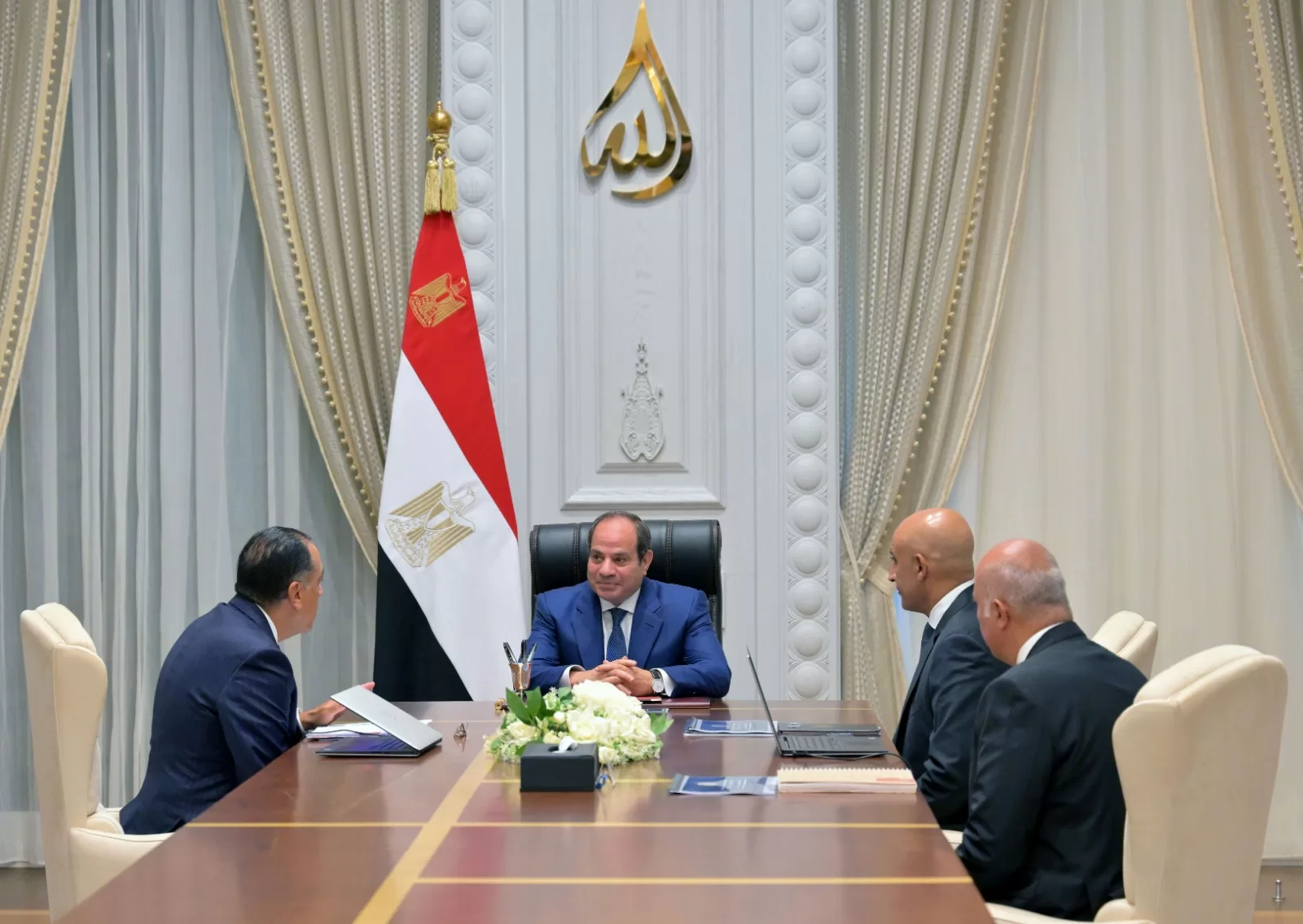
President Sisi made the remarks during a meeting on Sunday with Prime Minister Moustafa Madbouli and Minister of Education and Technical Education Mohamed Abdel Latif to review efforts to develop pre-university and technical education in Egypt.
During the meeting, Abdel Latif said technical education has become a key pillar of Egypt’s development plans, with around 2.35 million students currently enrolled in 3,213 specialised schools.
The minister said Egypt is working to expand its network of applied technology schools through international partnerships, with the number expected to reach nearly 225 schools by the start of the next academic year.
He added that Egypt recently signed co-operation agreements with Italy to establish 100 applied technology schools in various fields starting from the next academic year. He described the partnerships with Italy and Germany as successful models for developing technology-based education, fostering innovation, and equipping students with skills required by the labour market.
Abdel Latif also reviewed progress in Egyptian-German co-operation to develop technical schools. The initiative includes a declaration of intent signed with Germany’s Federal Ministry for Economic Co-operation and Development to provide graduates with German-accredited certificates.
The ministry has also signed co-operation protocols with the German Agency for International Co-operation (GIZ) to develop, establish, and operate 38 Egyptian-German technical schools as of the next academic year.
The meeting also covered the ministry’s ongoing review of the educational framework for the Egyptian Baccalaureate system in co-operation with the International Baccalaureate Organisation (IBO).
The review aims to align the new system with international best practices while preserving Egypt’s national identity, Abdel Latif said. He noted that the partnership reflects the country’s efforts to modernise education through international expertise.
The minister highlighted Egypt’s co-operation with Hiroshima University to implement the TOFAS programming and artificial intelligence assessment for first-year secondary students, introduce financial literacy courses for second-year secondary students, and integrate programming and AI into technical education through Japan’s Qureo platform.
He also pointed to planned co-operation with Harvard University, particularly in teacher training programmes at the Egyptian Military Academy.
The meeting reviewed government efforts to improve the quality of education, promote innovation, and create a supportive learning environment that enhances students’ skills and prepares them for future challenges.

