



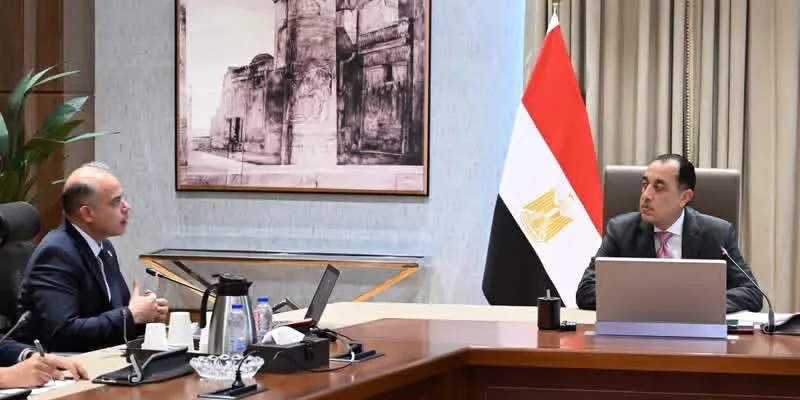
Egypt is preparing a two-track plan to boost exports. A short-term track aims to speed up growth and draw in new companies, and a medium-term track aims to tackle obstacles and seize emerging opportunities. Prime Minister Mostafa Madbouly reviewed and followed up the proposals on Tuesday at a meeting attended by Minister of Investment and Foreign Trade Mohamed Farid and Hatem El-Nawawy, head of the Executive Body of the Egyptian Export Development Authority.
Opening the meeting, Madbouly said the government regards exports as a main driver of industrial and investment activity. He said the current stage requires building on gains in production and deepening partnership with the private sector, so that Egyptian products can reach wider global markets and consolidate their competitive standing in support of comprehensive economic development. He added that the government would continue to encourage and support the export community and create a favourable environment to strengthen its competitiveness and widen its presence abroad.
Farid said priorities include strengthening the export support system and freight assistance, as well as studying procedural facilitation and financing and insurance solutions to empower exporters.
The proposals also include a package of incentives to encourage manufacturers to modernise production lines and localise technology, and to help companies meet sustainability standards and obtain international quality and accreditation certificates. They also cover improving the skills of technical staff and boosting participation in specialised international and regional exhibitions and on e-commerce platforms, in order to reinforce the identity and competitiveness of the Egyptian brand worldwide.
The minister said co-ordination continues with ministries and other bodies to prepare for the actual implementation of the proposals. Work is proceeding to set timetables and periodic follow-up mechanisms, he said, to improve the efficiency of the duty drawback system and ease logistics flows, and so ensure a swift response to exporters’ needs.
El-Nawawy outlined the authority’s plan to offer an integrated package of services covering every stage of the “exporter’s journey”. The services will be delivered through 12 branches in key governorates, which will serve as exporter service centres.
He said the services include raising awareness of duty drawback and export support programmes, providing studies on promising markets and their requirements, and assessing the readiness of companies and products so that export gaps can be closed. They also include networking and business matchmaking with the trade representation service, and capacity-building through specialised training programmes. Finally, the authority will launch a digital platform using artificial intelligence to match exporters with importers and to help new exporters join.
