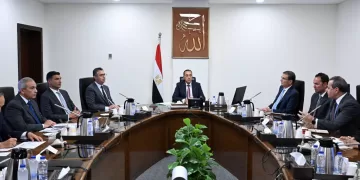





Prime Minister Moustafa Madbouli stressed on Wednesday the importance of the “Productive Village” initiative in leveraging the resources and capabilities available in each village and identifying its comparative advantages.
He called for developing existing activities, crafts and industries, improving product quality, and providing training, financing, technical and marketing support to create added value and open new markets.
Madbouli made the remarks during a meeting he called on Wednesday with some cabinet ministers and state officials in New Alamein City to review the initiative.
Supply and Internal Trade Minister Sherif Farouk, Agriculture and Land Reclamation Minister Alaa Farouk, and Industry Minister Khaled Hashem, were present at the meeting.
Local Development and Environment Minister Manal Awad participated via video conferenceDuring the meeting, Madbouli said the initiative should adopt a comprehensive economic and social development vision based on supporting productive activities, creating sustainable jobs, developing the skills of rural youth and women, improving living standards and strengthening villages’ ability to rely on their own resources.
Supply Minister Farouk said coordination with Agriculture Ministry is targeting agricultural and food-producing villages, while LE1 billion has been allocated to establish markets for agricultural and food products, strengthen marketing and provide suitable outlets.
Farouk said the initiative aims to transform villages from consumer communities into production centres, create jobs, reduce migration abroad, maximise agricultural added value and narrow food gaps in strategic crops.
It will also promote agricultural cooperatives to address fragmented holdings, establish agro-industrial complexes, improve soil fertility and increase agriculture’s contribution to GDP.
Its three pillars are agricultural productivity and added value, livestock development, and economic and social empowerment. Proposed activities include crop productivity, beekeeping, livestock, modern irrigation, solar energy, women’s empowerment, agricultural-waste recycling, natural silk and agro-processing.
Industry Minister Hashem said around 100 factories are planned over three years in villages with comparative industrial advantages.Seventeen plots have been identified, while coordination with the private sector and Federation of Egyptian Industries is underway.
Residents will receive training to provide the required workforce.
In this respect, Madbouli tasked Minister Hashem with preparing a comprehensive implementation plan with clear timelines and mechanisms to rapidly expand the initiative, maximise each village’s strengths, create jobs and improve rural living standards.

