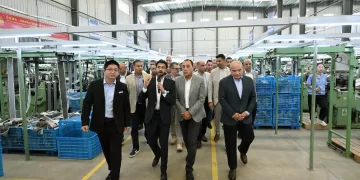




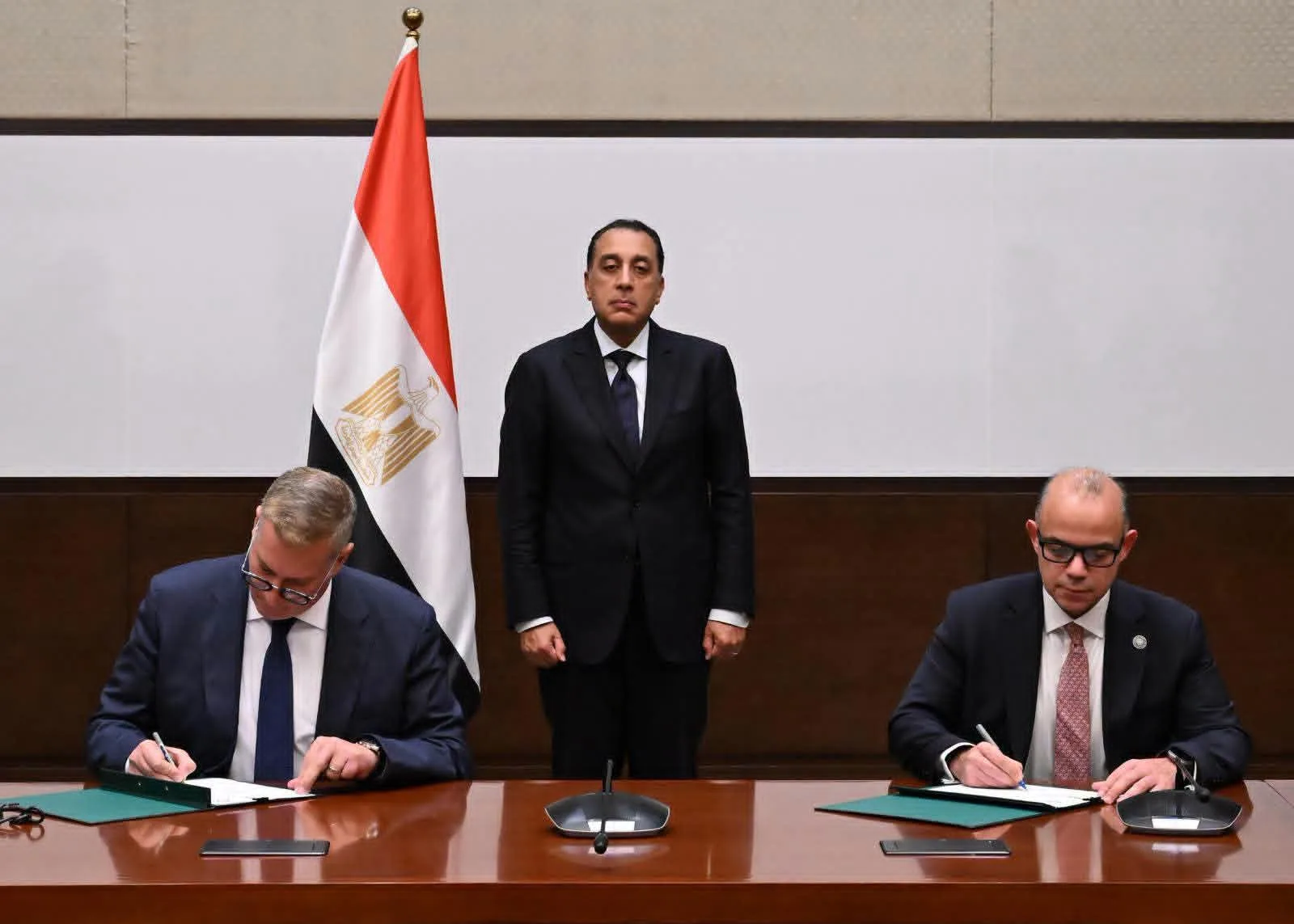




Prime Minister Mostafa Madbouly on Sunday toured the Sokhna Integrated Industrial Zone, affiliated with the General Authority for the Suez Canal Economic Zone (SCZone), to inaugurate nine new industrial projects.
Accompanying Madbouly on the tour were Minister of Industry Khaled Hashim, Minister of Planning Ahmed Rostom, Minister of Health and Population Khaled Abdel Ghaffar, SCZone Chairman Mostafa Sheikhoun, and Suez Governor Hani Rashad.
Madbouly said the SCZone has become an integrated Egyptian platform for industry and logistics services and a key pillar of the country’s economic development system. He highlighted its exceptional advantages, including its strategic geographic location, integrated ports and industrial zones, and advanced infrastructure.
The Prime Minister said the SCZone represents a successful model of integration between industry, trade and logistics. In recent years, it has attracted high-quality investments across various sectors, localised strategic industries, and strengthened Egypt’s production and export capabilities.
This, he added, supports Egypt’s position as a regional manufacturing hub and gateway to global markets. The inauguration of new industrial projects in the SCZone reflects growing investor confidence in Egypt’s investment climate and demonstrates the government’s success in creating an attractive business environment based on strong infrastructure, streamlined procedures, and the ability to connect local production with global supply chains and international markets.
SCZone Chairman Mostafa Sheikhoun said the projects reflect the continued development of the zone’s industrial base and demonstrate the success of the authority’s strategy to attract diverse industrial investments.
He noted that the nine projects, with total investments of $84.5 million, are expected to create around 2,000 jobs, giving further impetus to industrial development in the zone.
The projects span several sectors, including building materials, finishing products and furniture; textiles and artificial turf; chemical and mining industries; engineering and electrical industries; and medical industries and equipment.
The diversity of the projects, he added, reflects the authority’s vision of building an integrated industrial ecosystem that supports deeper local manufacturing, creates jobs, and strengthens integration between industrial zones and affiliated ports.