








Prime Minister Mostafa Madbouly said on Sunday that Egypt’s current economic course is focused on building a skilled workforce, deepening and localising industry, and attracting major investments from leading manufacturers worldwide, stressing that the growing number of productive projects across the country demonstrates the tangible progress being made in the national economy.
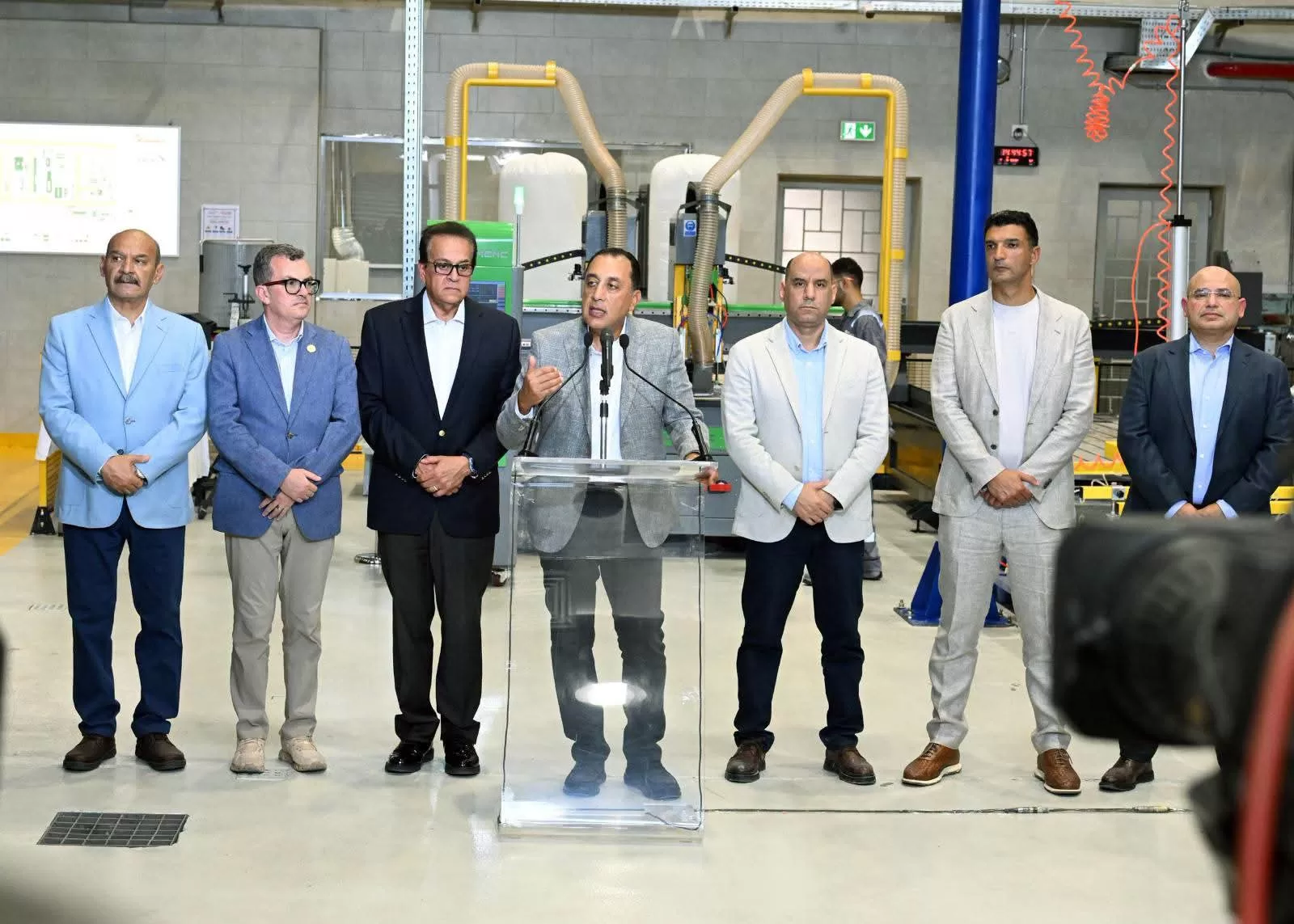
Speaking at a press conference following his tour of the integrated industrial zone in Ain Sokhna, affiliated with the General Authority for the Suez Canal Economic Zone, the prime minister said he regularly visits the zone to inaugurate new factories, projects and expansions.
During Sunday’s tour, nine industrial projects were inaugurated with total investments of $85 million, creating 2,000 new jobs for Egyptian workers.
Madbouly noted that exports account for between 70% and 100% of production at the newly inaugurated factories, while local content ranges from 40% to as much as 95%.
The projects represent a diverse range of industries, including textiles and yarn, furniture, food, fertilisers, mining and medical products.
The prime minister highlighted the refurbishment of ambulances using modern technologies, enabling vehicles that might otherwise have been scrapped to remain in service for another five or six years.
The factory has also begun transferring its expertise to neighbouring countries. He further highlighted the local manufacture of dental chairs, previously fully imported, to international standards and at around half the cost of comparable imported products.
A lighting-products factory, meanwhile, has expanded production to levels capable of competing with German-made products and supplying international markets.
Madbouly said the SCZone now has 212 operating factories employing tens of thousands of Egyptian workers, compared with only around 30–35% of the current number four years ago.
Nearly 140 factories have been established and brought into operation during the past four years, while 176 factories are currently under construction and expected to be completed within 18 months to two years, bringing the total number of factories to nearly 400.
He said the development of Ain Sokhna Port, together with road networks and conventional and high-speed electric railways, is transforming the zone into a global industrial and logistics hub.
Additional infrastructure, including desalination plants and power stations, will be accelerated to meet growing demand.
The prime minister also cited rising wages as evidence of the effectiveness of technical training, noting that some technical-school graduates with three years’ experience earn LE14,000–15,000 per month, while newly graduated engineers receive LE15,000–30,000.
The premier stressed that government field visits are intended not merely to inaugurate projects, but to listen directly to investors, identify challenges and facilitate expansion.
He reaffirmed the target of increasing the private sector’s share of total investment to more than 70–75% within four years, helping create further employment and support growth across industry, tourism, agriculture, communications, IT, outsourcing, services, logistics and real estate.

