







The Future of Egypt Authority for Sustainable Development (Mostaqbal Misr) is pressing ahead with plans to reclaim around four million feddans across several areas, including the New Delta, Aswan, Minya-Beni Suef, Sinai and El-Lahoun, as part of efforts to strengthen Egypt’s food and water security.
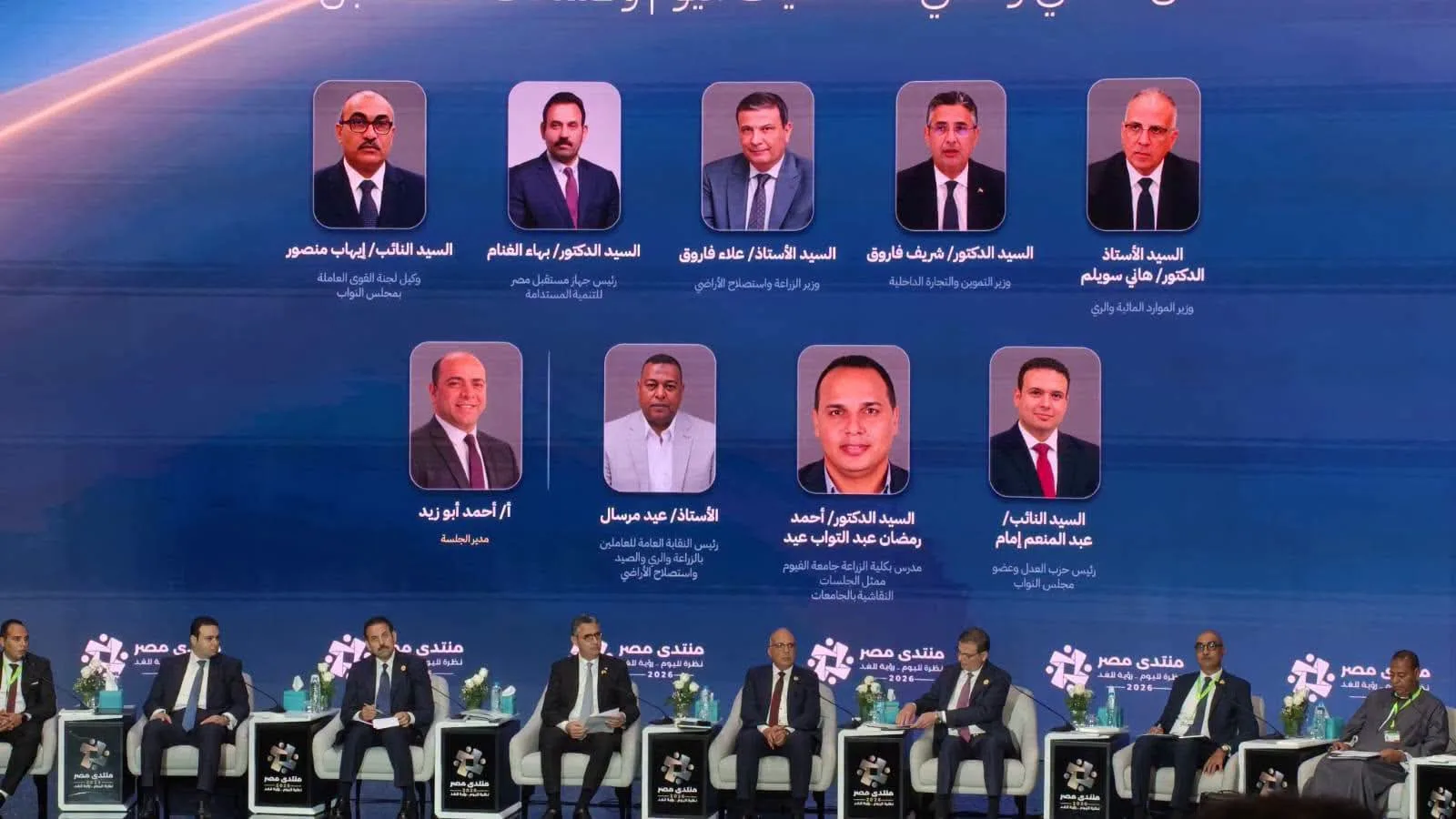
Speaking at a session of Egypt Forum 2026 entitled “Food and Water Security: Today’s Challenges and Future Guarantees”, Mostaqbal Misr Chairman Bahaa El-Ghannam outlined the authority’s role in expanding agricultural land, developing infrastructure and improving resource management, while creating investment opportunities for the private sector.
Food security requires ensuring the continuous availability of essential commodities despite limited water resources and agricultural land, as well as Egypt’s annual population growth rate of 1.5 per cent, El-Ghannam said.
He noted that agricultural expansion began with the 1.5-million-feddan initiative in 2014, while infrastructure projects to support food security began in 2018.
Egypt’s agricultural land had shrunk from around nine million to eight million feddans because of building violations, he added.
El-Ghannam stressed that the authority’s role was to drive and organise development rather than dominate it. More than 1,000 private-sector companies are involved in its projects, while the authority holds stakes in more than 55 companies. Only two of these are wholly owned by the authority, he said.
He added that the authority aims to withdraw from projects it develops directly once their assets have been prepared for investment, either by listing them on the Egyptian Exchange or making them available to the private sector, in line with the State Ownership Policy Document.
On governance and transparency, El-Ghannam said the authority had undergone comprehensive restructuring following the issuance of a law reorganising its operations. It pays its due taxes, social insurance contributions and customs duties, and complies with competitive neutrality rules.
He also said the authority relies on its own resources to finance projects and does not depend on bank guarantees.
Addressing farmers’ rights, El-Ghannam said the authority had not taken land away from farmers.
He added that it works to regularise the status of unregistered land, address encroachments on state-owned property and provide infrastructure to support existing productive farms, while taking citizens’ circumstances into account.
