



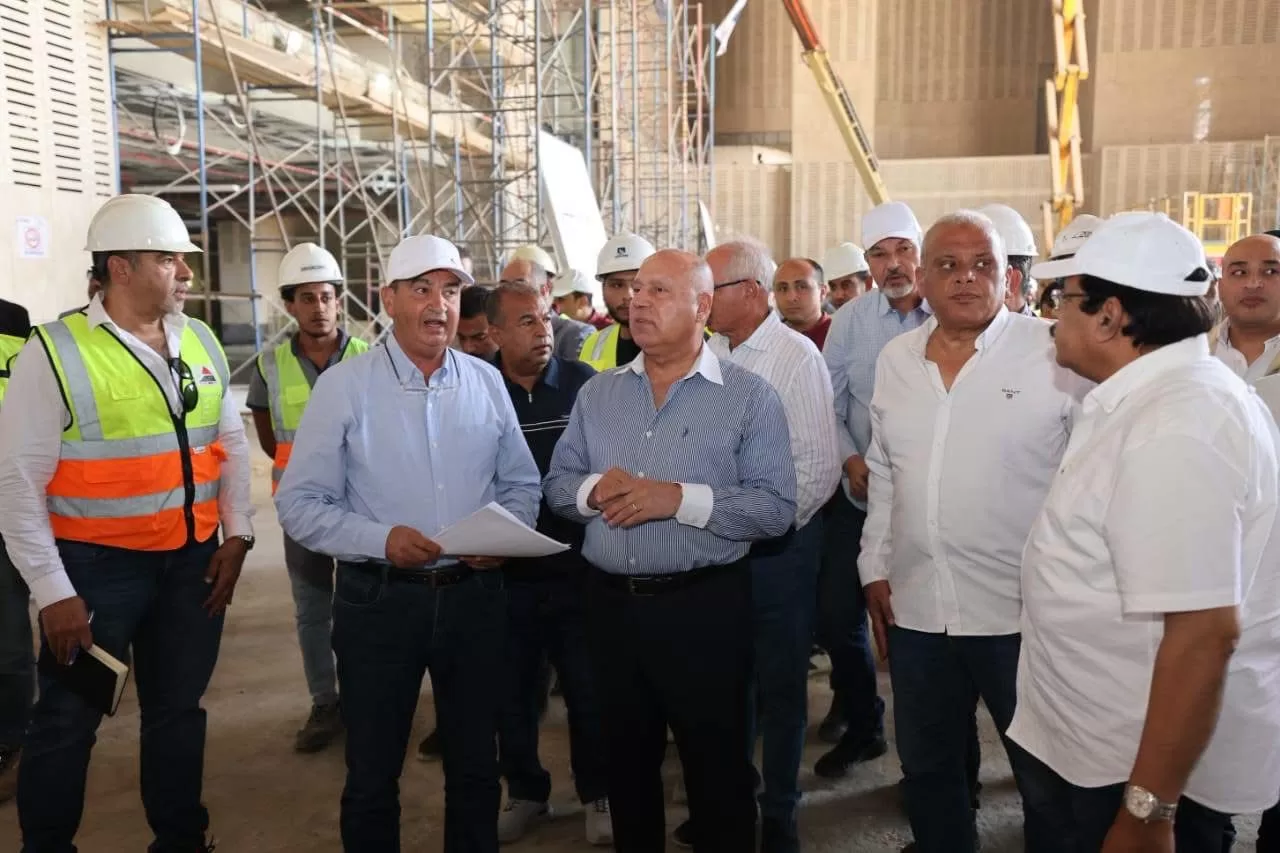
Egypt’s Minister of Transport Lieutenant General Engineer Kamel El-Wazir on Sunday inspected the first line of Egypt’s high-speed electric rail network, running from Ain Sokhna to the New Capital, ahead of the start of passenger-free trial operations on selected sections.
The project forms part of a 660-kilometre line linking Sokhna with Alamein and Matrouh, and is being implemented in line with the government’s directive to complete major mass transit projects within their scheduled timeframes.
El-Wazir described the high-speed rail network as a “giant project” with economic and development benefits extending beyond the transport sector. He said it would serve industry, tourism, agriculture and urban development, while helping to attract both domestic and foreign investment.
The line will link the Red Sea with the Mediterranean and serve as a “new Suez Canal on rails”, he added.
During the tour, El-Wazir reviewed progress on construction work at Sokhna and Capital Central stations, inspected service roads and visited maintenance and workshop facilities designed to accommodate up to 50 trains and locomotives.
He also praised the work of young engineers and awarded a number of station managers opportunities for overseas training and postgraduate study.
The project includes a range of bridges, tunnels and other engineering works carried out by Egyptian engineers, including the 600-metre Khour Bridge over Wadi Degla.
The high-speed rail network is also planned to integrate with other modes of transport, including the light rail transit system, metro lines, the monorail, bus rapid transit services and airports, creating an integrated national transport network.
Egypt’s high-speed rail programme comprises four lines extending over a total of 2,250 kilometres, with the first three lines currently under construction. The initiative reflects Egypt’s commitment to green transport, integrated logistics and sustainable development.

