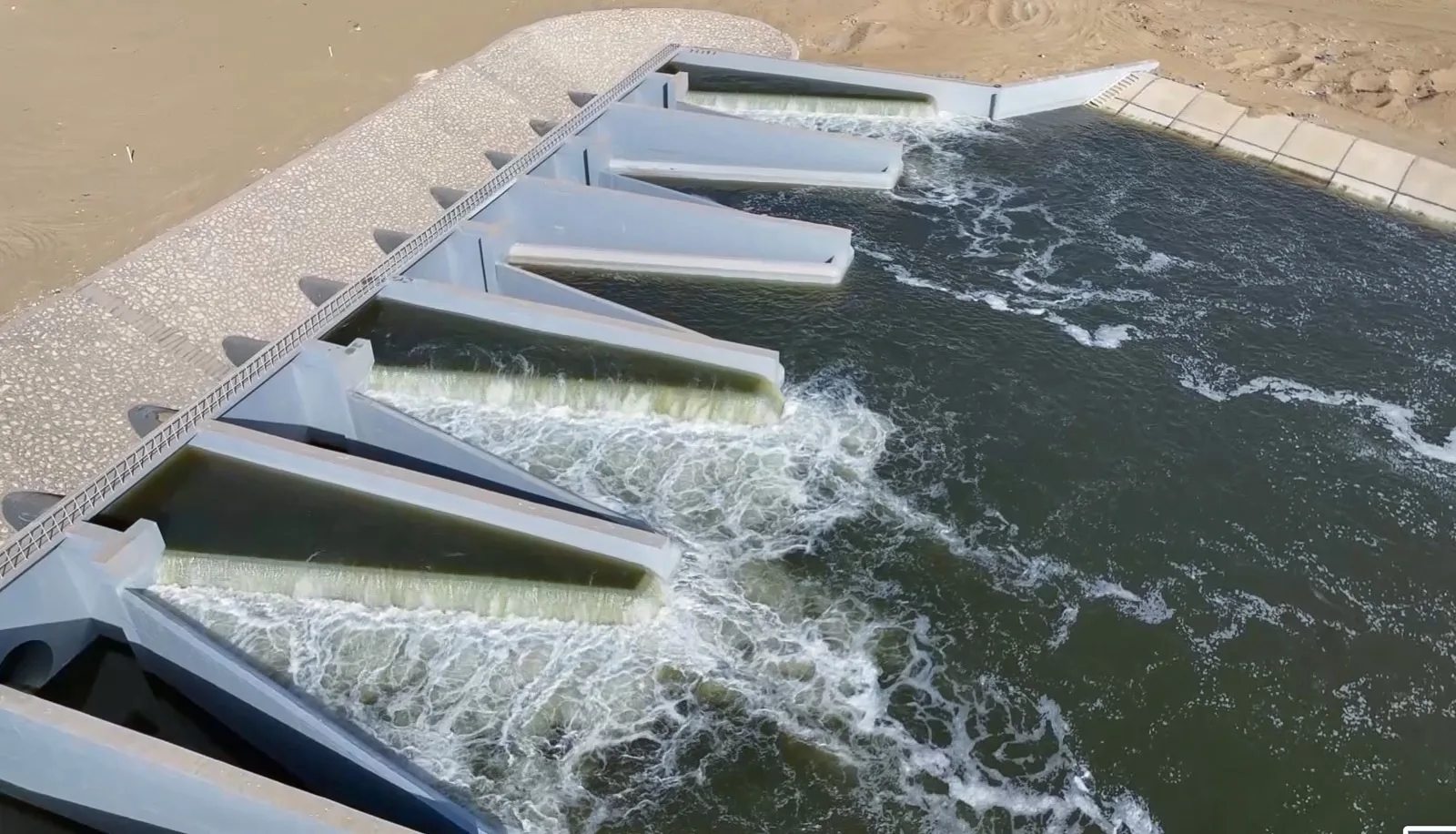







The Future of Egypt for Sustainable Development Authority has developed an extensive water infrastructure network to support agricultural expansion in the New Delta, improve irrigation efficiency and maximise the use of available water resources.
The network includes around 697 kilometres of open canals and 9,200 kilometres of pipelines to transport and distribute water across the project’s agricultural areas.
The New Delta project relies on several water sources, including surface water, groundwater and treated agricultural water. These are integrated into a system covering water treatment, transportation and distribution.
The infrastructure also includes 28 pumping stations equipped with 280 high-capacity pumps, 1,500 medium-capacity pumps and 380 booster pumps to ensure reliable water supplies.
The authority has installed around 8,100 centre-pivot irrigation systems across its agricultural projects to reduce water waste and improve irrigation efficiency. It has worked with state institutions to localise the manufacturing of these systems in Egypt, helping build local expertise in manufacturing, installation, supply and maintenance.
The authority uses digital monitoring and remote-sensing technologies to assess soil and crop conditions and regulate irrigation and fertilisation according to the needs of each agricultural project.
Regular maintenance programmes are also in place to ensure the network operates efficiently. These include equipment inspections, network monitoring and the early detection of faults and leaks.
Solar energy is also used to power some groundwater wells, depending on the requirements and conditions of individual agricultural sites.

