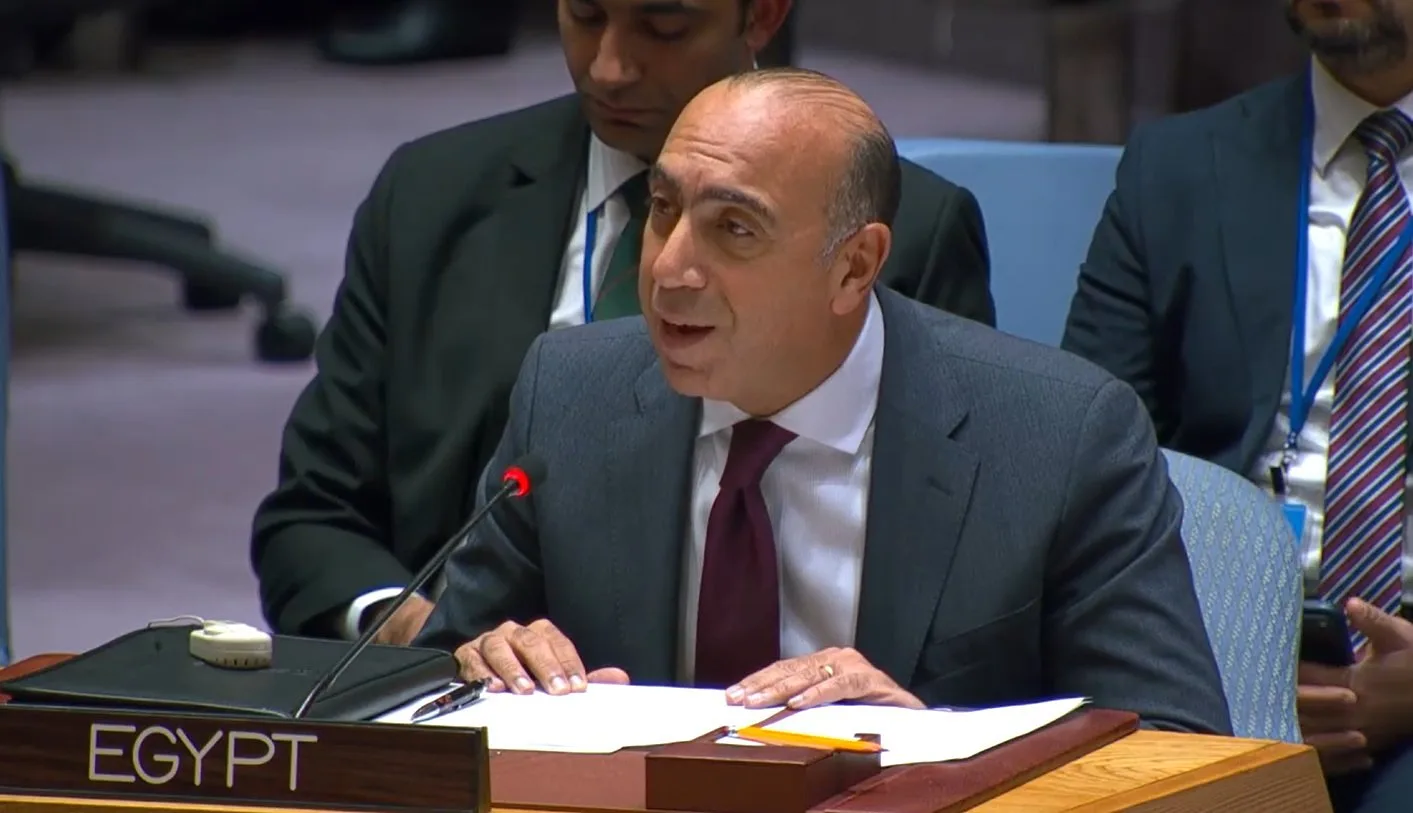



Egypt urged the UN Security Council on Friday to take more effective action to help end the war in Sudan, saying there was “no logical justification for the council’s hesitation”.
It also warned that any measures involving the sanctions regime must not weaken Sudanese state institutions or undermine their ability to protect civilians, MENA reported.
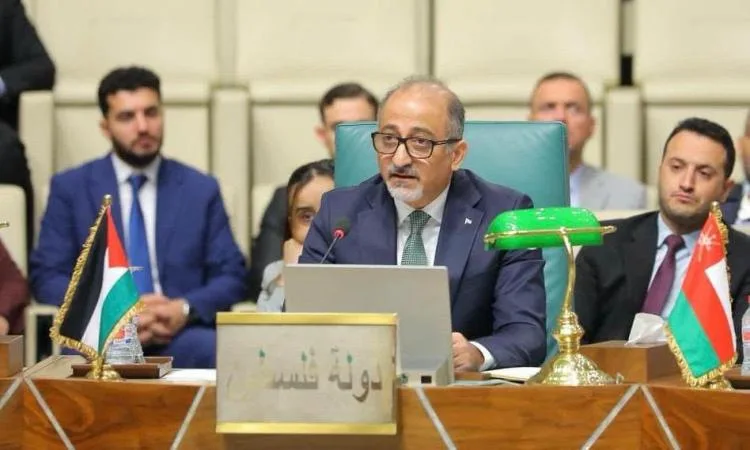
Egypt’s permanent representative to the United Nations, Ambassador Ihab Moustafa Awad Moustafa, told a Security Council session on Sudan that Cairo continued to provide support and assistance to more than 1.5 million Sudanese people.
He voiced concern over the latest military escalation, including repeated attacks targeting civilians and civilian infrastructure.
On sanctions, Moustafa stressed that any discussion should be based on an objective assessment of existing measures and their impact.
Sanctions should remain a tool for the international community to help end the conflict and protect civilians from mercenaries, he said, and not a means of changing the balance of power on the ground or depriving the Sudanese armed forces of the means needed, in Egypt’s view, to fulfil their responsibility to protect civilians.
He said mercenaries and armed groups were terrorising civilians and exploiting Sudan’s national resources, and called for action against activities that contribute to the continuation of the war and the exploitation of the country’s resources.
Egypt was ready to play a “leading role” in co-ordinating efforts between the “Quintet” and the “Quad” to make regional and international initiatives aimed at ending the war more effective, he said.
The Sudan Quad comprises Egypt, Saudi Arabia, the United Arab Emirates and the United States.
The Quintet comprises the United Nations, the African Union, the Arab League, the Intergovernmental Authority on Development (IGAD) and the European Union.
Moustafa cautioned against viewing the Sudan conflict in isolation from wider regional tensions, citing what he described as “foreign interference and a rise in cross-border armed activities”.
Addressing the crisis required greater co-ordination among international and regional initiatives, he said, to support efforts to end the war while preserving Sudanese state institutions and the country’s unity.

