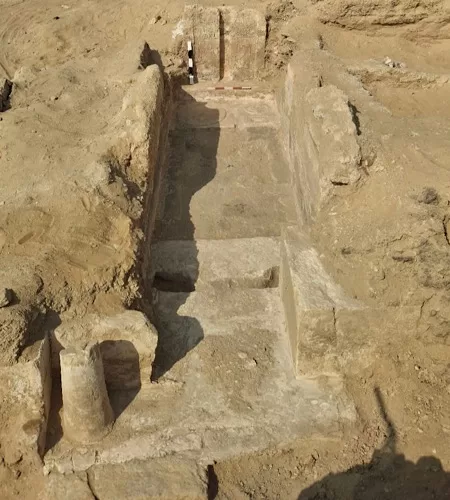




An Egyptian archaeological mission has uncovered an Old Kingdom tomb belonging to an official named Sekhentiu-Ptah, along with a network of burial shafts containing numerous human remains and artefacts at Saqqara, the Tourism and Antiquities Ministry said Saturday.
The discoveries were made during the first excavation season in the western sector of the Bubastion necropolis, a site that was used repeatedly over several historical periods.
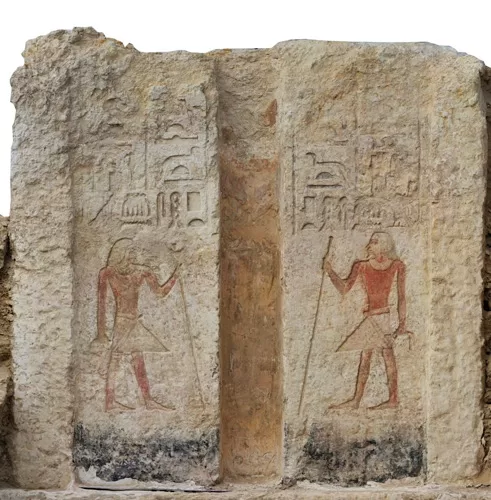
Archaeologists found the remains of the tomb’s funerary chapel, including a false door in its original position. In front of it was a complete set of alabaster funerary objects, including an offering table, an offering disc, a purification basin, a jug and a bowl.
All the objects bear hieroglyphic inscriptions naming the tomb’s owner and listing his titles, including royal chamberlain, overseer of all the king’s works, overseer of royal documents, keeper of the secrets of royal commands, priest of the goddess Maat and overseer of scribes.
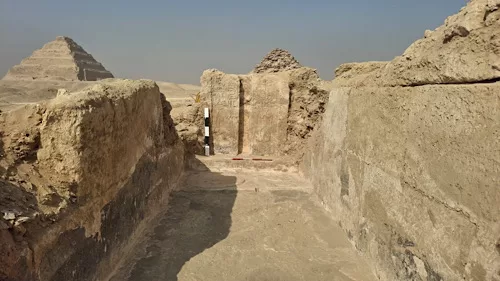
The titles indicate that Sekhentiu-Ptah held a senior administrative position during the Old Kingdom, officials said.
The mission also uncovered interconnected burial shafts containing human burials, large quantities of painted funerary cartonnage and more than 100 faience ushabti figurines.
Three stone coffins were found sealed in their original condition, alongside a wooden falcon statue and a range of pottery vessels and other artefacts, the ministry said.
Initial studies showed that several of the shafts had been looted in antiquity, with openings made by tomb robbers between the burial chambers. Despite the damage, the remaining discoveries could provide important information about the site’s layout, architecture and successive phases of use.
The finds will contribute to research into funerary rituals and burial practices during the Late Period, as well as the repeated reuse of the necropolis over time, officials said.
The mission is continuing its documentation, analysis and comparative studies before publishing its findings in specialised peer-reviewed journals. Archaeologists said further discoveries were expected at the site.