



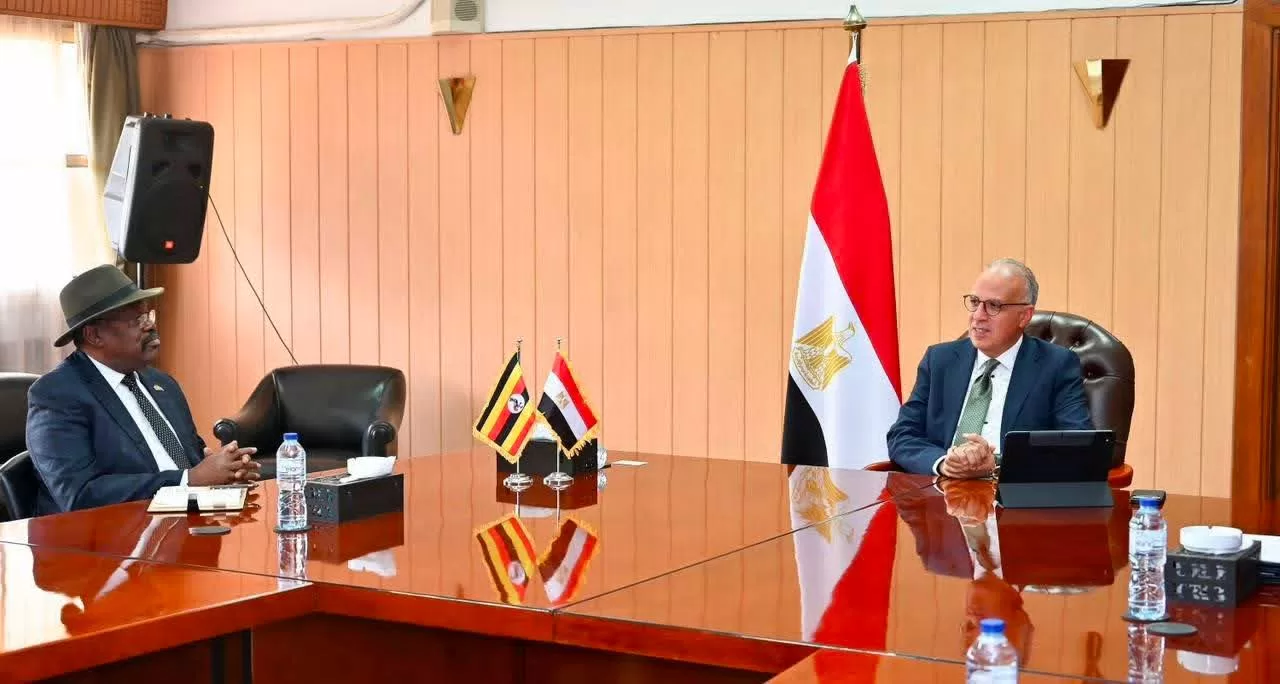
Egyptian Minister of Water Resources and Irrigation Hani Sweilem on Monday reaffirmed that Egyptian-Ugandan co-operation represents a successful model of regional partnership and sustainable development in the Nile Basin.
He stressed the importance of expanding joint development projects that directly benefit citizens, turning aquatic weeds into an economic resource that improves local livelihoods, and preparing the next phase of co-operation under a long-term programme to ensure the sustainability of its achievements.
Sweilem made the remarks during a meeting with the Ugandan delegation participating in the 14th meeting of the Joint Steering Committee for the Egyptian-Ugandan Project for Combating Aquatic Weeds in the Great Lakes, held in Uganda on 1–2 August 2026.
The delegation was headed by David Kasura, permanent secretary at Uganda’s Ministry of Agriculture, Animal Industry and Fisheries.
During the meeting, Sweilem highlighted the deep-rooted ties between Egypt and Uganda, noting that technical co-operation with Nile Basin countries is based on mutual benefit and projects with tangible impacts on people’s lives.
He also referred to Egypt’s US$100 million regional financing mechanism supporting priority development projects in southern Nile Basin countries.
Sweilem praised the achievements of the project’s sixth phase, launched in November 2023, which included the removal of aquatic weeds from Lakes Victoria, Albert and Kyoga.
The phase also involved developing a fish landing site, a modern fish market and a river marina in Kamwokya on Lake Victoria to improve navigation, fisheries, transport and local economic activity.
He also highlighted an integrated programme to convert aquatic weeds into biogas and organic fertilisers, while noting ongoing co-ordination with the Ministry of Agriculture and Land Reclamation and the Ugandan side to explore aquaponics projects combining fish farming with soilless agriculture.
The minister further commended capacity-building programmes for Ugandan technical personnel, describing knowledge transfer and institutional development as key pillars of sustainable bilateral co-operation.

