



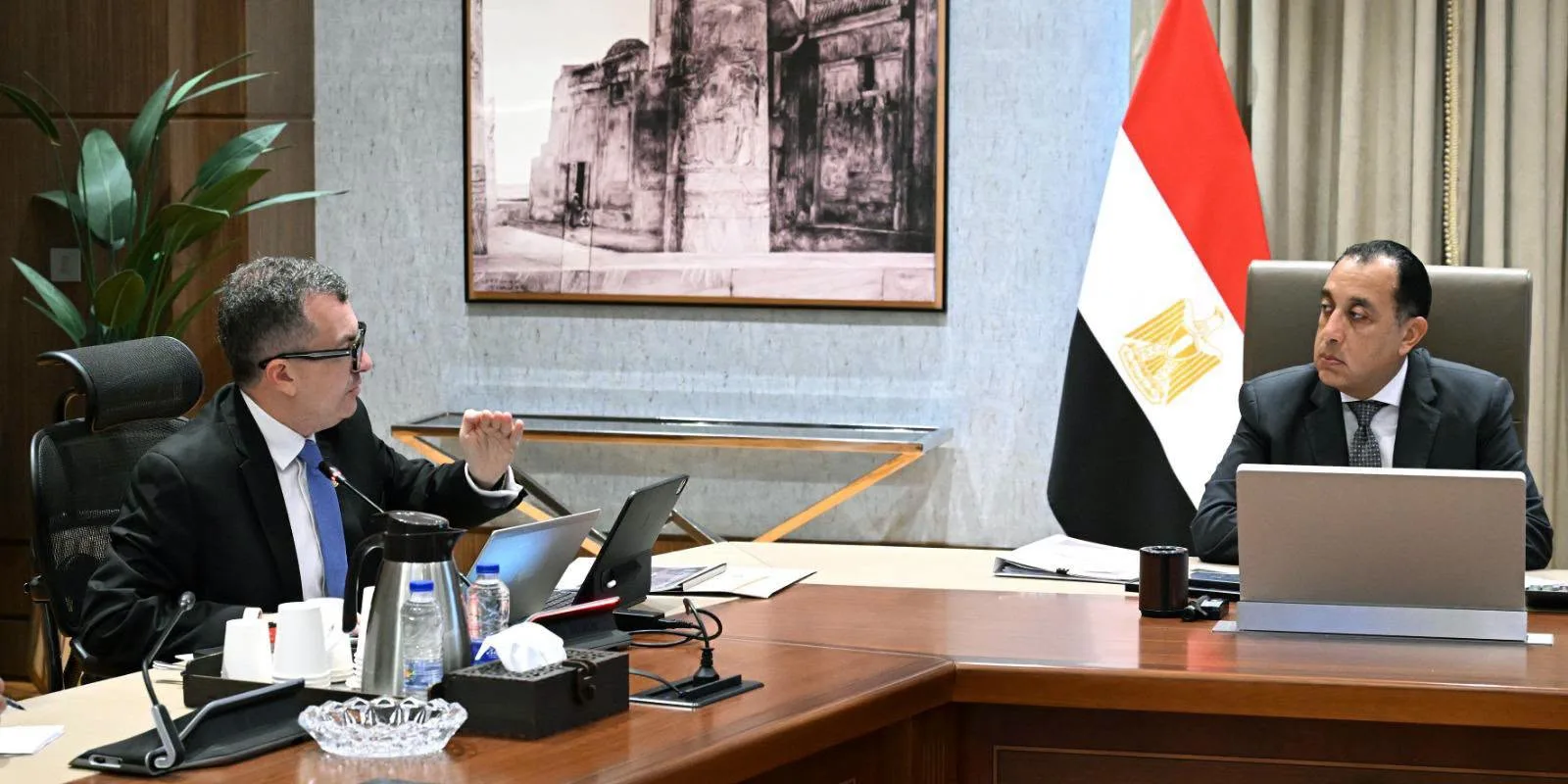
Prime Minister Mostafa Madbouly reviewed on Sunday with Planning and Economic Development Minister Ahmed Rostom the key issues on the ministry’s agenda, including Egypt’s economic performance, investment plans and preparations for a national economic transformation programme.
The meeting began with a review of macroeconomic developments and current performance indicators.
Rostom outlined the main features of the economic and social development plan for fiscal year 2026/2027, which targets economic growth of 5.4 per cent and total investments of LE3.7 trillion.
The private sector is expected to account for around 59 per cent of these investments, reflecting the state’s commitment to expanding private-sector participation and boosting productive capacity and manufacturing.
The minister also reviewed the main features of the National Economic Transformation Programme for 2027-2030, being prepared on the basis of existing sectoral strategies, the industrial development strategy and the national employment strategy.
The programme is built around measures aimed at strengthening the resilience of the national economy in the face of crises, enhancing mechanisms for private-sector participation and enabling businesses to compete more effectively.
It also seeks to raise employment and productivity levels, create jobs that improve citizens’ living standards, and improve the allocation of public and private investments across governorates.
Other priorities include boosting public financial management, increasing energy production and efficiency, expanding the use of energy and enhancing exports, as well as establishing an effective coordination framework among the Central Bank of Egypt and the ministries of finance and planning.
Rostom also outlined the ministry’s efforts to develop legal and legislative frameworks to improve the investment climate and protect investors’ rights.
These efforts include supporting entrepreneurship, startups and fast-growing businesses to enhance their competitiveness.
He further reviewed structural reforms under the State Ownership Policy Document and the government’s initial public offering programme, which aim to create more space for the private sector to lead economic growth.
The ministry is also working to expand innovative long-term financing instruments, diversify funding sources and improve liquidity to facilitate the expansion of national and private-sector projects.
Addressing human capital development, Rostom highlighted recent initiatives aimed at aligning workforce skills with labour market needs.
The minister also referred to an expanded meeting with a delegation from ESLSCA University to discuss renewing and broadening the scientific and training partnership between the government and the university, particularly in preparing and training leaders and employees of the state’s administrative apparatus.
The partnership has provided 1,500 scholarships for young government leaders to pursue a Master of Business Administration in Government, Rostom said. The initiative aims to bring new talent into the government administration and strengthen employees’ human and leadership capabilities.

