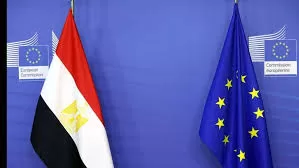




A delegation of the Egyptian Environment Ministry held a series of high-level meetings with European Commission officials in Brussels as part of Egypt’s presidency of the Barcelona Convention and the Mediterranean Action Plan (MAP) for 2026-2027.
The delegation is led by Sherif Abdel Rahim, Chief Executive Officer of the Egyptian Environmental Affairs Agency (EEAA) and President of the Executive Bureau of the Barcelona Convention, and Heba Shaarawy, Head of the Central Administration for Coasts, Lakes and Ports and National Focal Point for the Barcelona Convention,
The meetings aimed to strengthen cooperation in marine environmental protection, sustainable development and efforts to address the impacts of climate change across the Mediterranean region.
The meetings included talks with Dubravka Šuica, European Commissioner for the Mediterranean; Paulina Dejmek Hack, Head of Cabinet of the European Commissioner for Environment, Water Resilience and a Competitive Circular Economy; and Veronica Manfredi, Director at the European Commission’s Directorate-General for Environment responsible for Barcelona Convention-related files within the department tasked with pollution reduction, water resilience and the green transition.
The Egyptian delegation reviewed the outcomes of the 24th Meeting of the Contracting Parties to the Barcelona Convention (COP24), hosted by Cairo, notably the Cairo Ministerial Declaration and the Mediterranean Strategy for Sustainable Development 2026-2035, describing them as a comprehensive regional framework for strengthening joint environmental action and advancing sustainable development goals across Mediterranean countries.
Minister of Local Development and Environment Manal Awad said Egypt’s current presidency of the Barcelona Convention and the Mediterranean Action Plan reflects international confidence in the country’s leading role in marine environmental protection and sustainable development, and represents an important opportunity to advance regional cooperation and strengthen collaboration among Mediterranean countries and their international partners in addressing growing environmental challenges.
Awad stressed the importance of enhancing regional efforts to protect marine biodiversity and expand marine protected areas, contributing to the global target of protecting 30% of marine areas by 2030. She also highlighted the need to combat plastic pollution and support the transition toward a sustainable blue economy, a priority issue during COP24, which was held in Cairo in December 2025.
During the meetings, Abdel Rahim underscored the importance of European Union’s support for implementing the new Mediterranean sustainable development strategy, describing it as the main reference document for regional cooperation in addressing environmental, social and economic challenges and supporting Mediterranean countries in achieving the goals of the 2030 Sustainable Development Agenda.
He said discussions covered a number of key regional priorities, including adaptation to climate change impacts, particularly in coastal areas; strengthening cooperation on nature-based solutions and offshore renewable energy; improving monitoring and early-warning systems; and supporting implementation of the Regional Climate Change Adaptation Framework and Resilience Enhancement Plan for the Mediterranean Region for 2026-2035.
He added that the meetings also featured extensive discussions on ways to strengthen cooperation with the Union for the Mediterranean and build on existing partnerships in the fields of environment, climate action, blue economy and integrated coastal zone management, contributing to greater complementarity among regional initiatives and maximizing the use of available resources and expertise.
The meetings come as part of Egypt’s efforts to strengthen its partnership with the European Union and the Union for the Mediterranean, supporting the implementation of sustainable development goals and contributing to the protection of the marine environment and preservation of natural resources in the Mediterranean region. They also reflect Egypt’s commitment to maximizing environmental and development gains during its presidency of the Barcelona Convention.
The meetings concluded with a review of success stories achieved through programs and projects implemented or currently under implementation in Egypt with European Union funding in the fields of coastal protection, biodiversity conservation, environmental monitoring and updating the national action plan, in coordination with the Mediterranean Action Plan’s Regional Activity Centre for Information and Communication. The two sides also agreed to establish specific implementation mechanisms to maximize the benefits of the meetings’ outcomes during the next phase.

