



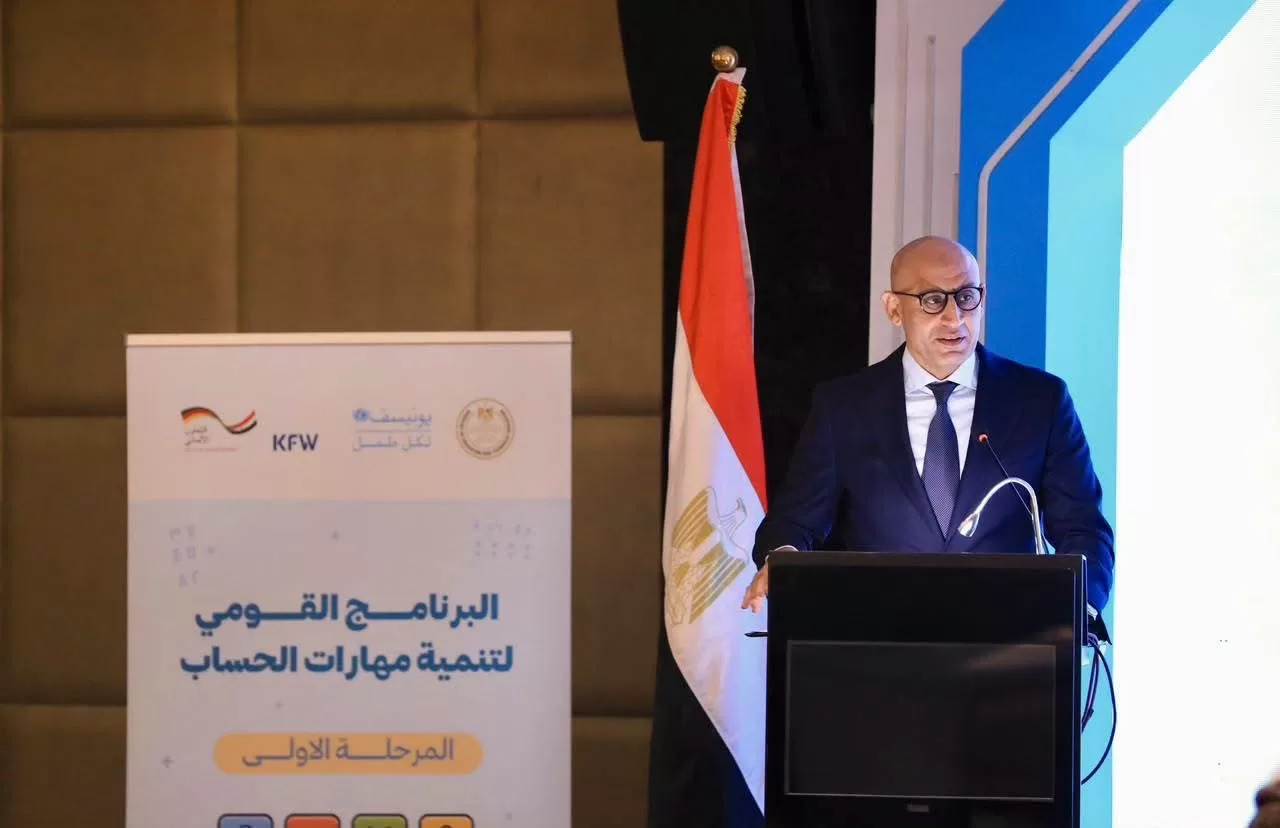
Minister of Education and Technical Education Mohamed Abdellatif on Thursday announced the launch of the fourth phase of the National Programme for Developing Arabic Language Skills and the first phase of the National Programme for Developing Numeracy Skills, in co-operation with UNICEF Egypt and the Sawiris Foundation.
The Arabic programme’s fourth phase will cover the governorates of Sohag, Assiut and Fayoum, while the first phase of the numeracy programme will be implemented in 10 governorates, including Cairo, Giza, Alexandria, Aswan and North Sinai.
School enrolment did not necessarily mean that learning had taken place, stressing that the education system’s responsibility was fulfilled only when children actually learned, Abdellatif said.
The ministry had worked to improve attendance, address teacher shortages and classroom overcrowding, strengthen educational content and improve assessment, adding that reading and numeracy provide children with essential tools for independent learning, logical thinking and problem-solving, he added.
The minister described foundational learning as more than a limited educational intervention, saying it represented “nation-building” at its most fundamental level.
For her part, UNICEF Egypt Representative Natalia Winder Rossi said Egypt was leading education reform as a national priority with support from development partners, adding that lessons from the literacy programme were now being applied to numeracy.
The results achieved reflected a clear vision, strong leadership and genuine partnership among the different stakeholders, the Sawiris Foundation Executive Director Laila Hosny said.
The partnership between the Education Ministry and UNICEF had made a real difference in children’s learning through targeted support for pupils and teachers and evidence-based teaching methods, UN Acting Resident Co-ordinator in Egypt, Christina Albertin, said.
GIZ Country Director Christian Grün said Egypt had placed human capital at the heart of its national development ambitions, adding that Germany was proud to support the country in this investment.
The fourth phase of the Arabic programme will expand to 2,500 additional schools and reach between 500,000 and one million children.
Around 10,000 Arabic language teachers and education specialists will also receive training under the initiative.

