



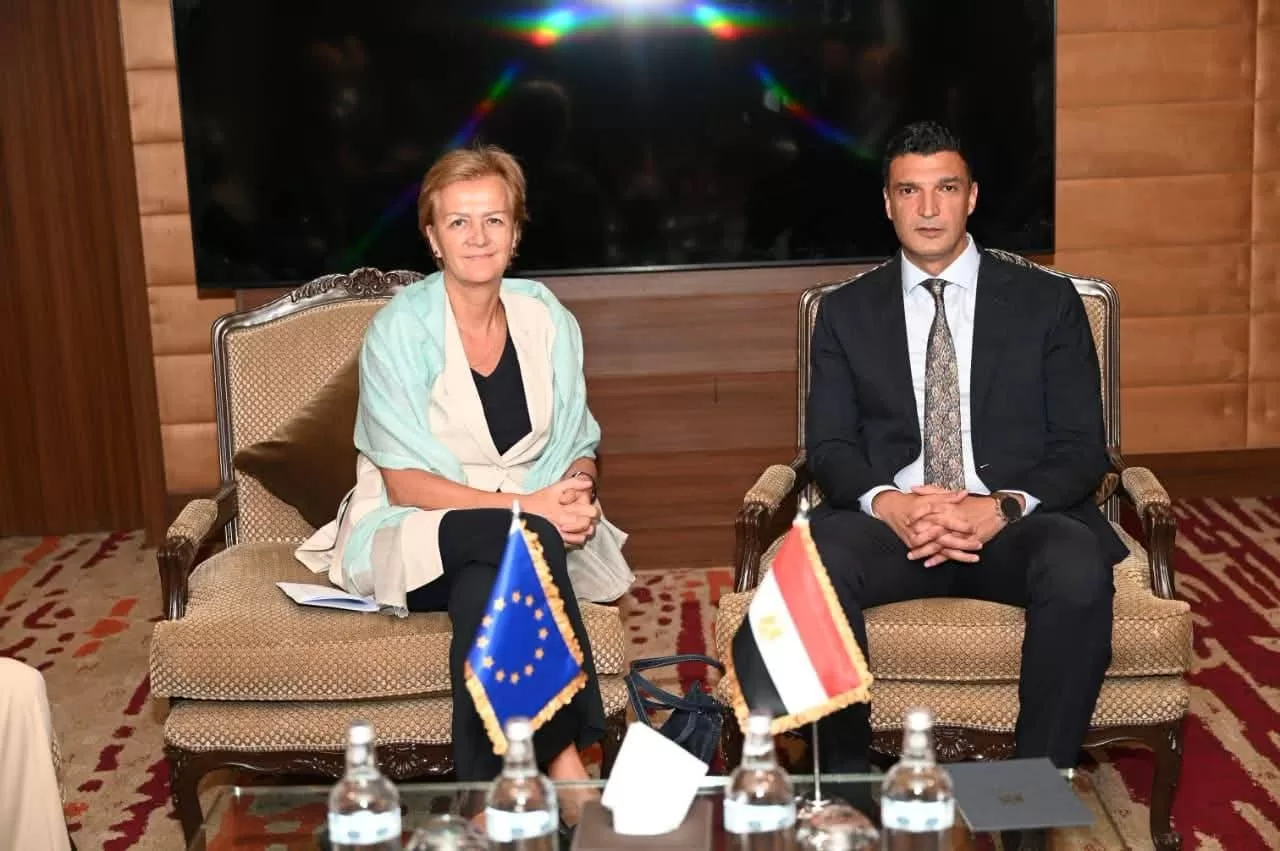
Minister of Industry Khaled Hashem discussed on Friday with Angelina Eichhorst, Head of the European Union Delegation to Egypt, ways to strengthen Egypt-EU co-operation in key industrial sectors, including support for small and medium-sized enterprises (SMEs), automotive localisation, vocational education, and the transition to green industry.
Minister Hashem described the EU as Egypt’s main economic and trade partner, stressing the need to translate the comprehensive strategic partnership into concrete industrial projects, deepen integration across value chains, and attract more European investment.
He has made it clear that SMEs are a cornerstone of the ministry’s updated industrial strategy and outlined efforts to integrate them into local and global supply chains, support feeder industries, expand domestic manufacturing, and improve industrial competitiveness.
Hashem also announced plans to introduce simplified industrial land allocation for small projects, provide ready-to-operate factory units, develop financing tools for feeder industries, and launch citizen-backed investment funds for industrial projects.
According to Hashem, the state is developing a world-class vocational education programme focused on technical, language, and digital skills, expanded factory-based training, and stronger links between graduates and industry. He expressed hope for EU support in securing international accreditation for the programme.
He urged European companies to accelerate investment under the National Automotive Industry Development Programme, noting that early investors would benefit most from its incentives.
He reaffirmed the ministry’s commitment to industrial decarbonisation, energy efficiency, and compliance with the EU’s Carbon Border Adjustment Mechanism (CBAM), highlighting the Industrial Environmental Registry as a key step toward greener exports. He also called for greater EU support in technology transfer, SME investment, and co-operation on industrial accreditation.
Eichhorst underscored the EU’s commitment to SMEs and closer coordination with the ministry, while highlighting opportunities to expand Egyptian exports — including agricultural products, fruits, and fertilisers — and encouraging Egypt to benefit from the Sustainable Investment Facilitation Agreement (SIFA) to attract more European investment.

