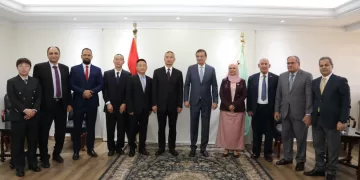




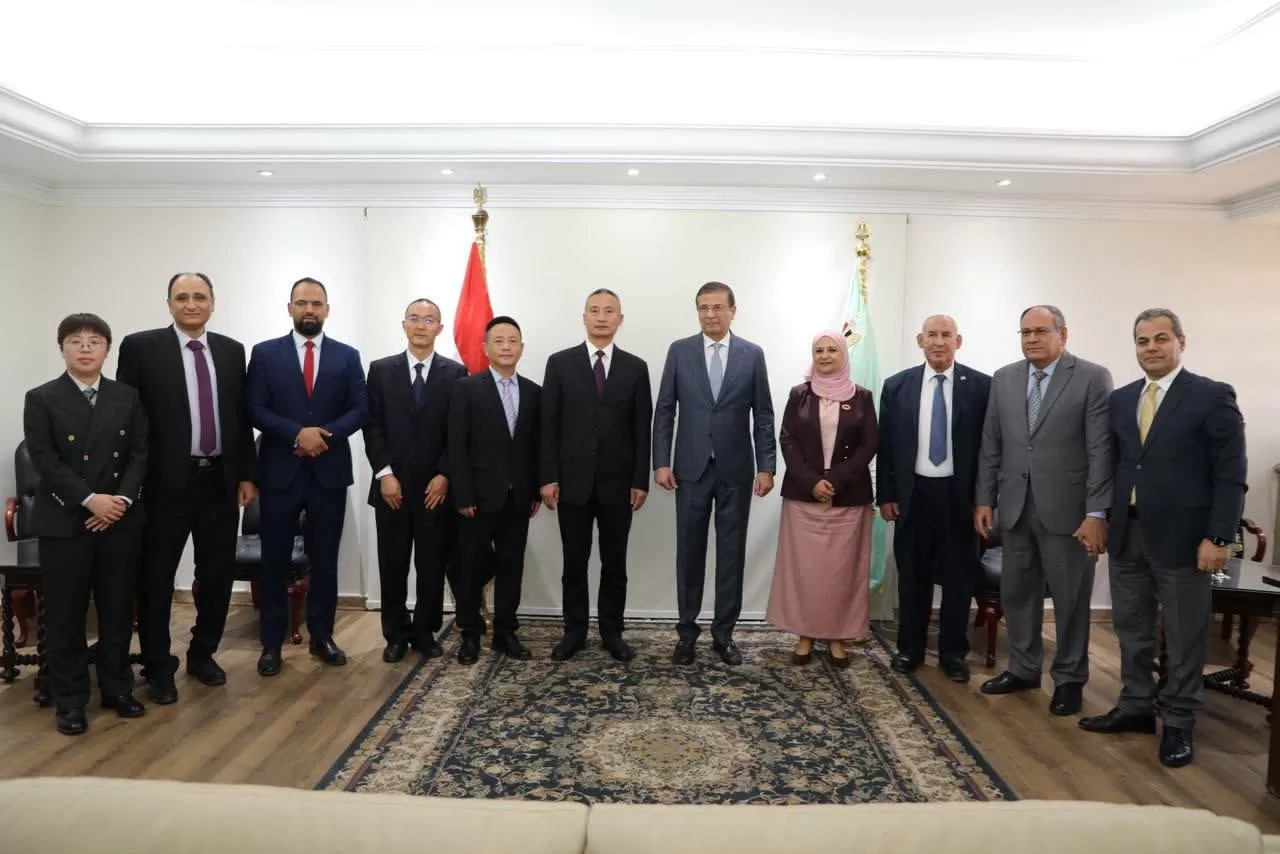
Minister of Agriculture and Land Reclamation Alaa El-Din Farouk on Monday received a high-level delegation from China’s Institutes of Agricultural Pesticides Control and Identification (ICAMA), headed by Institute Director Huang Xiujiu, to discuss localising pesticide manufacturing, transferring modern technologies and strengthening scientific and technical cooperation.
During the meeting, Farouk stressed that co-operation with China is a key pillar of the Ministry’s strategy to develop Egypt’s agricultural sector.
He highlighted government efforts to improve the investment climate and provide facilities to attract investment, particularly in pesticides and agricultural production inputs.
The minister said Egypt is prioritising private-sector participation, local manufacturing and joint investment.
He noted that transferring and localising modern Chinese technologies would help establish a national industrial base producing high-quality pesticides in line with international standards, reducing imports and supporting self-sufficiency.
Farouk also emphasised investment in human resources, saying the co-operation would include specialised training and knowledge transfer for young engineers and researchers to strengthen integrated pest management in line with the latest international practices.
Head of the Agricultural Pesticides Committee Hala Abu Yousef presented a draft memorandum of understanding with ICAMA to establish an institutional framework for exchanging expertise, developing pesticide control systems and building technical and research capabilities.
The Chinese delegation’s programme includes visits to pesticide factories in 6th of October City and citrus and vegetable export farms in Beheira Governorate to review manufacturing processes, pesticide use and agricultural practices.
The delegation praised Egypt’s agricultural development and promising investment opportunities, reaffirming its commitment to transferring advanced technologies, developing safe and effective pesticide compounds, and providing technical and training support to Egyptian personnel.
The co-operation is expected to support sustainable agricultural development, strengthen food security and enhance Egypt’s capacity to expand agricultural exports to global markets.

