



Paleontologists have uncovered the fossilised teeth of at least seven shark species in Egypt’s Abu-Tartur Plateau, offering fresh evidence of a highly productive marine ecosystem that existed in the region tens of millions of years ago.
The discovery was made in phosphate-bearing layers of the Duwi Formation, which date to the Cretaceous period, between roughly 145 million and 66 million years ago. At the time, much of what is now northern Egypt lay beneath a warm, shallow sea.
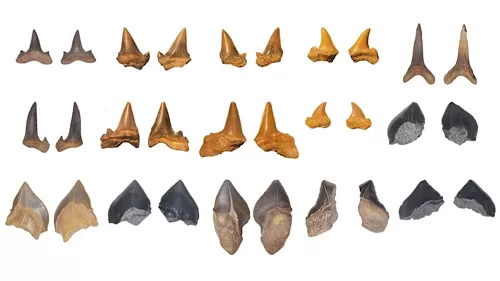
Researchers led by paleontologist Tarek Yassin of Cairo University found 14 previously unreported shark teeth during a new investigation of the site. The fossils represent five species not previously identified at Abu-Tartur, adding to two species documented in earlier research.
The findings, published in the journal Cretaceous Research, point to a diverse shark community living along the ancient northern African coastline.
“Collectively, this assemblage highlights a nutrient-enriched, high-productivity marine ecosystem along a phosphogenic shelf margin,” the researchers wrote.
The Duwi Formation’s extensive phosphate deposits are thought to have formed in waters rich in nutrients and marine life. Such deposits can preserve evidence of ecosystems in which strong food webs supported several large predators.
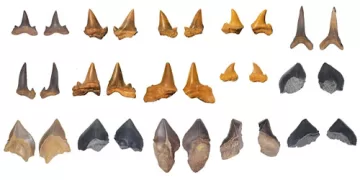
The fossil teeth varied widely in shape. Some were long and slender, while others were broad and serrated, likely adapted for slicing. Additional teeth were sharply curved, and some featured small side projections known as cusplets.
Because shark skeletons are largely made of cartilage and rarely fossilise, their teeth are often the primary evidence available to scientists studying ancient shark species. The diversity of teeth found at Abu-Tartur provides a glimpse into a once-thriving marine environment that has long since disappeared beneath Egypt’s desert sands.

