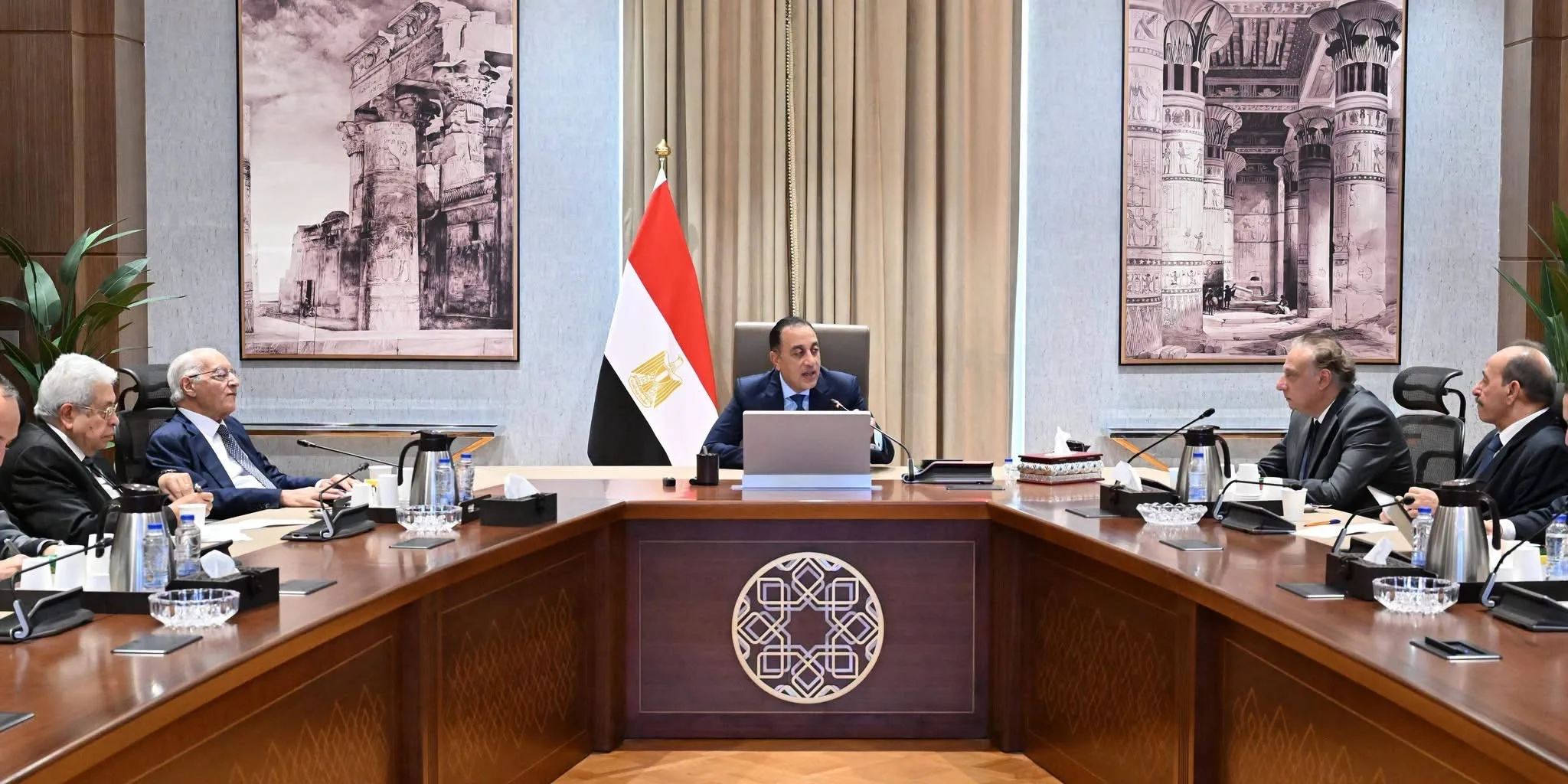




Prime Minister Mostafa Madbouly met members of the Political Affairs Advisory Committee at the government headquarters in the New Capital , as part of regular meetings aimed at exchanging views and ideas on key regional and international issues.
At the beginning of the meeting, Madbouly stressed his keenness to maintain dialogue with committee members and benefit from their views and proposals, particularly amid accelerating developments on the regional and international fronts and the continued impact of the current international political landscape on economies worldwide.
The Prime Minister raised a number of questions concerning the political situation in the region, seeking the experts’ assessments of developments, including the course of the US-Iran war, the prospects for its continuation and its potential repercussions for the region and the world. He particularly highlighted the adverse effects of the conflict on energy supplies and rising prices.
Madbouly also sought the committee members’ assessment of the outcome of the latest US elections and developments in the Israeli electoral landscape, as well as the implications of these developments for regional affairs at both the geopolitical and economic levels.
For their part, committee members pointed to the growing complexity of the current situation, the widening scope of conflicts and their increasing interconnectedness. They noted that political, security and economic issues had become closely intertwined, with uncertainty representing one of the most serious challenges facing the regional and international landscape.
The members presented their assessments of regional developments, the various tools available to the parties involved in the conflicts, and recent moves across the region. They also discussed developments in the United States and Israel and outlined possible scenarios for the coming period.
They further highlighted the considerable economic pressures facing the world as a result of continued tensions in the Gulf region and their impact on energy prices, warning of the catastrophic consequences that any further military escalation could have.
The meeting also addressed Egypt’s international partnerships, particularly with major powers and within the Arab framework, as well as opportunities to strengthen and expand these partnerships.
In this context, committee members praised Egypt’s position and the clear principles underpinning its foreign policy towards regional crises. These include rejecting military escalation, calling for dialogue and diplomatic solutions to settle disputes, upholding states’ sovereignty and territorial integrity, and rejecting any attacks against fellow Arab countries.
The committee members stressed the importance of being transparent with citizens and keeping them informed of the facts surrounding various issues. They called for ministers and relevant officials to play an active role in explaining government positions to public opinion, while giving particular attention to dialogue with young people and addressing their concerns.