





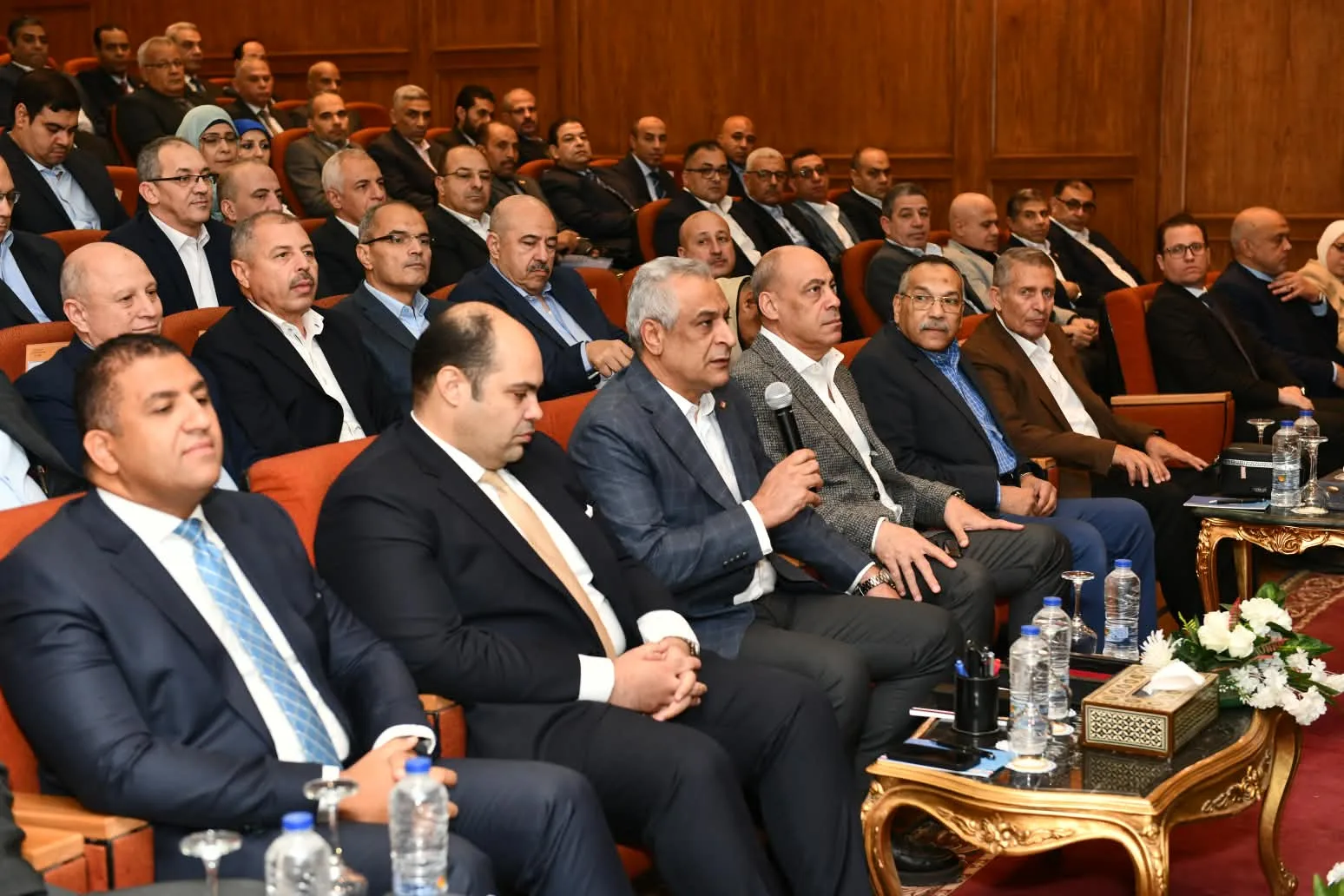




Egypt’s Prime Minister Mostafa Madbouly attended on Monday the signing ceremony of the National Compact for Accelerating the Implementation of Egypt’s Universal Health Insurance System by 2030, in co-operation with the World Bank Group (WBG), aimed at expanding coverage and strengthening citizens’ financial protection.
The compact was signed by Health and Population Minister Khaled Abdel-Ghaffar, Finance Minister Ahmed Kouchouk and Deputy Minister of Foreign Affairs for International Co-operation Samar Al-Ahdal.
The ceremony was attended by Planning and Economic Development Minister Ahmed Rostom and WB’s Managing Director of Operations Anna Bjerde, alongside representatives of development partners.
Madbouly described the system as a major health and social reform priority, stressing the need to upgrade healthcare facilities, secure qualified personnel and ensure sustainable financing through co-operation among government entities and development partners.
The compact supports the second phase of the system, which will extend coverage to Damietta, Kafr El-Sheikh, Minya, Matrouh, North Sinai and Alexandria, bringing approximately 18.5 million additional citizens under the system by 2030.
The combined target for the first and second phases is 23.5 million beneficiaries. The plan provides for upgrading 935 healthcare facilities, including 827 primary healthcare centres and 108 hospitals and critical care units, in line with national accreditation standards.
It also targets reducing out-of-pocket spending to below 28 per cent of total health expenditure in the targeted governorates, increasing the share of locally produced essential medicines and health products to more than 75 per cent by value and 90 per cent by volume, and securing LE178 billion in financing, comprising LE163 billion from the public sector and LE15 billion from the private sector.
The compact also establishes a joint monitoring, evaluation and accountability framework, with measurable indicators and timelines covering geographical expansion, facility readiness, registration, financing and service quality.
Health authorities, the WB and development partners will co-ordinate implementation to ensure accessible, high-quality and sustainable healthcare, the Cabinet said in a statement.