










Governments pursuing austerity often face a difficult test: how to rein in public spending without slowing investment, weakening economic activity or undermining growth.
How to make sure that spending cuts won’t impact investment and gross domestic (GDP) growth is what governments seek while adopting austerity measures.
Earlier this month, the Cabinet approved a three-month spending rationalisation plan for fiscal year (FY) 2026/27. According to the plan, all state bodies must cut electricity use by 20 per cent and vehicle fuel by at least 30 per cent.
The plan is sound, and the objective is great. This is the foundation of fiscal discipline. How and where to cut public spending.
In the coming three months, at least a fifth of remaining goods-and-services allocations is frozen. Advertising, receptions, conferences and foreign travel are out. New projects wait until the end of June 2027, with exceptions. The decree can be extended.
From theory to practice
Italian economists Alberto Alesina, Carlo Favero & Francesco Giavazzi examined thousands of fiscal measures implemented across sixteen advanced economies. In their book “Austerity: When It Works and When It Doesn’t”, they argue that expenditure-based fiscal consolidation can be more effective in reducing public debt. But that would impose smaller economic costs than consolidation based primarily on tax increases.
“Spending cuts have much smaller costs in terms of output losses than tax increases,” the authors say in the book.
Italian-born American economist Vito Tanzi explains that strong fiscal institutions establish constraints on government expenditure and encourage policymakers to prioritize public resources.
“Governments could scale back their activities without necessarily compromising their objectives,” Tanzi argued in his book “Public Spending in the 20th Century: A Global Perspective”.
According to him, without effective budgetary controls, governments risk “accumulating excessive expenditure, persistent deficits, and unsustainable public debt.”
“Fiscal rules and institutions that establish effective budget constraints are more likely to lead to leaner and more efficient governments,” Tanzi argues, noting that the expansion of government expenditure does not automatically translate into better economic or social outcomes.
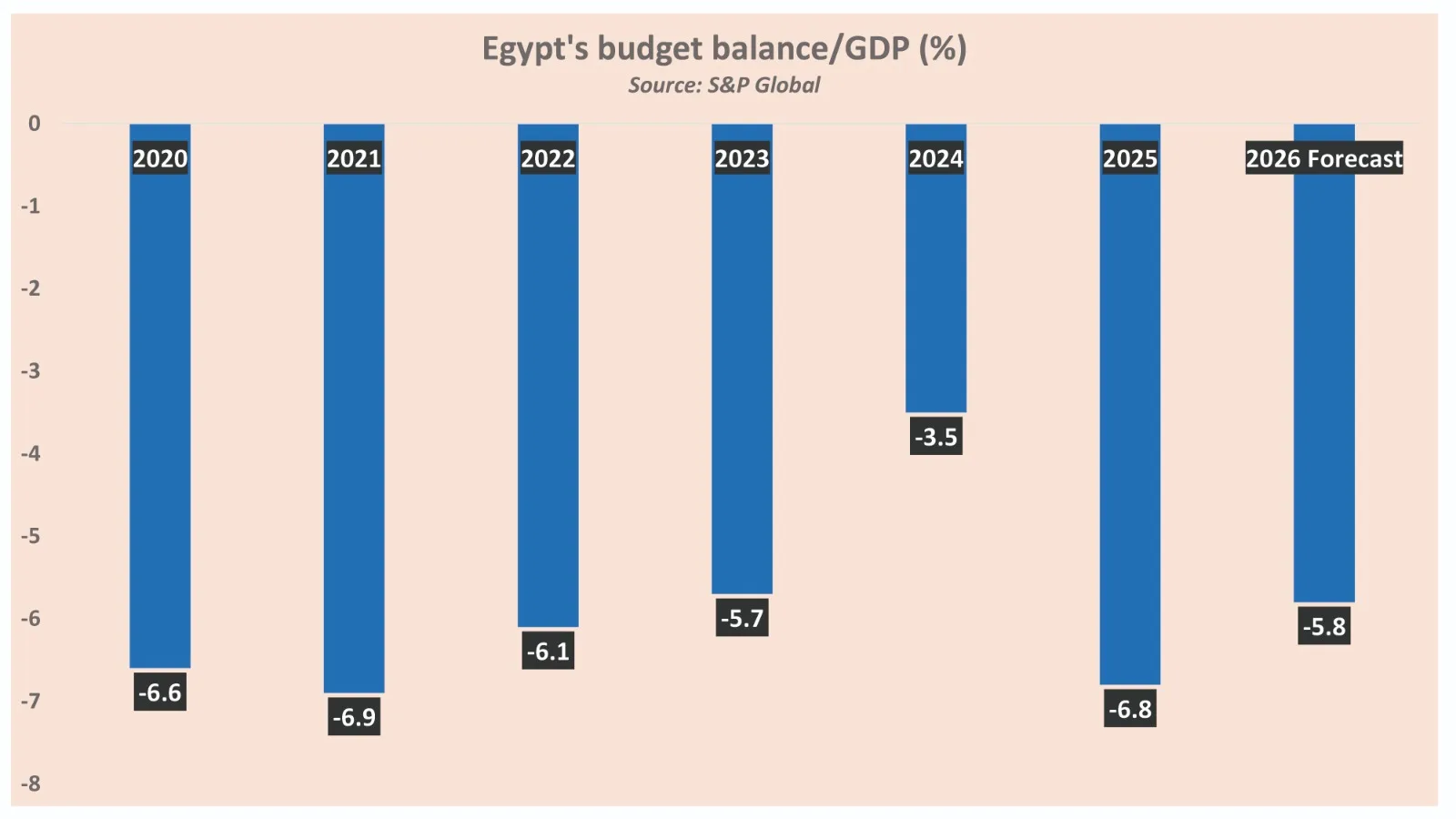
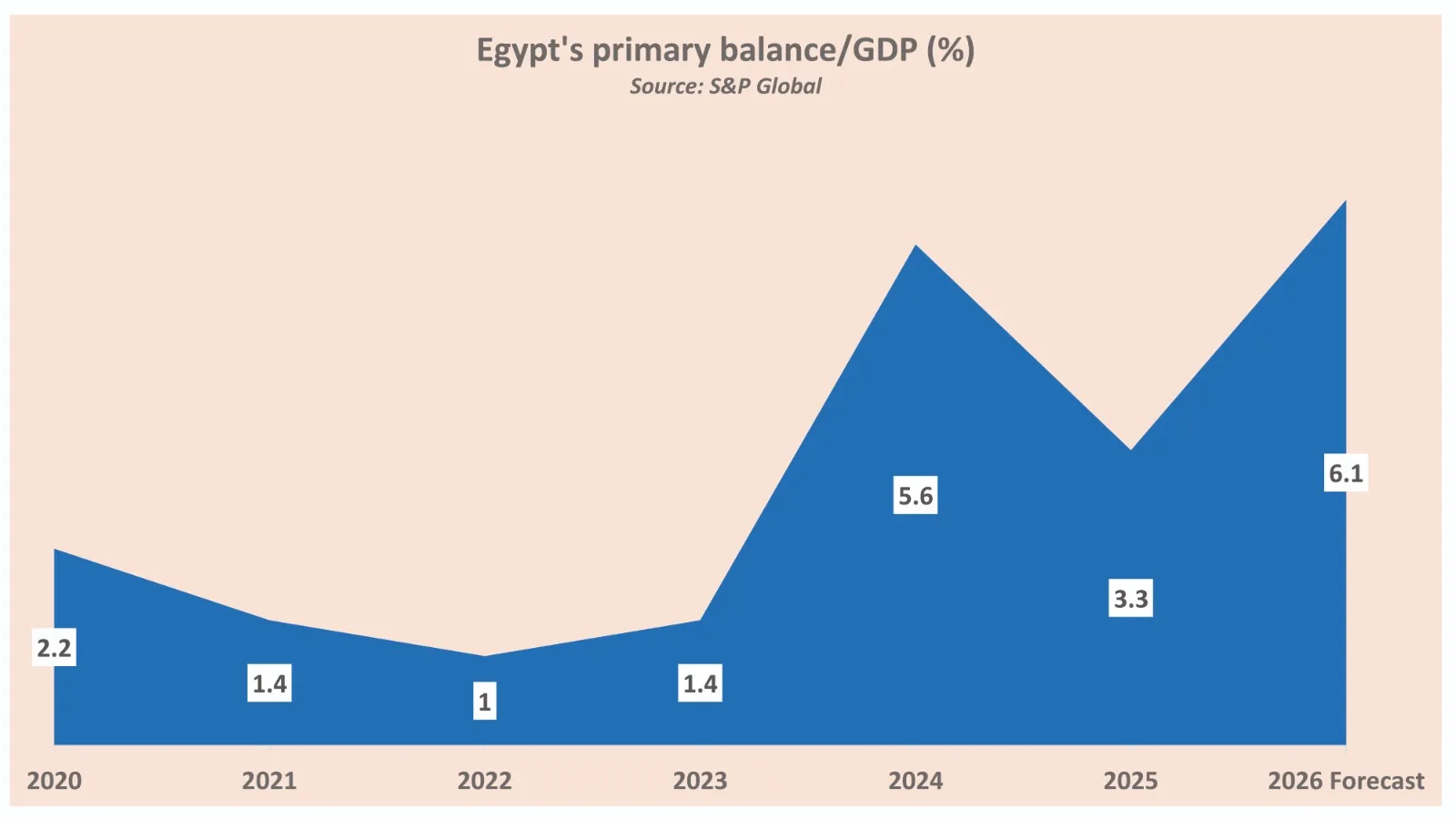
From a budgetary perspective, the consolidation itself is already working in Egypt. The state budget closed FY2025/26, ended on June 30, with a primary surplus of 4.9 per cent of GDP.
The overall budget deficit stood at 5.8 per cent, against a target of 7.3 per cent, according to the Ministry of Finance. This year’s goal is a 5 per cent surplus and a 4.9 per cent deficit.
Desirable GDP growth above 5 per cent
The monetary and financial policymakers have pledged to the International Monetary Fund (IMF) to unlock Egypt’s growth potential through market-friendly reforms that will attract investments, raise productivity and competitiveness, support exports and create jobs.
GDP growth above five per cent is imperative to ensure job creation and a trimmed inflation rate. However, such a desirable growth will highly rely on a number of pillars, i.e. tourism and higher inflows of foreign direct investment (FDI), in addition to external key factors such as oil prices and rising threats of regional tensions.
Friedman’s case for trimmed spending
In the early 1980s, American economist Milton Friedman wrote: “A far better way to stimulate the economy is to reduce government spending, taxes, and controls, leave more money in our pockets to spend or invest in accordance with our own values.”
Friedman argued in his book “Bright Promises, Dismal Performance” that reducing government expenditure and taxation allows individuals and businesses to retain more of their resources and make independent consumption and investment decisions.
However, private investment cannot replace every form of public investment. It only applies to commercially viable projects where private investors are willing to provide liquidity.