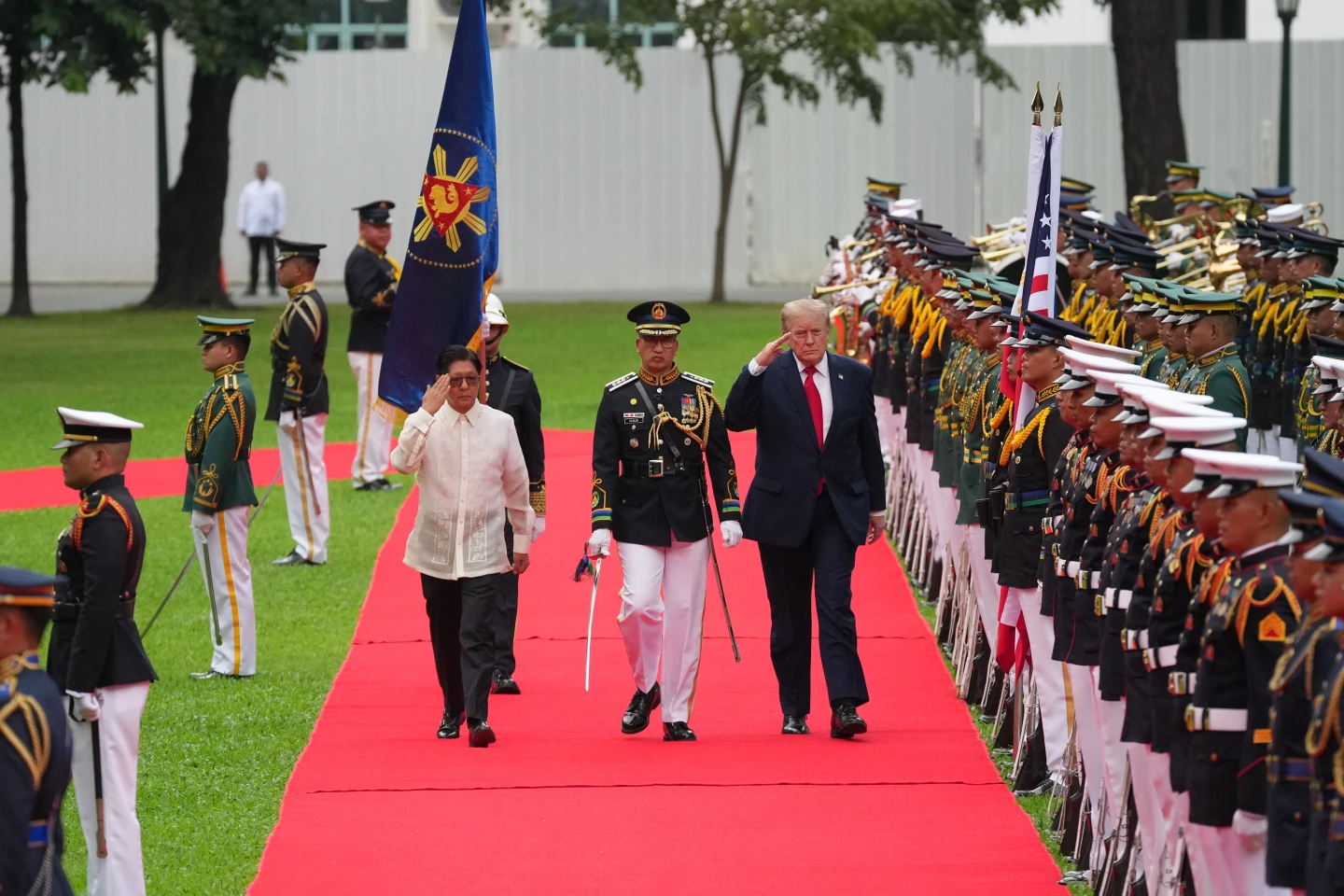






President Donald Trump landed in China on Wednesday, seeking to reinforce the US status as the world’s leading technology power, but a distressing series of technical outages back home has left the administration scrambling to calm the American public.
Trump had been nonchalant on his first day on the ground in Asia about the outages that left people in the United States worried about accessing their email, checking their bank accounts or safely flying on an airplane.
“It’s fine,” Trump pronounced on Tuesday from the Philippine capital of Manila, suggesting it was all just a consequence of being a nation that is “big and powerful.”
But the outages involving Microsoft, the Federal Aviation Administration, JPMorgan Chase and the National Security Agency’s communications network are starting to overshadow Trump’s visit. They raised the specter that artificial intelligence can disrupt daily life, as new cyber vulnerabilities identified require software to be constantly upgraded to fix flaws or other security holes, known as patching, which is supposed to improve how the technology runs.
So at the start of the second day of Trump’s trip, Secretary of State Marco Rubio stepped in to reassure Americans on Trump’s behalf. He told reporters there was “zero” evidence that the outages are connected or tied to rival nations, cyber hackers or criminals.
“Sometimes when you are going in to fix your system because you’ve identified a vulnerability, it creates a short-term disruption,” said Rubio, who is also Trump’s national security adviser.
“That’s how it’s been described to me in terms of the role” that AI “might have played in it.”

