






By Ahmed Sallam
The African continent has firmly established itself as a cornerstone of 21st-century international rivalry, driven by its vast mineral wealth, abundant natural resources, strategic energy reserves, rare minerals, sprawling agricultural lands and promising markets. Compounding this appeal is its vital geographical position, bridging global trade routes and maritime corridors, which makes the region far more than a mere theatre for political influence or military posture.
Consequently, Africa occupies an increasingly prominent place in the strategic calculations of the major global powers, foremost among them China, the United States, Russia and the European Union. Each strives, to varying degrees and through distinct mechanisms, to consolidate its presence, safeguard its interests and help shape Africa’s trajectory.
Weighing in on this dynamic, an article published earlier this month in the American magazine Forbes, entitled “America Buys Africa’s Minerals… While China Buys Influence Papers”, contrasted Washington’s increasingly narrow focus on securing critical minerals with Beijing’s multi-pronged approach, rooted in infrastructure investment, finance, trade and enduring bilateral relationships.
The true value of this comparison lies not in crowning a victor in the contest for continental influence, but in scrutinising the underlying models each nation projects and how well they align with Africa’s core needs and popular aspirations. China has consistently rejected the view of the continent as merely a quarry for raw materials. Instead, over decades, it has woven its partnerships through tangible projects spanning transport, energy, communications, manufacturing and vocational training, all anchored in a steadfast commitment to state sovereignty and non-interference in domestic affairs.
This vision was formally codified in November 2021, when China’s State Council Information Office released a white paper titled “China and Africa in the New Era: An Equal Partnership”. The document underscored Beijing’s pledge to forge a community with a shared future between China and Africa, expanding collaboration across development, trade, technology transfer and capacity building. These tenets complement the cooperative frameworks established through the Forum on China-Africa Cooperation and the Belt and Road Initiative.
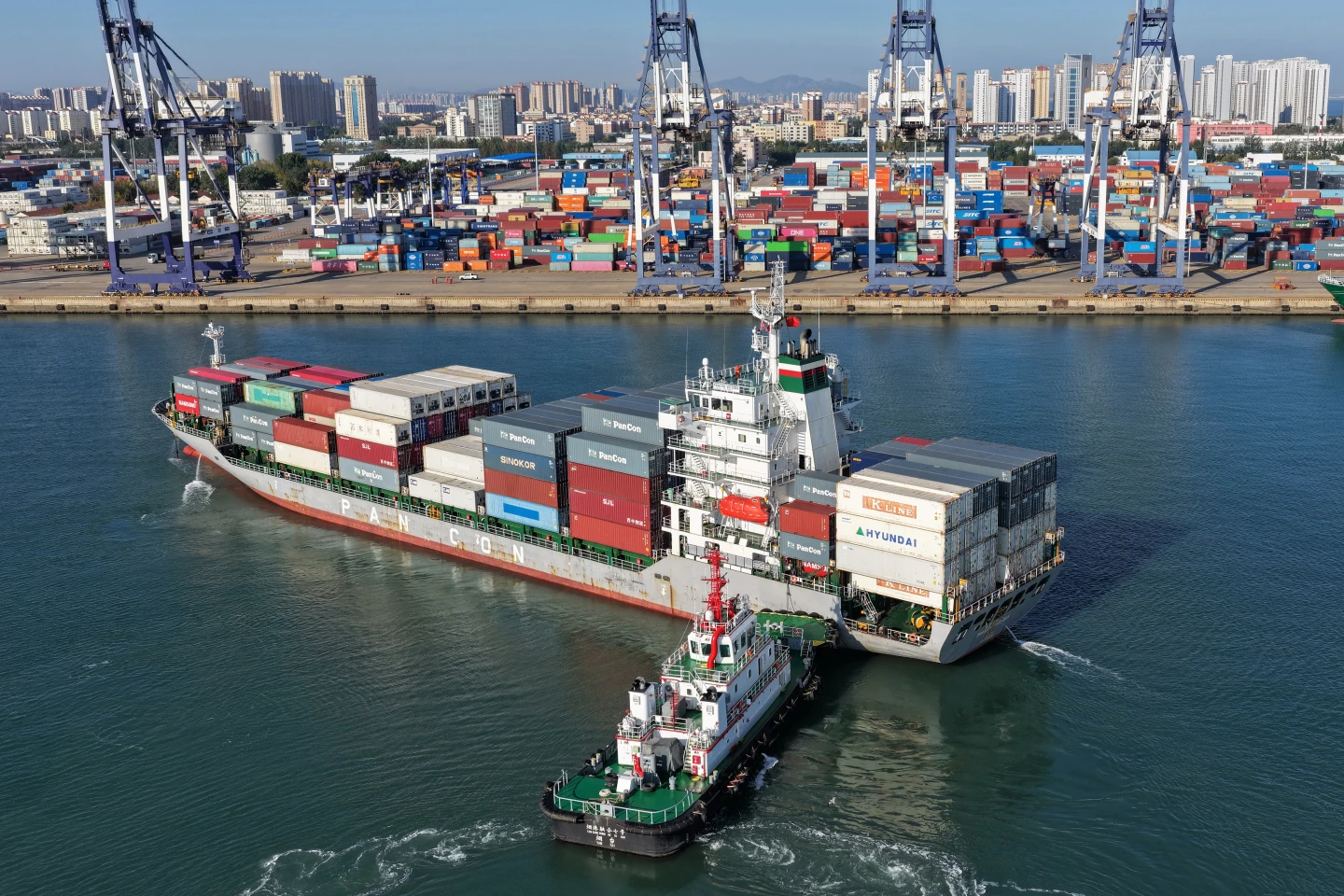
While Beijing’s strategic self-interest and the inevitable friction points of international cooperation remain undeniable, the defining hallmark of the Chinese model is its tangible footprint, seen in sprawling railway networks, modern highways, deep-water ports, power stations and industrial parks. This highlights a crucial pivot away from pure resource extraction towards localised manufacturing within Africa, unlocking genuine added value and expanded employment opportunities.
A pivotal milestone in this evolving relationship is Beijing’s decision to extend a zero-tariff policy to all African nations that maintain diplomatic ties with China, including Egypt, taking effect on 1 May 2026. The policy opens significant pathways for African exports to enter the Chinese market, encompassing Egyptian staples such as oranges, strawberries and dates, and so secures domestic producers a competitive foothold in one of the world’s largest consumer economies.
These milestones carry profound resonance for Egypt, which in 2026 commemorated seventy years of diplomatic relations with China, formally established on 30 May 1956. The partnership has yielded landmark strategic projects, including the TEDA China-Egypt Economic and Trade Cooperation Zone in Ain Sokhna, the Light Rail Transit (LRT) network and the soaring towers of the Central Business District in the New Administrative Capital, alongside robust technical cooperation in energy, communications and technology. Further cementing these ties, the Chinese and Egyptian governments finalised a non-refundable economic and technical cooperation grant on 6 November. Valued at 100 million Chinese yuan from Beijing, the grant is earmarked to fund vital development initiatives, reinforcing mutual cooperation at the highest levels.
For Cairo, a golden opportunity lies in leveraging its strategic partnership within Egypt-China frameworks to supercharge joint manufacturing. By capitalising on its prime geographic position, robust infrastructure and the Suez Canal Economic Zone, Egypt can spearhead productive industrial ventures tailored to broader African markets.
Reflecting broader continental sentiment, a 2026 report by the Afrobarometer network revealed that China captured 62% positive public approval for its economic and political footprint across 38 surveyed African nations, outstripping the United States (52%), the European Union (50%) and Russia (36%). While these figures should not be read as an infallible verdict on the Chinese model, they powerfully underscore how tangible economic engagement and developmental delivery shape public perceptions of international partners.
Looking ahead, China’s paramount challenge will be driving local value addition, executing technology transfers, localising domestic industries and balancing bilateral trade and financial flows. Simultaneously, African administrations carry the solemn duty of negotiating robust frameworks that fiercely guard their citizens’ interests.
Ultimately, Africa does not face an ultimatum to choose between Washington, Beijing or Moscow. Instead, the continent requires diverse, balanced partnerships that honour its sovereignty and fortify its self-determination in charting its own developmental destiny. The true measure of any global power’s success in Africa will be gauged not by the volume of wealth extracted from its soil, but by its tangible contribution to fostering domestic productive capacities and empowering the future of Africa’s peoples.
Ahmed Sallam
Expert on Chinese affairs and visiting professor at North China University of Technology in Beijing

