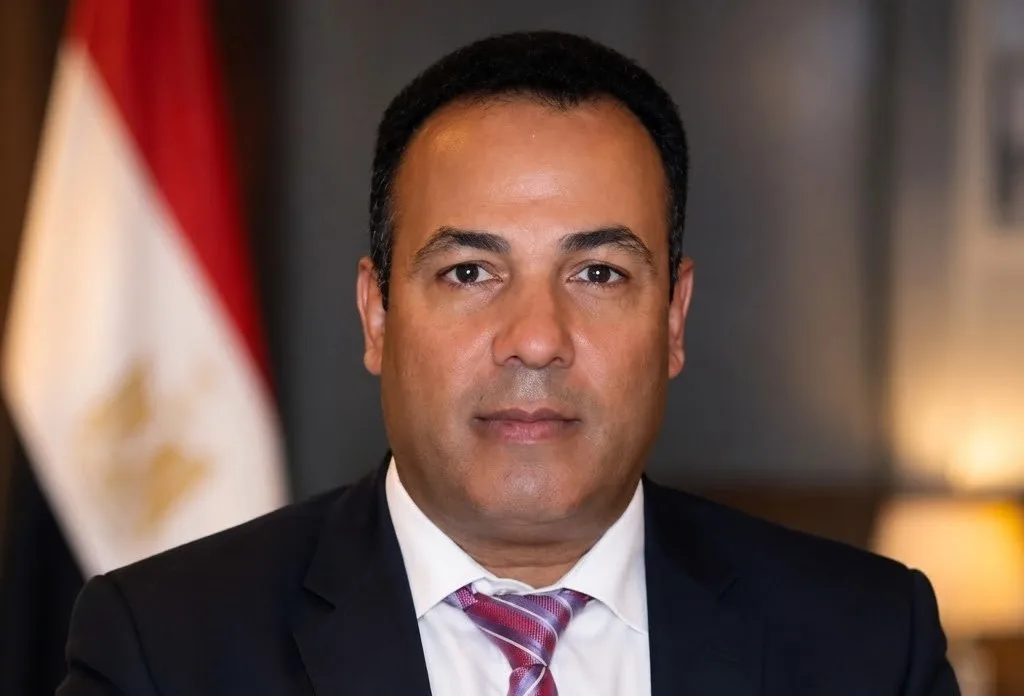












By Ramadan Arafa
Many of us will have experienced that moment when a shocking piece of news arrives on our phones, or a worrying video clip appears on our screens, and with it a simple yet critical question: is what we are seeing real, or just another form of disinformation? In a world where information spreads faster than it can be verified, the challenge is no longer merely knowing what is happening, but knowing what is truly worth believing.
This is where the ‘ChatEgypt’ platform gains its significance, as a step towards bringing reliable information directly to citizens. By harnessing technology and artificial intelligence, it helps users to distinguish fact from rumour. Confronting misinformation is no longer a purely reactive media exercise, carried out after a rumour has already spread; it now requires technological and institutional tools capable of making accurate information accessible and of verifying it in good time.
In this context, the Egyptian government, through the Cabinet’s Media Centre, launched the interactive digital platform ‘ChatEgypt’ at the Egypt 2026 Forum. The initiative aims to strengthen information-verification mechanisms and to give the public easier access to official news, statements and reports through a single digital gateway.
One of the platform’s key advantages is that it consolidates information and statements issued by ministries, state bodies and governorates in an integrated database. Citizens can therefore obtain information directly from its official source, rather than trawling through multiple websites or relying on circulating posts of unclear origin and accuracy. This is particularly vital in a fast-moving digital environment, where rumours often outpace verification and quick access to documented facts is essential to curbing the spread of false news.
According to published details, the platform’s database contains more than 21,000 data entries, alongside official statements and information gathered from various government entities. The value of this repository goes beyond data aggregation: it serves as a reliable reference point when addressing controversial claims or circulating news, while strengthening coordination among official bodies, which can update and correct information through the relevant authorities.
The platform has four main sections – News Corner, Statistics, Awareness and Citizen Enquiries – offering diverse ways of obtaining, understanding and verifying information.
News Corner lets users follow updates from official bodies, while Statistics provides verified data. Awareness helps users to recognise disinformation techniques, rumours and methods of manipulating digital content.
Citizen Enquiries, meanwhile, is an interactive space where users can search for topics of interest and verify circulating news or statements related to them. As the platform’s digital services evolve, this channel will become increasingly important for examining texts, images and videos and linking them back to their original sources and contexts.
The use of artificial intelligence is a key part of developing digital verification tools, particularly given the rising use of deepfake technology to generate images, videos and audio recordings that the average user may find hard to spot as manipulated. When integrated into a comprehensive verification framework, such technologies help to analyse texts, images and video clips, comparing them against original content and available data to assess their temporal and spatial consistency.
A video clip may be authentic in itself yet be re-posted as a new event or linked to a different location, creating a misleading impression even though the visual material is not wholly fabricated. Verification is therefore not limited to asking whether content is real or fake; it extends to identifying its source, its production date and the context in which it is presented.
The platform’s significance goes beyond its technical capabilities to a broader issue: building digital awareness and strengthening citizens’ ability to evaluate critically the information they encounter. Technology, however advanced, cannot on its own prevent the spread of rumours if content continues to be shared without review, or if there is no desire to verify sources.
A digital culture grounded in verification, cross-referencing of sources, distinguishing fact from opinion and avoiding sensationalist headlines thus remains an essential part of combating disinformation.
A conscious citizen does not merely ask whether a story is true, but actively looks for its source, publication date and context, and avoids re-sharing questionable information before verifying it. Such a citizen also recognises that a post’s being shared frequently does not guarantee its accuracy, and that a photo or video can convey a misleading impression if taken out of its original context.
Hence the importance of combining technological tools with awareness-raising efforts. The platform’s role is not confined to delivering and correcting information; it extends to helping users acquire the skills needed to engage responsibly with digital content.

