





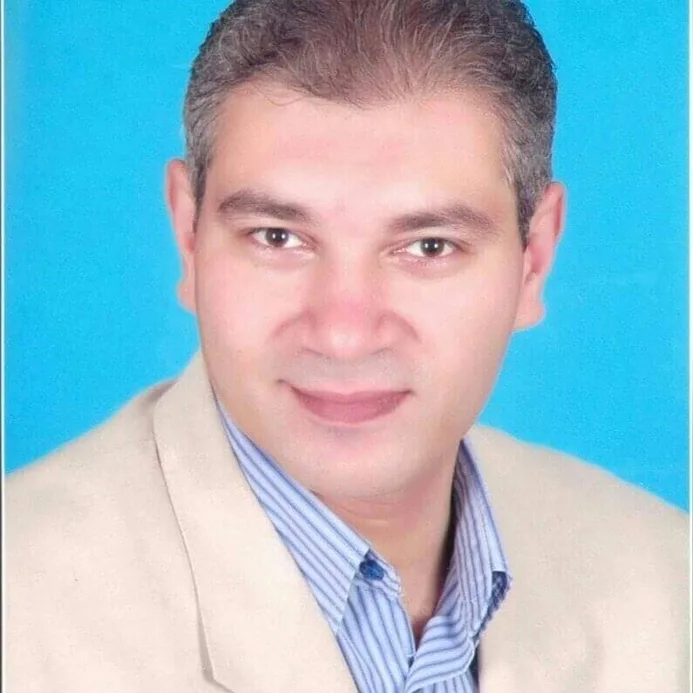


Dr Osama Al-Azhari
Minister of Awqaf
(Charitable Endowments)
The concept of al-Firqah al-Najiyah (the Saved Sect) has remained one of the most controversial concepts in contemporary religious consciousness, and also one of the most frequently invoked concepts in the discourse of groups, organizations, and ideological currents that continuously portray themselves not merely as being upon the truth, but as exclusively embodying the truth, while everything besides them is falsehood. Accordingly, they have drawn an exclusionary line against everyone and everything outside their circle. This idea came to dominate individuals who had not been adequately prepared scholarly, psychologically, intellectually, or spiritually, until exclusionism became a compulsory emotional isolation. In other words, such groups confined salvation and truth to themselves alone and obligated their followers to withdraw from society emotionally and socially; thus, they neither marry, trade, nor interact except among themselves.
Accordingly, this concept requires considerable effort to disentangle the confusion that extremist groups have complicated over the past seventy years through psychological dimensions, scholarly and juristic errors, aggression against the texts of the Shari’ah, and the construction of a philosophy and worldview in which a person monopolises for himself the idea of salvation, thereby becoming arrogant and disdainful towards others.
This idea emerged among extremist groups as a result of a sequence of preceding concepts, such as hakimiyyah (absolute divine authority; humans execute law), and the inclusion of subsidiary matters among foundational principles. Yet takfir (branding someone as an apostate) remains the seed from which all concepts within extremist currents were born.
When examining the hadith (tradition) of the Prophet Muhammad (peace and blessings be upon him): “The Jews split into seventy-one sects, the Christians split into seventy-two sects, and my Ummah will split into seventy-three sects,” we find that it speaks of a sunnah ilahiyyah (a divine coherent system) operating across religions, civilisations, cultures, peoples, and nations. Inevitably, division, disagreement, optionality, and various intellectual schools will emerge, some true and some false. This sunnah ilahiyyah (divine coherent system) has been entirely absent from extremist currents, despite the fact that the Ever-Glorious Qur’an repeatedly emphasizes the permanence and immutability of sunan ilahiyyah (divine coherent systems) dozens of times. Numerous scholars authored works concerning sunan ilahiyyah (divine coherent systems), among the earliest of whom were Muhammad ‘Abduh and Muhammad al-Sadiq ‘Arjun, followed later by Majdi ‘Ashur and Mustafa al-Shak’ah.
One of the gravest forms of aggression against the divine texts (i.e., Qur’an and Sunnah) is isolating a text from the remainder of the texts and interpreting it independently, despite the existence of established principles for correctly understanding texts, including: gathering all texts related to the issue through istiqra’ (induction), properly synthesising the texts together, understanding the implications of expressions, and deeply comprehending the maqasid (objectives) of Shari’ah (Islamic Legal Theory).
Salafi currents and (MB) in recent decades amplified discourse surrounding al-Firqah al-Najiyah through numerous writings built upon fragmentary understandings. Thus, the Salafis engage in takfir against society through one approach and arrive at Jahiliyyah (labelling people of belonging to the pre-Islamic era), together with the certainty that they are necessarily the Saved Sect. Likewise, (MB) engages in takfir against society through another approach and similarly arrives at Jahiliyyah and the conviction that it is the Saved Sect, because the map of thinking is fundamentally one. This originates from psychological dimensions such as egotism and arrogance. When examining the writings of Sayyid Qutb, we find that he transformed the concept of al-Firqah al-Najiyah into al-’uabah al-mu’minah (the believing vanguard), carrying the very same implications. Among its functions according to him is that it removes the curse from the entirety of humankind, and that it alone deserves the divine promise.
When scholars examined the noble hadith, “My Ummah will split into seventy-three sects,” they stated that these splitting disagreements remain continually surrounded by a protective framework that is never violated: namely, that all these differing and disputing groups remain under the umbrella of Islam. It is well established among scholars that the Prophet Muhammad (peace and blessings be upon him) possessed two types of Ummah: Ummat al-Da’wah (the community to whom the message is addressed) and Ummat al-Ijabah (the community that responded to the message). He was sent to all creation, and all creation is addressed by his call. Whoever affirmed, believed, and joined the noble path became part of Ummat al-Ijabah. Herein lies the methodological flaw in Salafi currents, which transferred matters pertaining to Ummat al-Da’wah onto Ummat al-Ijabah. Consequently, those minds turned against Muslims themselves, engaging in takfir against them and monopolising salvation for themselves alone, despite the fact that the hadith addresses Ummat al-Da’wah. Thus, the catastrophe resulting from failure in understanding, analogy, and insight into the intended meaning becomes evident. Distorted and artificial application of texts onto reality continues to produce disasters that the umma has endured generation after generation and nation after nation.
The correct understanding of the hadith is that its purpose is to direct attention toward a divine coherent system that has operated throughout religions, schools, and civilizations across nations: namely, that all Muslims are people of salvation (i.e., al-firqah al-Najiyah). Nor is it permissible to dominate non-Muslims, given the possibility that the call may not have reached them in its authentic form. A balanced Muslim intellect will conclude that the majority of the people of the earth are people of salvation. Prophetic Muhammad’s (peace and blessings be upon him) guidance came to honour the one being invited, even if he differs, not to humiliate him, belittle him, demean him, or drive him toward aversion and rejection.
Until we meet again, stay noble; stay safe.
Key transliterated terms
al-Firqah al-Najiyah: the Saved Sect
hakimiyyah: absolute divine authority; humans execute law
takfir: branding someone as an apostate
Shari’ah: Islamic legal theory and law
Jahiliyyah: labelling people of belonging to the pre-Islamic era
al-’usbah al-mu’minah: the believing vanguard
Ummat al-Da’wah: the community to whom the message is addressed
Ummat al-Ijabah: the community that responded to the message
Sunan ilahiyyah: divine coherent systems

