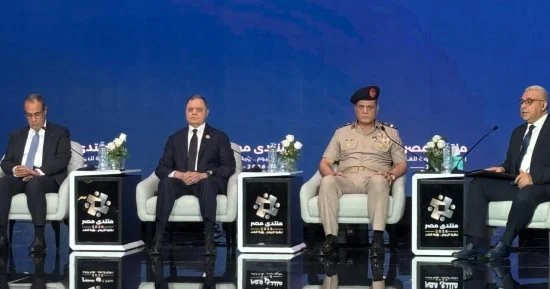










Egypt has experienced a major security transformation since the events of 2011, advancing towards the present state of stability, Interior Minister Mahmoud Tawfiq said.
Speaking at a session on national and citizen security at Egypt Forum 2026 on Wednesday, Tawfiq said the period following 2011 witnessed widespread security breakdowns and a decline in the efficiency of various state sectors, leading to a sharp and alarming rise in various types of criminal activity.
Citing car theft as an example, the minister said more than 72,000 cars were stolen between 2011 and 2013, reflecting the scale of the security breakdown compared with 2010.
Tawfiq said security agencies had succeeded in regaining control of the streets through comprehensive strategies, reducing conventional crime, eliminating car theft and defeating terrorism, while restoring security across the country.
He stressed that human resources remain the main pillar of an effective and developed security system, noting that modern technology cannot replace qualified and competent personnel.
The Interior Ministry has fully developed its training programmes and introduced new specialisations across police sectors, he said. These include preparing security personnel to protect cyberspace, combat cybercrime and safeguard intellectual property rights.
The minister added that the ministry’s development plan is based on modern scientific principles to improve monitoring and the early detection of terrorist organisations’ movements and activities, allowing security agencies to thwart criminal plots.
The first pillar of the strategy focuses on continuing to upgrade police facilities and capabilities across different sectors and equipping them with the latest technologies available through national resources. The aim is to keep pace with evolving criminal methods and combat various forms of trafficking and smuggling, he said.
The second and more important pillar involves establishing an integrated security system based on scientific methods and technological advances, including artificial intelligence tools to analyse crime patterns and predict various types of crime at an early stage.
This would help authorities develop appropriate operational plans and field measures to respond effectively, Tawfiq said.
He also reviewed efforts to upgrade of security operations rooms across all governorates and connect to a central security operations centre equipped with advanced technology and AI tools. The centre is responsible for real-time monitoring, command and data collection.
The session, titled “National and Citizen Security”, reviewed the Interior Ministry’s efforts to develop the security system and improve response times to citizens’ reports, as well as the work of the National Authority for Crisis and Emergency Management.
Discussions also covered regional and international challenges facing Egypt and the country’s foreign policy in a region marked by instability and a rapidly changing international environment.
The session was attended by Foreign Minister Badr Abdelatty and head of the National Authority for Crisis and Emergency Management Lieutenant General Mohamed Abdelrahman Rabie.

