

US Secretary of State Marco Rubio was in Uzbekistan on Monday to promote trade and ties with Central Asia, during a trip that came amid rumblings that America’s top diplomat is ignoring pressing matters in favor of politically safer visits and meetings.
The trip, which involves a stop in India later this week, seeks to promote US economic and security ties with Central and South Asia.
But it has only tangential links to the Trump administration’s current main foreign policy dilemmas in the Middle East and with the Russia-Ukraine war.
Rubio has brushed aside suggestions he is eschewing the most difficult issues in favour of taking on lower-hanging diplomatic fruit with less risk of failure and political damage, and the State Department pushed back on the criticism of his schedule.
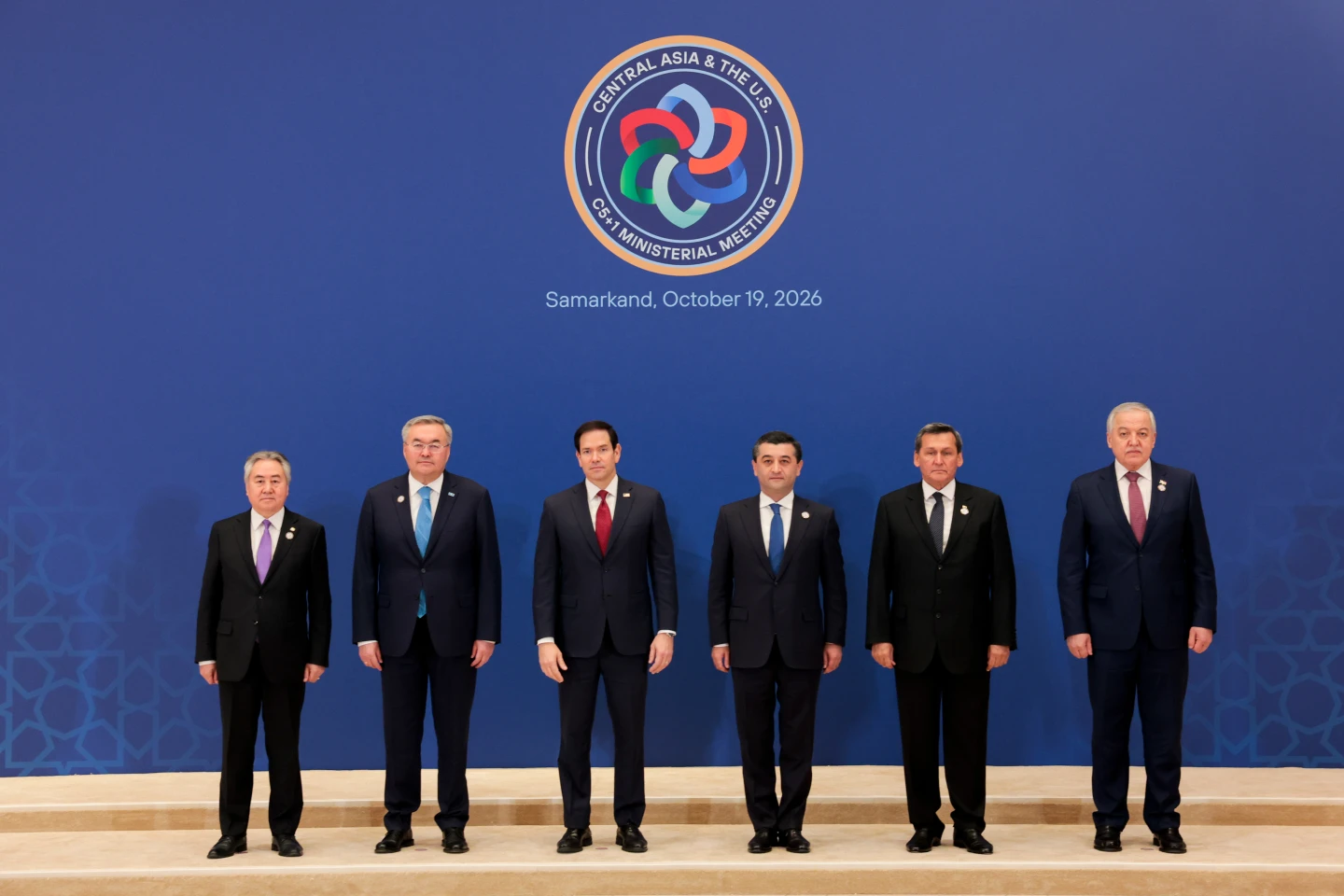
In Samarkand, Rubio was meeting with his counterparts from Kazakhstan, Kyrgyzstan, Tajikistan, Turkmenistan and Uzbekistan under the C5+1 diplomatic forum, which brings together the five Central Asian countries and the United States to discuss security, trade and other shared concerns.
As the US wound down its 20-year operation in Afghanistan, the Trump administration, in both its first and second terms, has sought to elevate its ties with Central Asia due to its location between Russia and China, but also as an underdeveloped area ripe for US business opportunities.
Rubio’s trip, which has been heavily promoted by the US ambassador to India and special presidential envoy for Central Asia, Sergio Gor, is perhaps the most ambitious US attempt in decades to boost economic and commercial ties with the region.
Speaking to reporters in Samarkand, Rubio described “an incredible delegation” with representatives of almost 300 American businesses joining.
“Historically, Central Asia has been the crossroads for trade between the West and the East. And today, as part of a broader renaissance and global engagement, it stands once again to play that vital role in transnational commerce,” he told officials at the meeting.
The region is “a new location for investment, and it serves as a new location for export, a central terminal out of which materials that are vital for the future of all nations are being delivered,” he added.

