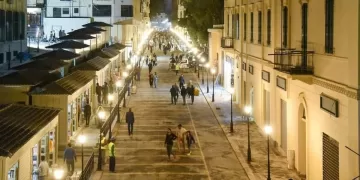








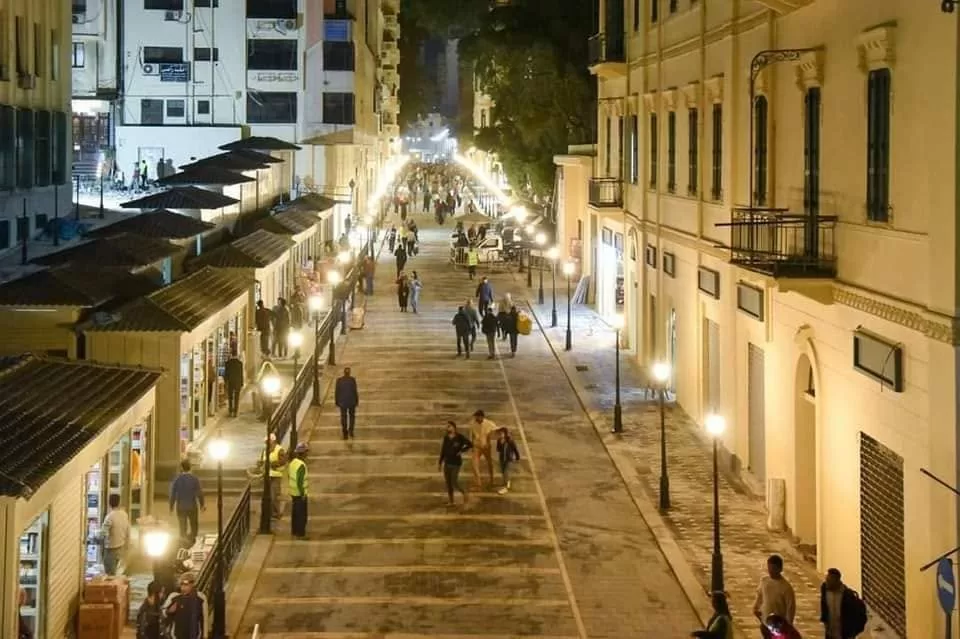
Passersby on Nabi Daniel Street, one of Alexandria’s best-known streets in the heart of the city, no longer hear only the roar of traffic, the calls of street vendors and the constant movement of pedestrians. Other sounds have begun to find their way into the street, giving it a new energy and restoring something of its old spirit.
Along the street, the sounds of live music fill the air, while traditional folk performances unfold in different spots. At the same time, sections of the street are being transformed into open spaces where visual artists can display their paintings and artworks to the public.
Nabi Daniel Street is gradually becoming more than just a thoroughfare for Alexandria’s residents and visitors. It is evolving into a space where history, art and everyday life come together, in a scene that gives historic places a new ability to connect with younger generations.
The street takes its name from the Prophet Daniel and is one of Alexandria’s prominent historic streets, running through the heart of the old city. Historic buildings stand alongside shops, bookshops and everyday activities that have shaped the street’s distinctive character over many decades.
But what is happening today goes beyond simply preserving the area in its traditional form. The idea is to reclaim public space in a way that makes culture and art part of the city’s everyday life.
When music fills the street and passersby stop to watch an artistic performance or listen to a musical ensemble, before continuing their journey among artists’ paintings, crafts and folk performances, their relationship with the place begins to change.
These changes are also giving Alexandria an opportunity to reclaim an important part of its historic character. A city long known as a meeting place of civilizations and cultures needs not only to preserve its buildings and archaeological heritage, but also to bring its public spaces back to life and create room for art and culture at the heart of the city.
The significance of the experience lies in the very nature of Nabi Daniel Street. It is not a place detached from Alexandria’s everyday life, but an integral part of its urban fabric.
The presence of music and the arts therefore does not appear as an isolated cultural activity, but rather as a natural extension of the life of the street.
Perhaps the most telling scene is that of a passerby stopping, perhaps for the first time, to listen to a piece of music, while another pauses in front of a painting and children gather around a traditional folk performance.
At that moment, history becomes present not merely through books or signs, but through a living experience.
Reviving Nabi Daniel Street through art and culture opens the door to a broader vision of how Alexandria’s historic heart can be approached — a vision that does not place heritage in opposition to modern life, but seeks to make the two work together.

