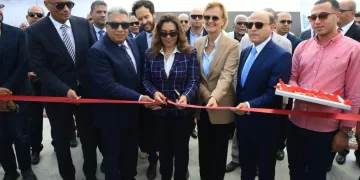






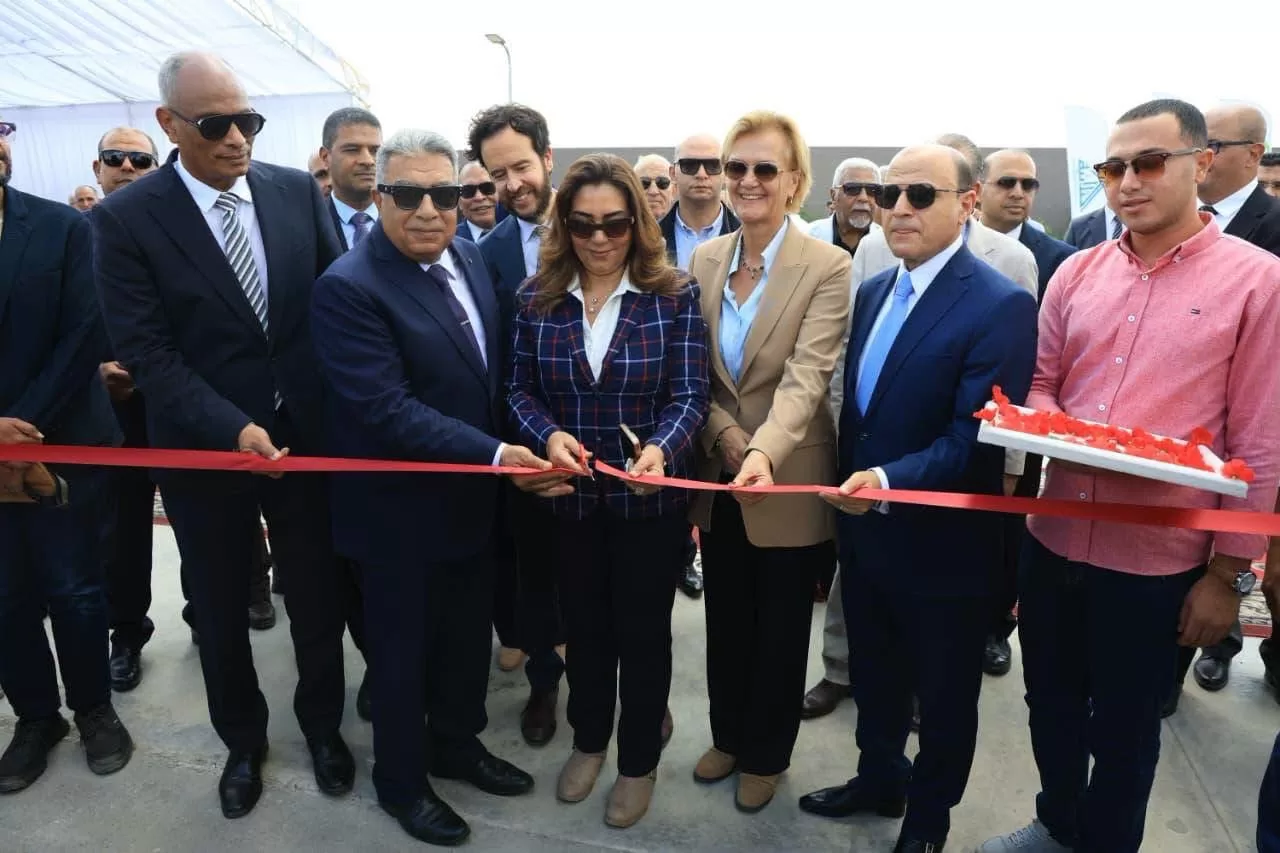
As part of the Kitchener Drainage Depollution Project’s solid waste component, Minister of Local Development and Environment Manal Awad inaugurated two waste transfer stations in Nabarouh, Dakahlia, and Nashil village in Gharbia. The facilities were built at a cost of €3.8 million under the wider project, which is funded by a €79 million loan from the European Bank for Reconstruction and Development (EBRD) and an €8 million grant from the European Union.
The Minister said the project serves Dakahlia, Gharbia and Kafr El‑Sheikh governorates and forms part of an integrated programme aimed at improving water quality in the Kitchener Drain by reducing pollution from untreated wastewater and solid waste, while rehabilitating the waterway and enhancing its efficiency.
Awad noted that the ministry is implementing the solid waste management component in the three governorates, adding that plans include the construction of five waste recycling plants with a combined capacity of 4,200 tonnes per day. Two recycling plants are scheduled to open in December, followed by two more in February 2027. The project also supports the waste collection and transport system with 47 pieces of equipment and the upgrading of eight garages.
She added that the project includes the closure and rehabilitation of the Qallabsho dumpsite, which contains around 2.5 million cubic metres of accumulated waste across 60 feddans, in line with environmental standards.
The two transfer stations each have a capacity of 300 tonnes per day. The Nabarouh station serves Nabarouh city and five surrounding local units, while the Nashil station serves Qutour city, several villages in Gharbia, and additional areas in El‑Mahalla El‑Kubra. Both operate through a direct‑unloading system, allowing collection vehicles to discharge waste directly into transport trucks.
Officials said the project will improve waste transport efficiency by separating collection and transport operations, reducing operating and maintenance costs, lowering fuel consumption and greenhouse gas emissions, and increasing the number of collection trips without requiring additional assets.
Representatives of the European Union and the EBRD praised co‑operation with the Egyptian government on the Kitchener Drain project and highlighted its importance in supporting environmental and sustainable development objectives.

